
Make Texture a preferred source on Google to support us
Add Texture to GoogleLower prices to boost sales? At LVMH, the answer lies elsewhere. While some luxury competitors are adjusting prices on certain products, Cécile Cabanis, the group’s chief financial officer, advocates a less immediate approach: refining designs, refreshing the product lineup, and maintaining the balance between desire and perceived value. The results for the first nine months of 2026 give this approach concrete significance. The fashion sector is declining, and Chinese customers are scaling back their purchases, but some fashion houses are still finding their audience. The challenge, therefore, is not simply to sell more. It is to understand what still drives the desire to buy.
At Dior, creativity is resonating with customers
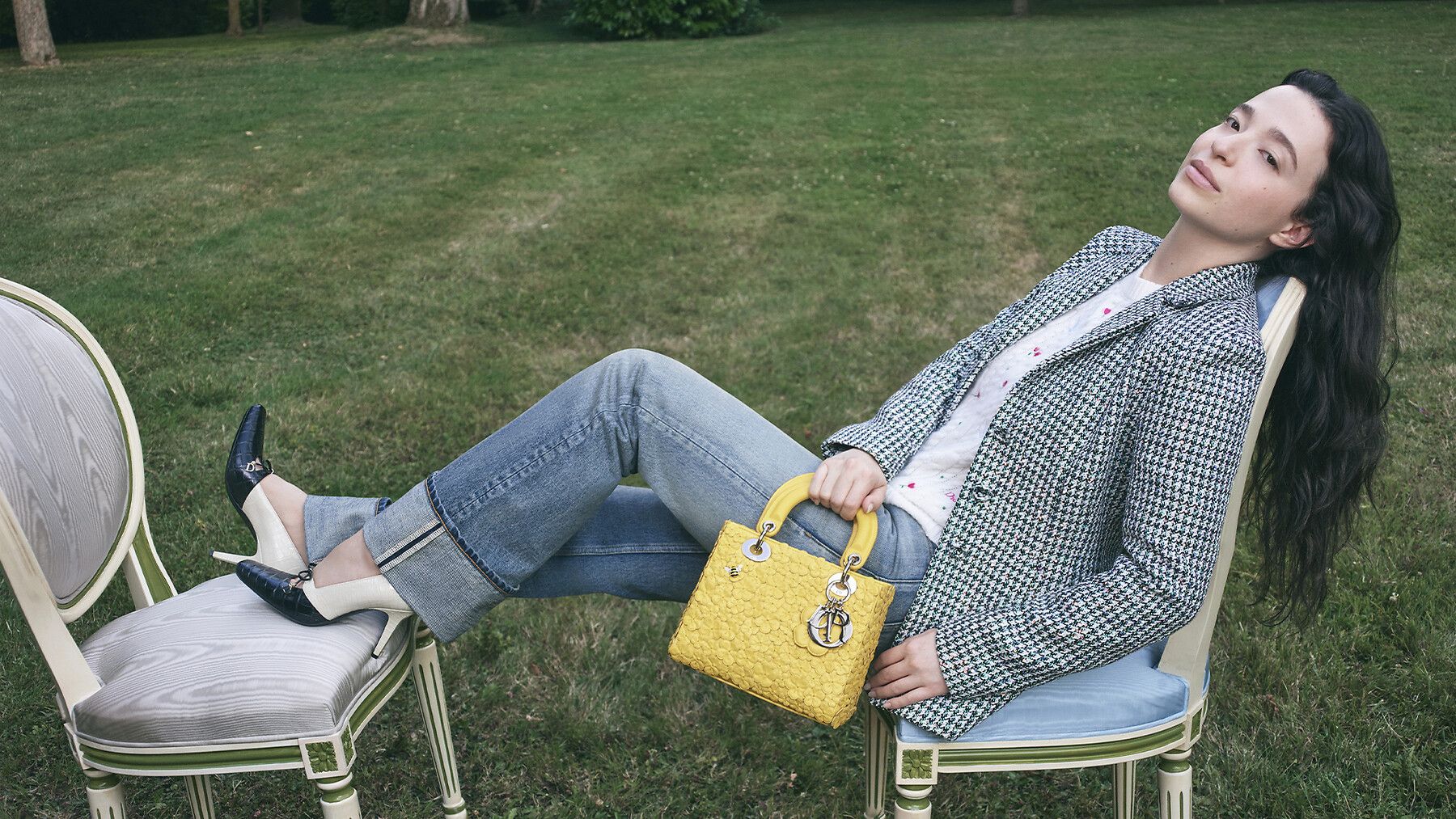
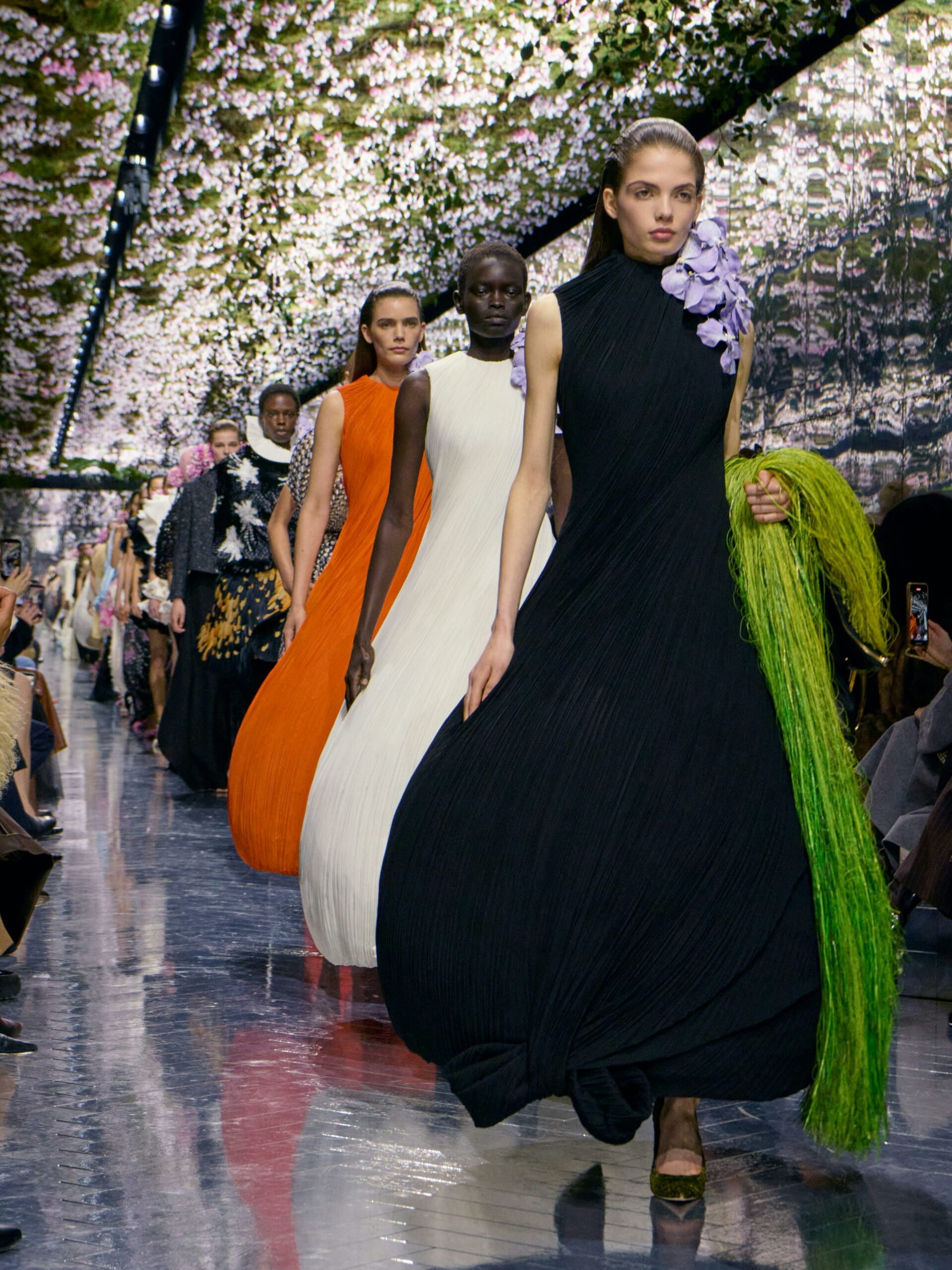
One figure sheds light on this issue: Dior is posting double-digit growth among its American clientele. The house remained stable in the third quarter and has been growing since the start of the year, according to Cécile Cabanis. In a fashion and leather goods division that is otherwise in decline, this resilience deserves attention. The group attributes this, in particular, to the positive reception of Jonathan Anderson’s designs, whose ready-to-wear and leather goods are driving sustained demand.
However, not everything is progressing at the same pace. The CFO highlights the interest in the women’s collections, while the men’s line still requires work. This nuance prevents creative renewal from being treated as a panacea. A vision can be compelling without producing the same results everywhere—or at the same time. The recent opening of House of Dior on Via Montenapoleone in Milan supports this development: commercial expansion continues despite less favorable economic conditions.
Elsewhere in the portfolio, LVMH highlights the positive reception of Michael Rider’s collections at Celine and that of Fendi’s Baguette, reimagined by Maria Grazia Chiuri. At Loewe, Jack McCollough and Lazaro Hernandez are continuing to transform the collections, as is Sarah Burton at Givenchy. These moves are not enough to turn around the division’s overall figures. They do, however, show where the group is focusing its efforts: on distinctive offerings, rather than on a uniform pricing strategy.
China Undermines the Recovery
The geographic contrast is stark. In the third quarter, organic sales in Asia excluding Japan fell by 5%, following a 4% increase in the previous quarter. This regional reversal should not be confused with trends in spending by Chinese customers: for this segment, Cécile Cabanis cites a decline in demand of approximately 15%. Two different contexts, but the same point of vulnerability for the group.
The executive describes a summer marked by unfavorable news from China, which weighed on consumer confidence. She adds tensions in the Middle East to the list of adverse factors. Prior to the earnings release, analysts at Barclays had already lowered certain estimates, taking into account, in particular, China’s stricter tax policies targeting high-net-worth individuals and the repercussions of the dispute between Louis Vuitton and the Molly tea chain.
Other markets are providing support, though without signaling a general acceleration. The United States grew by 5% on a like-for-like basis in the third quarter, compared with 6% in the second. Japan’s growth slowed from 14% to 6%. Europe, on the other hand, returned to 4% growth after a quarter of stagnation. The geography of the luxury market thus remains in flux: the U.S. market is holding steady, Europe is rebounding, but these positive signs do not dispel the uncertainty surrounding China.
Louis Vuitton: Between Heritage and Expansion
This uncertainty is most clearly evident in the fashion and leather goods segments. Over the first nine months, the division generated 26.3 billion euros in revenue, down 4% on a reported basis and 2% on an organic basis. In the third quarter, sales reached 8.2 billion euros, with an organic decline of 5%. Deutsche Bank had expected a 3% contraction; the consensus forecast was 2%. The disappointment therefore goes beyond simply acknowledging a challenging market.
Louis Vuitton is performing slightly below the division’s average. A one-time logistics and transportation issue at one of its shippers cost the company just over one percentage point of growth in the third quarter. This factor explains part of the gap, but not the entire challenge. The brand must continue to move upmarket while attracting new customers—a balance that Cécile Cabanis describes as central to its strategy.
The 130th anniversary of the Monogram provided an opportunity to bring its iconic bags back into the spotlight. The ready-to-wear collections by Nicolas Ghesquière for women and Pharrell Williams for men were also well received. The strength of the brand’s heritage and creative output therefore remains evident, though it has not prevented the decline in sales.
Loro Piana offers a more favorable contrast, with a performance praised by the group. The brand presented its “Solutions For” ready-to-wear collection and opened a center of excellence dedicated to knitwear in Ghemme, Italy. Rimowa and Berluti are also maintaining a positive trajectory. The group’s portfolio is also changing: Marc Jacobs was sold to WHP Global on September 1.

Diversification protects sales, not expectations
At the LVMH level, these contrasting trends resulted in revenue of 57.1 billion euros over nine months. The 2% decline on a reported basis translates to a 2% increase on an organic basis. The third quarter brought in 18.5 billion euros in sales, representing 1% organic growth, in line with analysts’ forecasts. The group continues to move forward, albeit slowly.
The jewelry segment is contributing to this resilience. The watches and jewelry segment reached €7.7 billion over nine months, up 4% on a reported basis and 8% on an organic basis. In the third quarter, sales totaled 2.5 billion, with organic growth of 6%. This is better than Deutsche Bank’s estimate but below the 9% expected by the consensus.
Tiffany continues to expand its major lines and renovate its store network. Bulgari attributes its record revenue to “Eclettica,” its new line of fine jewelry and luxury watches, while Chaumet continues to develop “Bee de Chaumet.” In watchmaking, TAG Heuer is benefiting from its visibility in Formula 1, particularly as the title partner of the Madrid Grand Prix. The division’s strong performance, however, is driven primarily by jewelry.
Selective retail provided another source of growth: 12.4 billion euros over nine months and 8% organic growth in the third quarter. Wines and spirits rose 6% in the same quarter, for 1.4 billion euros in sales. Perfumes and cosmetics remained more subdued, with organic growth of 1% and quarterly revenue of 2 billion.
A Fourth Quarter with Revised Expectations
This diversity helps offset the challenges in the fashion sector but fails to convince analysts of a solid recovery. RBC Capital Markets sees the results as a sign that the fragile recovery observed at the start of the year is losing steam. Following the earnings release, LVMH shares fell just under 2% in morning trading.
Barclays, in particular, has revised its expectations for the fourth quarter. The bank now forecasts organic growth of 2.2% for the group, down from its previous estimate of 3.9%. In fashion and leather goods, it has replaced an expected 1.2% increase with a 1.1% decline. For watches and jewelry, its forecast has been lowered from 10% to 5%. Faced with these reduced prospects, LVMH is sticking to its strategy: improving its product offerings and execution, rather than making price the primary driver of recovery.