
Make Texture a preferred source on Google to support us
Add Texture to GoogleThe river cuts through the city with majestic brutality. As the light fades over the Hungarian Parliament, most travelers crowd the bridges to capture the twilight. Yet the essence of the Hungarian capital eludes the hasty observer. Far from the romkocsma—those famous bars housed in dilapidated buildings that sometimes get lost in their own myth—and the streets flooded with neon lights, another landscape takes shape along the Danube. It is a ribbon of intimate spots, quiet courtyards, and suspended terraces where Central European elegance is reinvented. Here, the water is no longer merely a postcard backdrop, but the guiding thread of an exploration marked by high standards.
The shadow of the palaces on the right bank
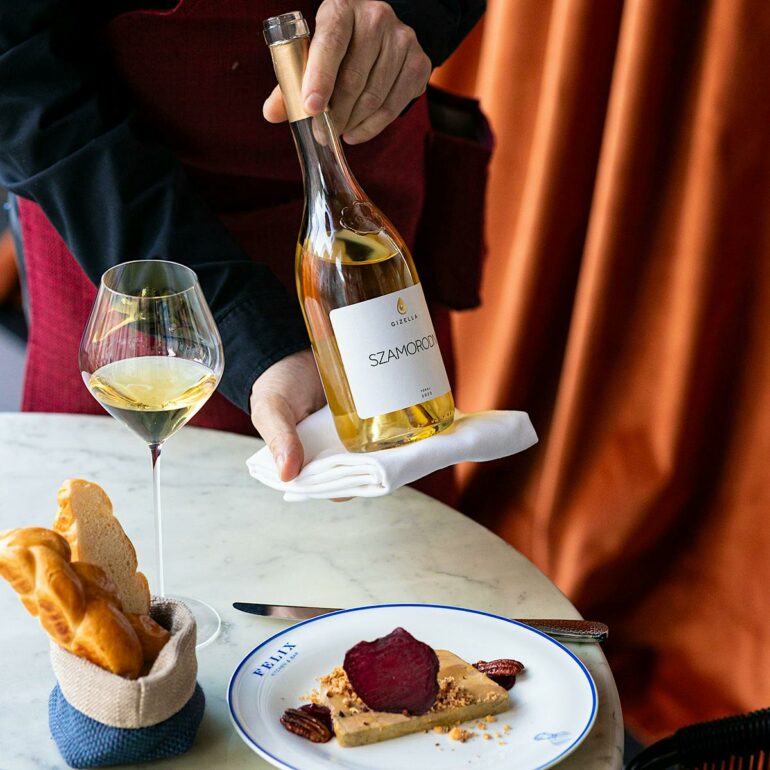
The hills of Buda have always maintained an aristocratic distance from the commercial bustle of Pest. At the foot of the Royal Palace, the Várkert Bazár perfectly exemplifies this reserve. This Neo-Renaissance complex, designed by architect Miklós Ybl in the late 19th century, lay dormant beneath overgrown vegetation for many years before regaining its original grandeur. It is in one of its side pavilions that Felix Kitchen & Bar is tucked away.
The building once housed the pumping station that supplied water to the palace’s fountains. Beneath its vaulted ceilings adorned with contemporary artworks, a crowd of regulars gathers around a menu that challenges local conventions. Imperial caviar meets smoked sturgeon, while the wine list unearths little-known vintages from the Somló region. Above all, the terrace—shielded by thick hedges—offers a head-on view of the river, free from the hubbub of the adjacent promenades. Here, one can watch the ballet of the barges in utter tranquility.
Suspended Retreats and Tailored Hospitality
On the other side of the water, monumental bridges serve as links to establishments where service is conveyed through silence. Right at the end of the Chain Bridge (Széchenyi Lánchíd), on the Buda side, the Hotel Clark offers an intimacy that stands in stark contrast to the surrounding classicism. The hotel defies the heavy-handed standards of the luxury hotel industry: few rooms, an industrial aesthetic skillfully softened by dark leather and raw wood paneling. The secret of the place is revealed on the top floor. The Leo Rooftop makes no attempt to rival the huge, festive terraces of Pest. Capacity is strictly limited, the view takes in the bridge’s lion statues, and the mixology menu draws freely from the flora of the Carpathians.
Further south, as you cross back to the left bank, the silhouette of the Elisabeth Bridge leads to the Matild Palace. Built at the dawn of the 20th century under the guidance of Princess Clotilde of Saxe-Coburg and Gotha, this architectural twin stands out with imperial grace. While the Belle Époque façade commands respect, the wing overlooking the river houses suites where the murmur of the water seems to set the tempo. The recent renovation has carefully erased the scars of the past century to restore the stucco and marble.
Beyond its rooms draped in royal blue velvet, the top floor of the building conceals The Duchess. Conceived as the secret library of a whimsical aristocrat, this bar remains hidden from the crowds. It’s accessed via a hidden corridor. Leaning against the zinc railing, a glass of chamomile-infused gin in hand, your gaze takes in the rugged contours of Gellért Hill and the dark ribbon of the Danube.
Art and Materials: The Soul of Collectors
Traveling upstream toward the northern part of Pest also means encountering the country’s visual heritage. Running parallel to the riverbanks, Falk Miksa Street is home to a concentration of galleries and art dealers. This street isn’t for idle strollers, but for those with a keen eye. Pushing open the heavy door of the Kieselbach Gallery reveals Hungarian modernist paintings from the 1920s, often little known outside the country’s borders.

Dealers and collectors mingle here in a tacit understanding, appraising works that chronicle the successive upheavals of Mitteleuropa. A few doors down, discreet showrooms featuring contemporary design prove that Budapest is not stuck in Austro-Hungarian nostalgia. Furniture with brutalist lines dialogues with the raw ceramics of local artisans. Luxury here is defined by the patina of materials and the uniqueness of the design, far from ostentation.
Gastronomy Against the Grain
Hungarian cuisine has long been characterized by generous, sometimes hearty portions. That has changed radically. Just a stone’s throw from the Pest riverfront, the Michelin-starred restaurant Essência exemplifies this transformation. Tiago Sabarigo and his wife Éva blend their respective Portuguese and Hungarian roots with surgical precision. The dining room, designed as a private dining room with warm tones, serves as the setting for a tasting menu that reimagines local ingredients. Mangalica, the woolly pig with melt-in-your-mouth fat, is given a contemporary interpretation of great finesse.
For those who prefer absolute seclusion, the experience moves directly onto the river. Turning your back on the crowded tourist shuttles, you can hire private boat operators. Departing from unmarked docks hidden beneath the Liberty Bridge, varnished mahogany motorboats from the 1960s await their passengers. You then glide across the black water with only the lapping of the water against the wooden hull as a soundtrack. A bottle of dry Tokaj—that mineral-rich white wine that finally reveals its complexity beyond its sweet varieties—accompanies this solitary cruise. The parliament building, viewed from the water’s surface, loses its imposing presence to reveal the intricate detailing of its stonework.
Spa Retreats and Nighttime Strolls
The city cannot be fully understood without its almost organic relationship with thermal water. While the grandiose and bustling baths attract most of the attention, those in the know prefer to follow the Danube northward, on the Buda side, to soak in the Veli Bej Baths. Sheltered by the massive walls of a hospital building, these Turkish baths, founded in the 16th century, strictly limit their capacity. Beneath the Ottoman dome pierced by glass oculi, water gushing at nearly forty degrees soothes the body. The atmosphere remains monastic, punctuated only by the echo of water overflowing from the octagonal pools.
When night finally falls, one must head toward Margaret Island. At the edge of this floating park, far beyond the developed areas, paths shrouded in twilight offer a final retreat. The damp scent of the tall trees mingles with the metallic scent of the river. A tugboat drifts by at a slow pace, momentarily breaking the reflection of the lights on the water’s surface. Budapest drifts off to sleep without losing its splendor, reminding us that its most precious sparkles are best appreciated in the twilight, away from the world.