
Make Texture a preferred source on Google to support us
Add Texture to GoogleThe official calendar of the Fédération de la Haute Couture et de la Mode for the Spring-Summer 2027 season will undoubtedly be marked by a tectonic shift in focus. While the spotlight usually falls on the historic institutions of Avenue Montaigne or Rue Cambon, this season saw creative energy and critical interest shift toward the fringes. In Paris, a constellation of radical designers—often labeled “freaks” by some in the fashion press—captured the essence of the moment, prioritizing subversion and raw expression in the face of the global market’s polished standards.
Rick Owens: The Leading Figure at the Palais de Tokyo
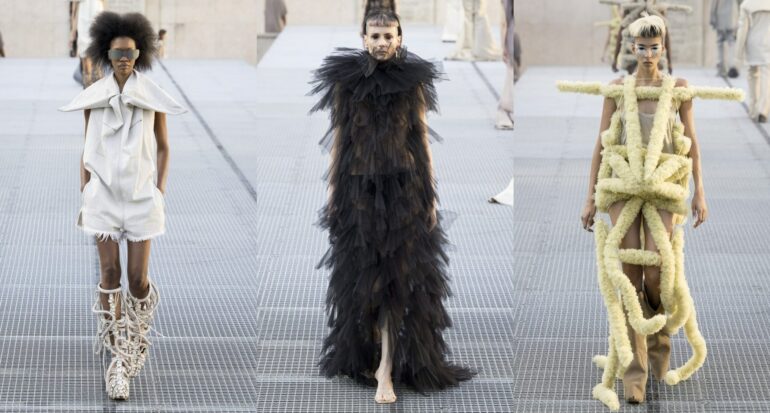
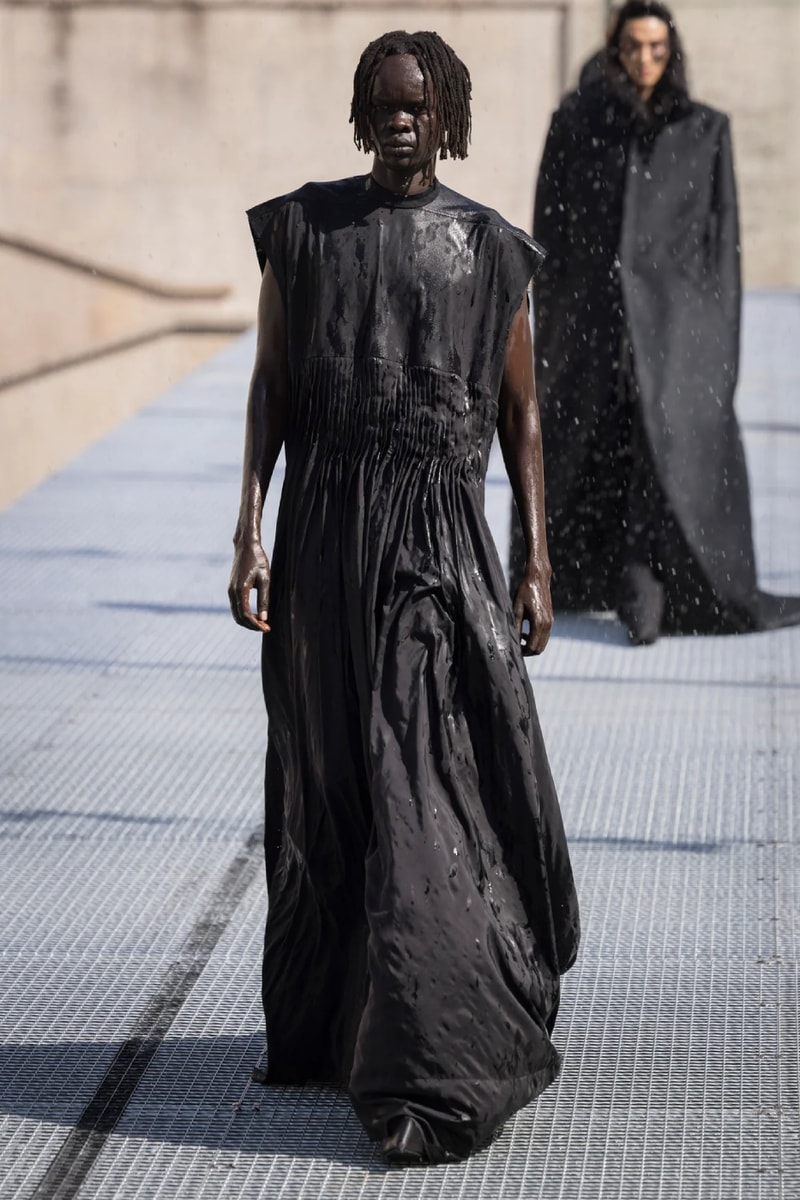
At the pinnacle of this alternative hierarchy sits Rick Owens. A longtime pillar of luxury counterculture, the designer continues to exert a major influence on the young guard. In early October 2026, at the Palais de Tokyo, his women’s fashion show reaffirmed his status as a leading figure. The house’s signature monumental silhouettes this time explored unprecedented structures: matching dresses mounted on elastic bands, defying traditional notions of cut and movement. The staging, centered on conceptual makeup and reimagined eyelashes, reinforced this aesthetic of archaic futurism.
Owens’ influence extends beyond his own collections. A long-standing mentor to many emerging talents, he notably supported the duo Matières Fécales long before they were included in the official fashion calendar. This legacy underscores a transmission of expertise centered on subversion, where clothing becomes a tool for identity transformation rather than a mere consumer product.
Matières Fécales: Occupying Public Space
The most spectacular moment of this two-week event came from the duo Steven Raj Bhaskaran and Hannah Rose Dalton. Founded between 2014 and 2016 in Montreal, their project—initially known as Fecal Matter—reached a decisive milestone this season under its new official name, Matières Fécales. Now commercially incubated by Dover Street Market, the brand staged a performance on an unprecedented scale around the monument at Place de la République.
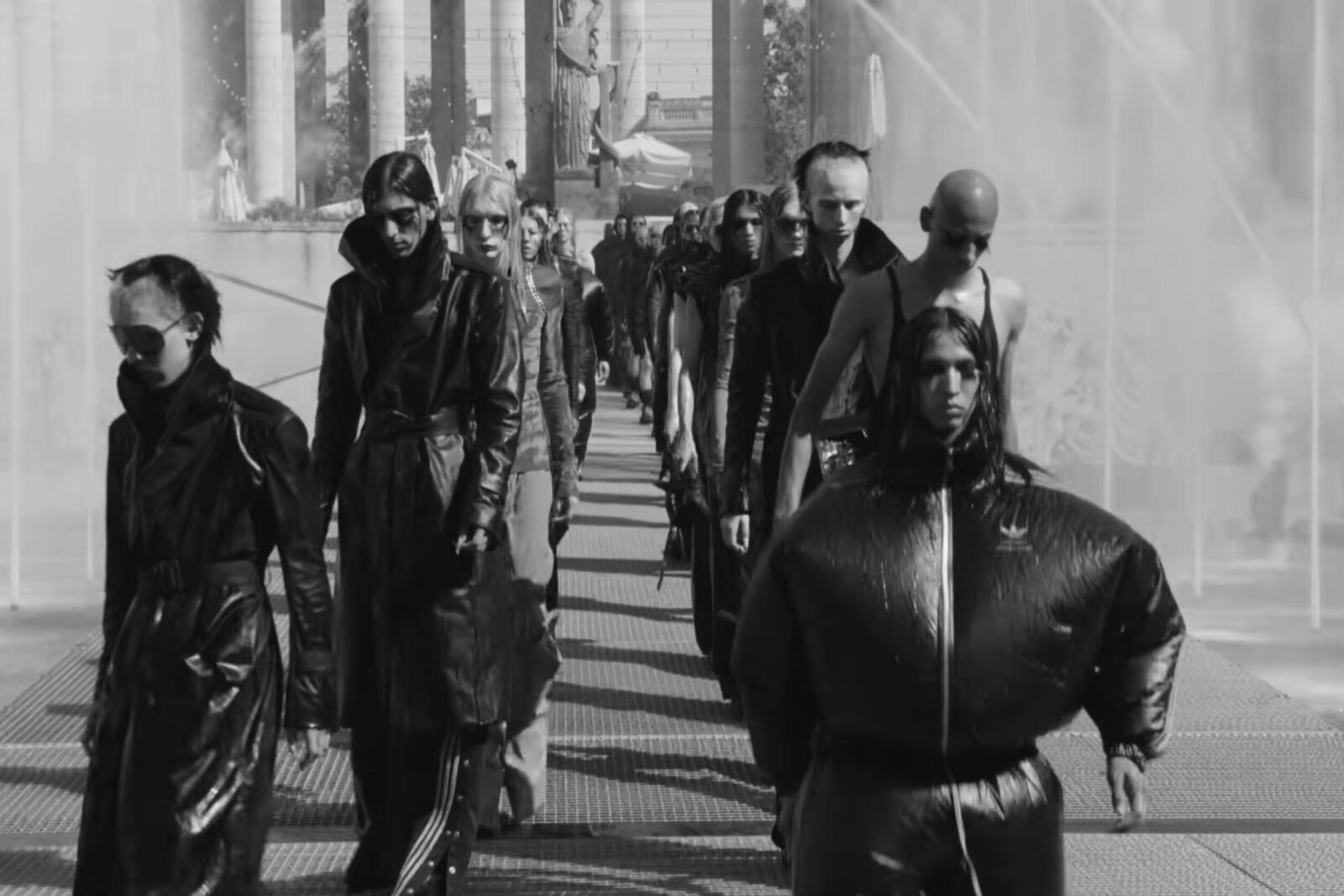
Titled “The Ninety Nine Percent,” the fashion show featured a cast of 99 models, all people of color, including friends, activists, and family members of the designers. The presentation was structured around three narrative chapters: Family, Tribe, and Gods. The finale made a particularly strong impression with its satirical element: models wearing hyperrealistic effigies of billionaires, designed by artist Sarah Sitkin, walked the runway in a setting that oscillated between unease and social critique.
Yet behind this “post-human” aesthetic and its body prosthetics lies an increasingly solid economic reality. Matières Fécales took advantage of this visibility to unveil a shoe collaboration with Christian Louboutin, marking an unexpected alliance between the radical underground and the luxury footwear institution. On the social front, the brand announced that a portion of the proceeds from this collection would be donated to the organization La Maison d’Allanah, which works to provide housing for LGBTQIA+ refugees in France.
Vaquera and the Deconstruction of American Fashion
Alongside this Parisian scene, the New York-based label Vaquera, led by Patric DiCaprio and Bryn Taubensee, has established its DIY and subversive vision. Backed by Adrian Joffe, the label—founded in 2013—is dedicated to subverting American fashion conventions. For the SS27 collection, Vaquera presented a bold “palindrome” structure.

The runway show, consisting of 41 looks, opened with five silhouettes in stark, sculptural white. In a powerful conceptual gesture, these same silhouettes closed the show in reverse order, but this time rendered in fluorescent hues: turquoise, fuchsia, neon yellow, acid green, and orange. To cap off this performance, the two designers performed Sonny & Cher’s song “I Got You Babe” live during the finale, imbuing the fashion show with a spectacular and emotional dimension that stands in stark contrast to the coldness of traditional presentations.
August Barron: Hollywood Satire at La Cigale
Another notable figure in this shift is the August Barron project, led by Benjamin Barron and Bror August Vestbø. Hailing from the art and fashion magazine ALL-IN, the duo—finalists for the 2025 LVMH Prize—took over La Cigale theater for a collection exploring the dark side of fame. Drawing inspiration from the imagery of films like “Boogie Nights” and “Sunset Boulevard,” the designers presented a satirical deconstruction of Hollywood icons. Wire-like structures disrupted the lines of reinterpreted dresses, transforming symbols of glamour into objects that prompt reflection on futility and the performance of self.
An emerging niche market
While critical interest in these designers is at an all-time high, the question of their economic viability remains central. The revenue figures for these independent brands are not disclosed, nor are the production budgets for their fashion shows. However, the retail prices listed in October 2026 in the Dover Street Market catalog in London attest to Matières Fécales’s unapologetic positioning as a luxury brand.
The pieces in the collection reflect a commitment to high-quality craftsmanship and premium materials: a denim jacket called “Pierre” retails for around €900, while the “Brigitte” blazer ranges from €2,400 to €4,400 depending on the chosen finishes. Pieces with more voluminous sleeves, such as the “Augustin” suede coat, reach €2,915, and the “Brigitte” coat tops out at nearly €5,280. These prices place these radical designers firmly within a concrete commercial reality, far removed from the image of mere street performers.
An analysis of this SS27 season suggests a paradigm shift. While it would be premature to conclude that the major fashion houses are losing economic momentum—given that their audiences and sales volumes remain incomparably larger—the shift in public favor and pure innovation toward these fringe figures is a major trend of 2026. Paris Fashion Week seems to have found, in these unique offerings, a new lease on life in the face of the sector’s growing standardization.