
Make Texture a preferred source on Google to support us
Add Texture to GoogleIn New York, gallery openings often continue long after the gallery lights have gone out, spilling over onto leather couches and table-set tables where deals are struck and reputations are forged. The culinary landscape of the contemporary art world—ever-changing and highly subjective—has now crystallized into a selection of thirty-five venues. This guide, published in October 2026, eschews traditional gastronomic rankings in favor of the on-the-ground habits of market players, museum curators, and behind-the-scenes professionals.
Art at the Table: The New Institutional Landscape
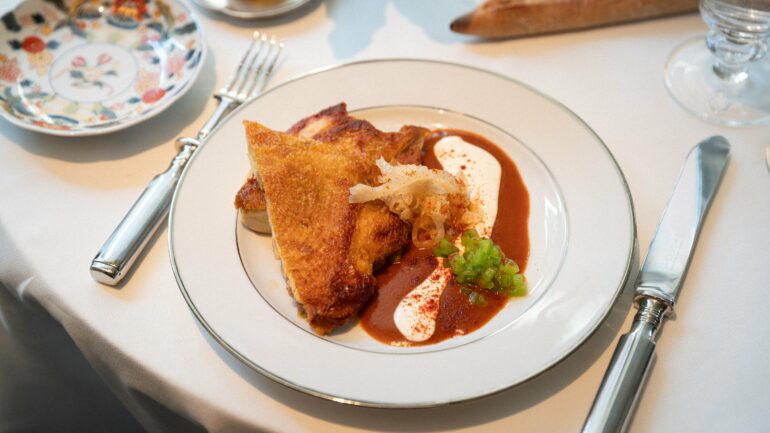
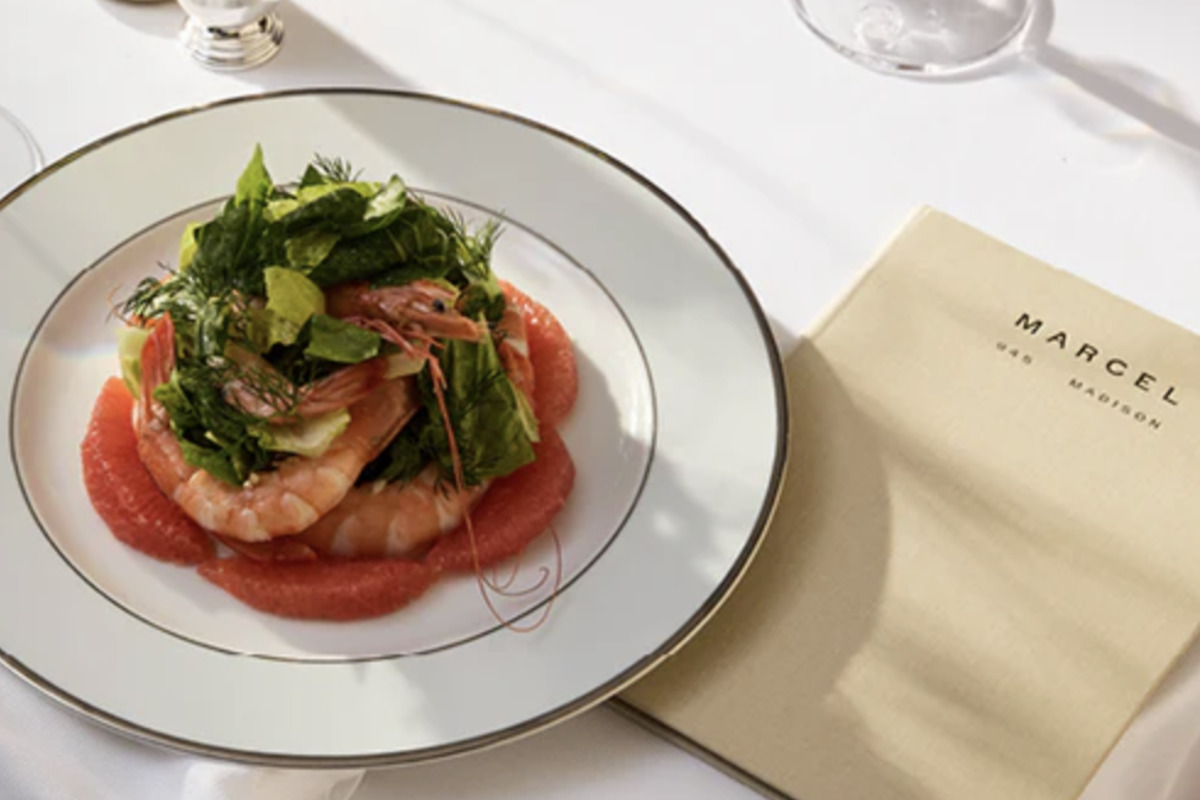
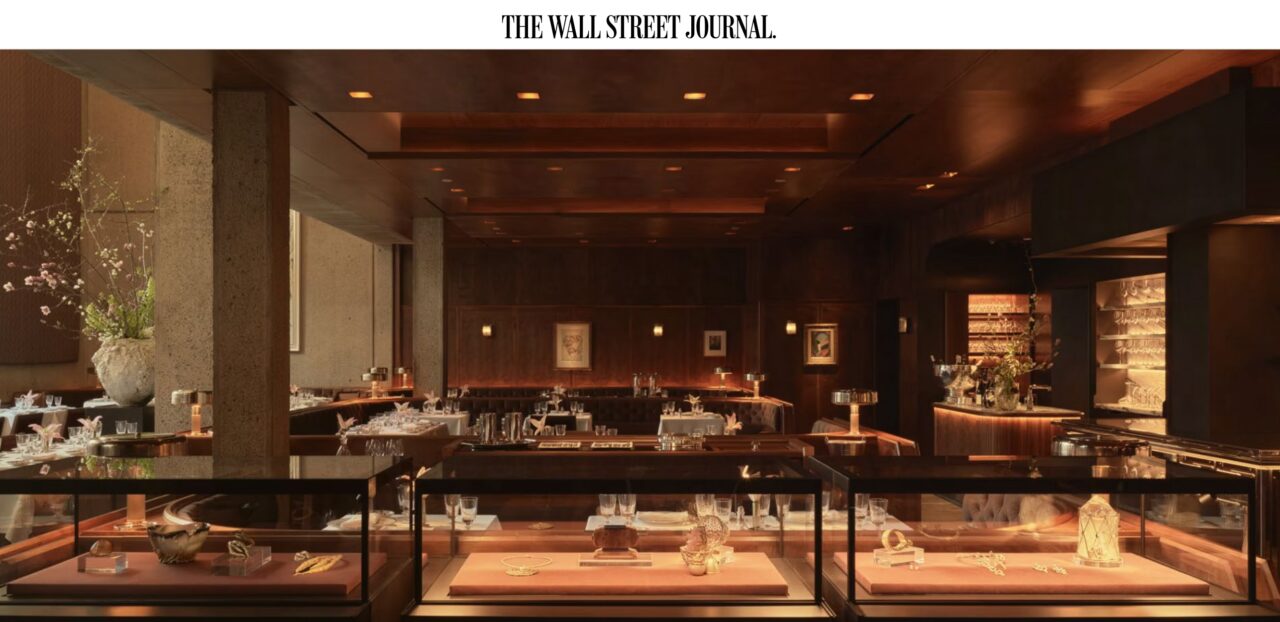
The shift of Manhattan’s center of gravity northward is confirmed by Sotheby’s move into the iconic Marcel Breuer building at 945 Madison Avenue. In the basement of this Brutalist monolith, the restaurant Marcel embodies this fusion of French haute cuisine and the art market. The dining room, where an authentic Joan Mitchell painting takes center stage, commands a certain level of financial standing: a whole Dover sole is priced at $176 (about 162 euros), underscoring the restaurant’s ambition to become the epicenter of business lunches on the Upper East Side.
This trend of integrating high-end dining into cultural institutions is becoming widespread. On the Lower East Side, the expanded New Museum complex now houses Oberon, while Long Island City welcomes Symone at MoMA PS1. In Brooklyn, the Amant contemporary art center—driven by the vision of collector Lonti Ebers—now features Zoli, a restaurant adjacent to its exhibition spaces in Bushwick. These venues are no longer mere stopgap cafeterias, but destinations in their own right where the presentation of the dish mirrors that of the artworks on the walls.
The Historic Mainstays of TriBeCa and SoHo
While new openings capture attention, the beating heart of New York’s art scene remains loyal to its historic institutions. The Odeon, founded in 1980 by Lynn Wagenknecht with Keith and Brian McNally, remains TriBeCa’s unshakable gathering place. Having witnessed memorable parties hosted by gallerist Mary Boone, painter Alex Katz’s 90th birthday, and three decades of Metro Pictures, the establishment maintains a classic brasserie menu. Between the oysters and the steak-frites, a whole chapter of the 1980s art scene’s history continues to be written there every evening.
A few blocks away, Frenchette reaffirms its status as a favorite haunt. Run by Riad Nasr and Lee Hanson—who also own the Whitney Museum’s bakery—this modern brasserie stands out for its selection of natural wines curated by Jorge Riera. It’s a place where you’re just as likely to run into prominent collectors as you are to meet art fair directors, all drawn by an atmosphere that’s less formal than Midtown’s.

The art market also has its own historic negotiation spots, such as Michael’s in Midtown, renowned for hosting power lunches for decades. In contrast, the Fanelli Cafe in SoHo retains its unpretentious pub-like charm. This historic café is one of the few places where the market’s leading figures still rub shoulders with art handlers—the indispensable technicians who set up exhibitions.
From private collections to affordable havens
Some establishments were chosen for their intrinsic connection to the visual arts. This is the case with Le Cavalier, which is run by a duo consisting of artist Yasmin Kaytmaz and art dealer Alex Adler. Others, such as Humm in the West Village or Oriana in Little Italy, stand out for the prevalence of artworks from private collections, transforming dinner into an extended aesthetic experience.
In the face of rising prices in New York’s most prestigious neighborhoods, the selection also highlights more affordable havens. On the Upper East Side—despite its reputation for exorbitant prices—Dorrian’s Red Hand stands out as an exception. This traditional tavern remains one of the few affordable spots in the area, offering a burger for less than $20 (about 18.50 euros), thus providing a tangible alternative to the white tablecloths of the neighboring high-end restaurants.
This map of New York’s art scene is not intended to be a rigorous statistical analysis, but rather a reflection of a networked culture where the proximity of studios, galleries, and kitchens defines a certain way of experiencing the city. From Queens’ institutions to TriBeCa’s brasseries, these spots outline a world where influence is measured as much by the table you sit at as by anything else.