
Make Texture a preferred source on Google to support us
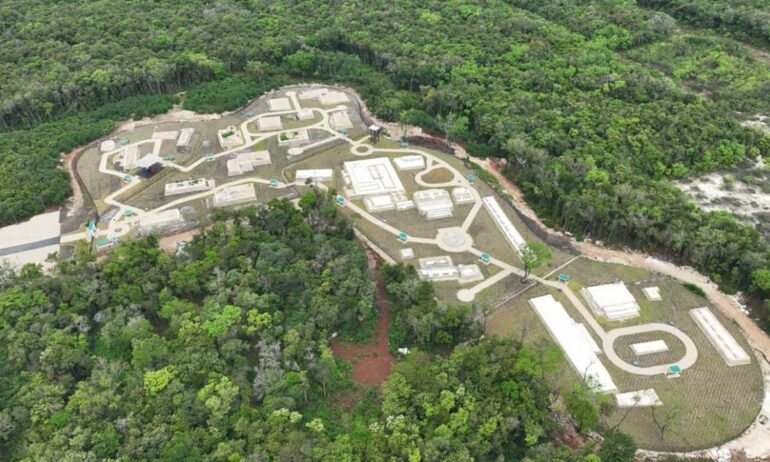
Add Texture to GoogleIn the humid climate of Quintana Roo, in southeastern Mexico, a strange city rises from the ground. Set on four hectares of landscaped jungle in Chetumal, the Parque de la Memoria Balam Tun does not celebrate a chance discovery, but rather a relocation. Here, forty-seven Mayan archaeological structures—once situated along the route of the “Mayan Train” megaproject—were methodically dismantled and then reassembled stone by stone. This relocation, presented by the authorities as a technical feat of preservation, now crystallizes a deep rift between the Mexican government and a segment of its scientific community. What was meant to be a repository of memory has become the center of an unprecedented legal battle, in which the very concept of heritage is on trial.
The Balam Tun Sanctuary: A Relocated Heritage
The relocation project orchestrated by the Instituto Nacional de Antropología e Historia (INAH) is based on a colossal logistical undertaking. To clear the way for the tracks of sections 6 and 7, connecting Tulum to Escárcega, engineers and archaeologists had to excavate structures from the forest floor and reassemble them within the Parque Quintana Roo. These ruins, some of which date back to the Late Preclassic (400–250 B.C.) and Early Classic (250–600 A.D.) periods, bear witness to the influence of the Río Bec and Petén architectural styles in the region.
Beyond Balam Tun Park, a second site named Parque de la Memoria K’awiil is already planned near the Xpujil station in the state of Campeche. Official figures illustrate the scale of the operation: while initial reports from August 2025 mentioned 36 pyramidal structures for Balam Tun and 12 for Xpujil, more recent reports indicate that 47 monuments have already been relocated to Chetumal. Across the entire rail project, a total of 56 masonry structures are reported to have been physically relocated from at least fifteen distinct sites.
To justify this operation, the Ministry of Culture and the INAH cite a state-of-the-art methodology. According to official sources, the use of LiDAR technology, photogrammetry, and millimeter-precise surveys has enabled a reconstruction of absolute fidelity, following the reverse order of the original removal. This approach is presented as a “last resort,” a necessity imposed by the technical impossibility of maintaining these structures directly beneath the railroad tracks.
The Researchers’ Backlash: Between Dismantling and “Ideological Fraud”
However, this vision of archaeology as a savior is fiercely contested. In July 2026, the National Union of Scientific Research Professors at the INAH (SNPICD-INAH) reached a legal milestone by filing a criminal complaint with the Mexican Federal Prosecutor’s Office (FGR). This action targets twenty-six high-ranking officials and executives, foremost among them Diego Prieto Hernández, former director general of the institute, and Manuel Pérez Rivas, coordinator of the archaeological rescue efforts for the Maya Train.
The charges brought by the union are exceptionally serious: destruction of archaeological monuments, unlawful exercise of public office, abuse of power, and what the plaintiffs describe as “ideological and archaeological fraud.” For these researchers, relocating a monument does not preserve it—it negates it. By removing the stones from their original soil, the stratigraphic context—that layering of soil and artifacts that alone allows us to date and understand a structure’s true function—is irreparably destroyed. Without its geographical and historical context, the monument would be nothing more than an empty shell.
The criticism goes even further. Opponents denounce the creation of “fake structures” or decontextualized attractions, designed to cater to tourist traffic rather than serve science. In their view, these “memorial parks” violate not only Mexico’s federal law on historic monuments but also international conventions governing heritage protection. They see this project as a staging of the past for the sake of modern infrastructure, transforming archaeology into a theatrical backdrop.
The Paradox of Conservation: The Abu Simbel Precedent
In response to these accusations, INAH leadership maintains that the operation is entirely legal, having received the approval of the institute’s Archaeology Council. To support their position, the authorities cite prestigious references and foundational texts. In particular, they refer to the 1969 UNESCO recommendation and the 1964 Venice Charter, while drawing a historical parallel with the rescue of the Abu Simbel Temple in Egypt, which was relocated in the 1960s to escape the rising waters of the Aswan Dam.

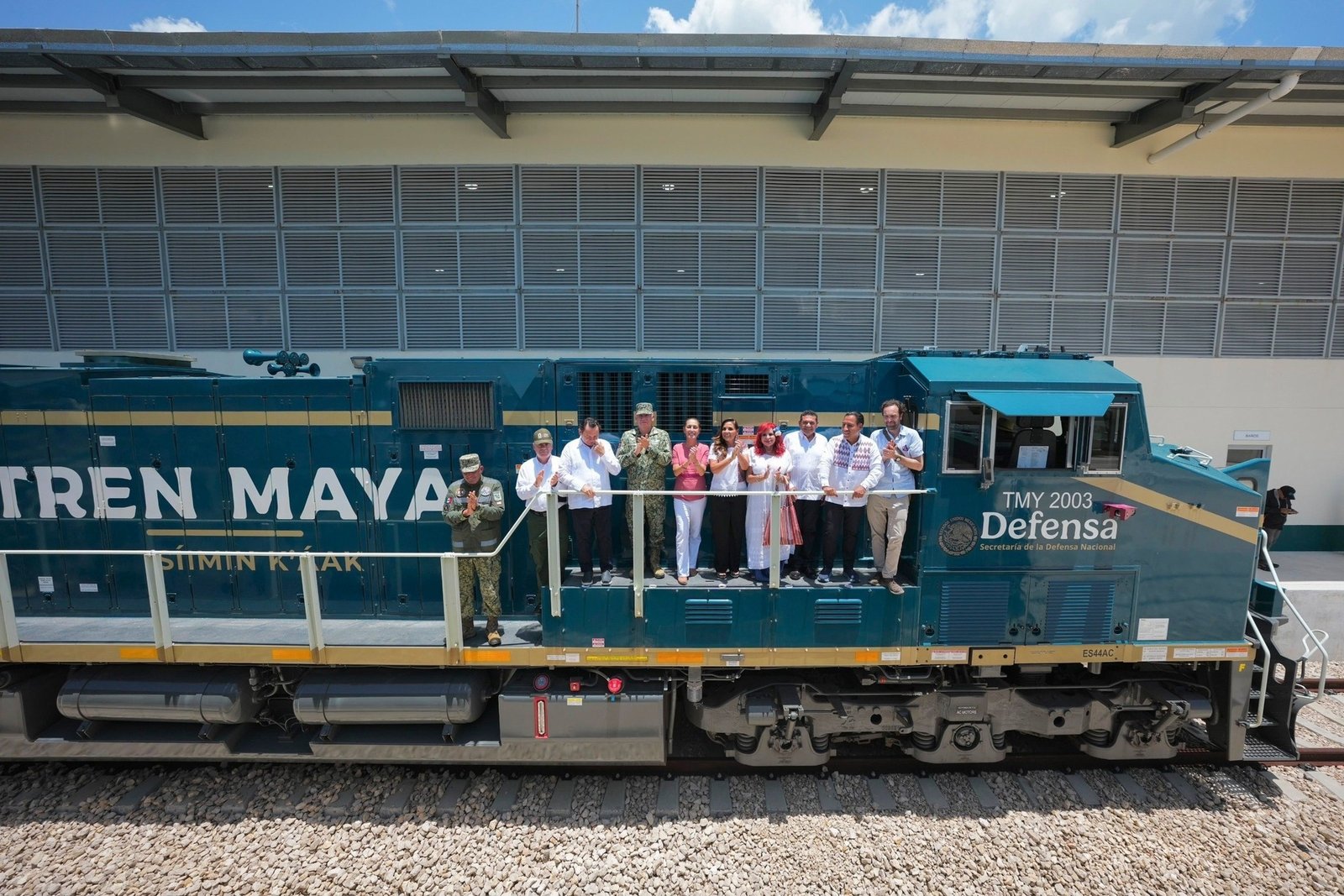
The institute also emphasizes the efforts made to avoid damage. According to their figures, more than 100 kilometers of the rail route have been rerouted to preserve between 6,000 and 7,000 monuments in situ. Relocation would therefore affect only a tiny fraction of the discovered artifacts. The overall Maya Train project, which spans 1,554 kilometers across five states (Chiapas, Tabasco, Campeche, Yucatán, and Quintana Roo), has in fact enabled archaeological documentation on an unprecedented scale: between 62,985 and 66,662 archaeological artifacts have been recorded, including more than 500 major sites since construction began.
In this context, the archaeological salvage effort is portrayed as a race against time. Authorities emphasize that without this intervention, the remains located within the right-of-way would have been simply destroyed. The use of LiDAR technology has made it possible to map areas previously inaccessible beneath the canopy, offering a new perspective on Maya spatial occupation, although this knowledge is now disconnected—for the relocated structures—from their original physical reality.
A High-Stakes Judicial Investigation
The outcome of the complaint filed by the SNPICD-INAH remains uncertain, as the case is currently under investigation by the Mexican federal courts. The stakes go far beyond a mere dispute among experts. They raise the question of sovereignty over cultural heritage and the balance between economic development and cultural conservation. The Maya Train, designated a “national security” project by presidential decree in 2021–2022, enjoys a status that has accelerated construction but has also fueled tensions with the guardians of the country’s history.
The specific cost of dismantling and reassembling the 47 structures at Balam Tun has not been disclosed, as it is part of the overall budget of several billion dollars allocated to the railway line. While the first sections of the railway opened in December 2023, the controversy over “archaeological fraud” calls into question the sustainability of this model of heritage management. For visitors who will stroll through the paths of Balam Tun Park tomorrow, these stones will tell the story of a vanished civilization, but they will also serve as silent witnesses to a contemporary political choice: that of relocating the past to make way for the future.
Detailed information on the rescue zones and sites open to the public is available on the Lugares INAH portal, which documents the scope of the heritage managed by the institute throughout the country. Pending the court’s ruling, the pyramids of Balam Tun remain monuments in exile, symbols of an archaeology of compromise.