Make Texture a preferred source on Google to support us
Add Texture to GoogleWhen the armored crates from Dresden were opened in the National Gallery’s storage areas, a palpable sense of emotion swept over the conservation team. Dr. Emma Capron, curator of Flemish and early German paintings, says the moment nearly brought tears to the eyes of the specialists present. The source of this emotion is an extremely fragile sheet of primed paper bearing the features of an elderly man. This drawing, on loan from the Kupferstich-Kabinett in Dresden, is the only surviving graphic work by Jan van Eyck. It serves as the centerpiece of a landmark exhibition, titled “Van Eyck: The Portraits,” which will be held in London from November 21, 2026, to April 11, 2027.
An unprecedented gathering in the history of art
Under the direction of Sir Gabriele Finaldi, the London institution has pulled off a remarkable curatorial feat: bringing together for the first time all nine surviving portraits on wood by the Flemish master. In total, the exhibition features thirteen works, including ten authentic pieces by Van Eyck himself—the nine painted panels and the Dresden drawing—supplemented by three works from his studio or by his followers. In a world where experts estimate the painter’s entire body of work to consist of only about twenty authenticated paintings, such a gathering is truly exceptional.
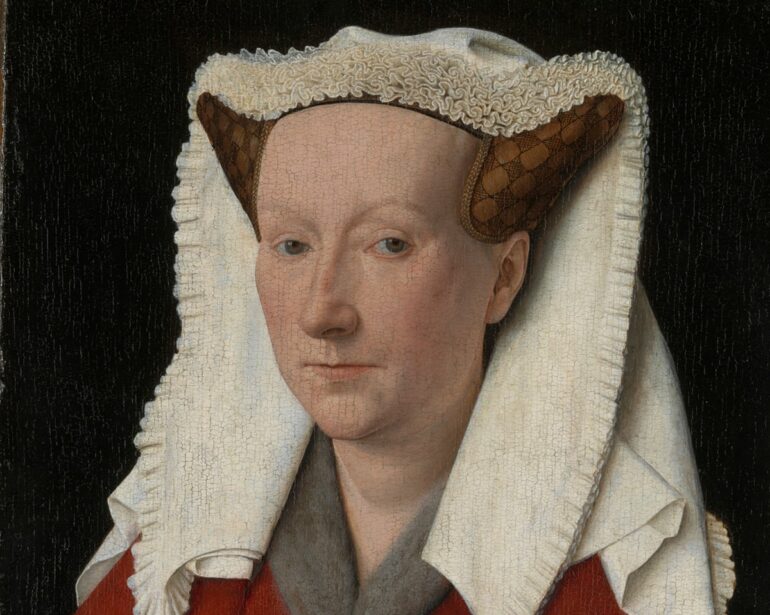
The curators, Dr. Emma Capron and Nicholas Flory, reached out to leading international institutions to supplement the National Gallery’s own collection. In addition to the loan from Dresden, the Kunsthistorisches Museum in Vienna, the Gemäldegalerie in Berlin, and the Groeningemuseum in Bruges have agreed to temporarily part with their treasures. The Portrait of Margaret van Eyck (1439), the artist’s wife, will thus make the journey from Belgium to join London masterpieces such as *Léal Souvenir* (1432) and the famous *Portrait of a Man with a Red Turban* (1433).
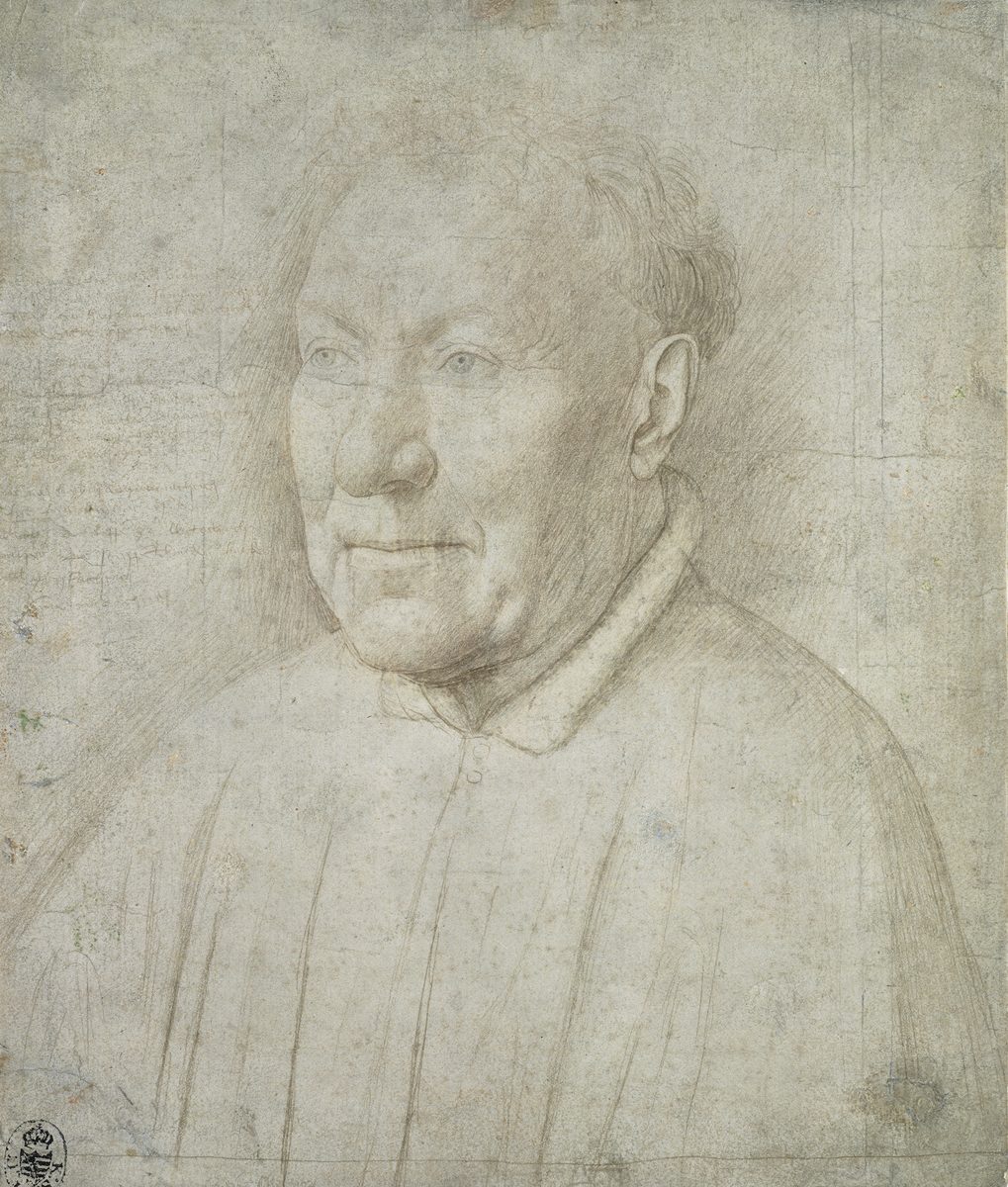
The Dresden Drawing: The Birth of the Pose
The exhibition’s centerpiece, this Portrait of an Elderly Man executed in silver and gold point around 1438, offers a technical insight into the creative process of the 15th century. Beyond its finesse, the work is invaluable for the handwritten notes added by Van Eyck himself in the margins of the figure. Written in Middle Dutch, these annotations detail with surgical precision the chromatic nuances that the painter would later render in oil: the color of the eyes, the shades of the lips, and even the appearance of a stubble beard.
For curators, this drawing represents much more than a preparatory study. It is considered the earliest documented evidence of a model formally posing for a painter in the history of European art. The exhibition’s layout allows for a direct and rare comparison: the drawing is displayed opposite its finished version on panel—the portrait traditionally identified as that of Cardinal Niccolò Albergati, which has been sent from Vienna especially for this occasion.
A Display of Intimacy and the Object
The presentation in the National Gallery’s Ground Floor Galleries aims to challenge the traditional perception of Renaissance paintings. Nicholas Flory emphasizes that these portraits were not originally intended to be hung statically on a wall, but rather as intimate objects, meant to be handled and viewed from all angles. To reflect this physical reality, several panels are displayed in such a way as to reveal their reverse sides. Visitors will thus be able to discover painted backgrounds and trompe-l’œil marbling, evidence of the meticulous attention Van Eyck paid to the painting as an object.
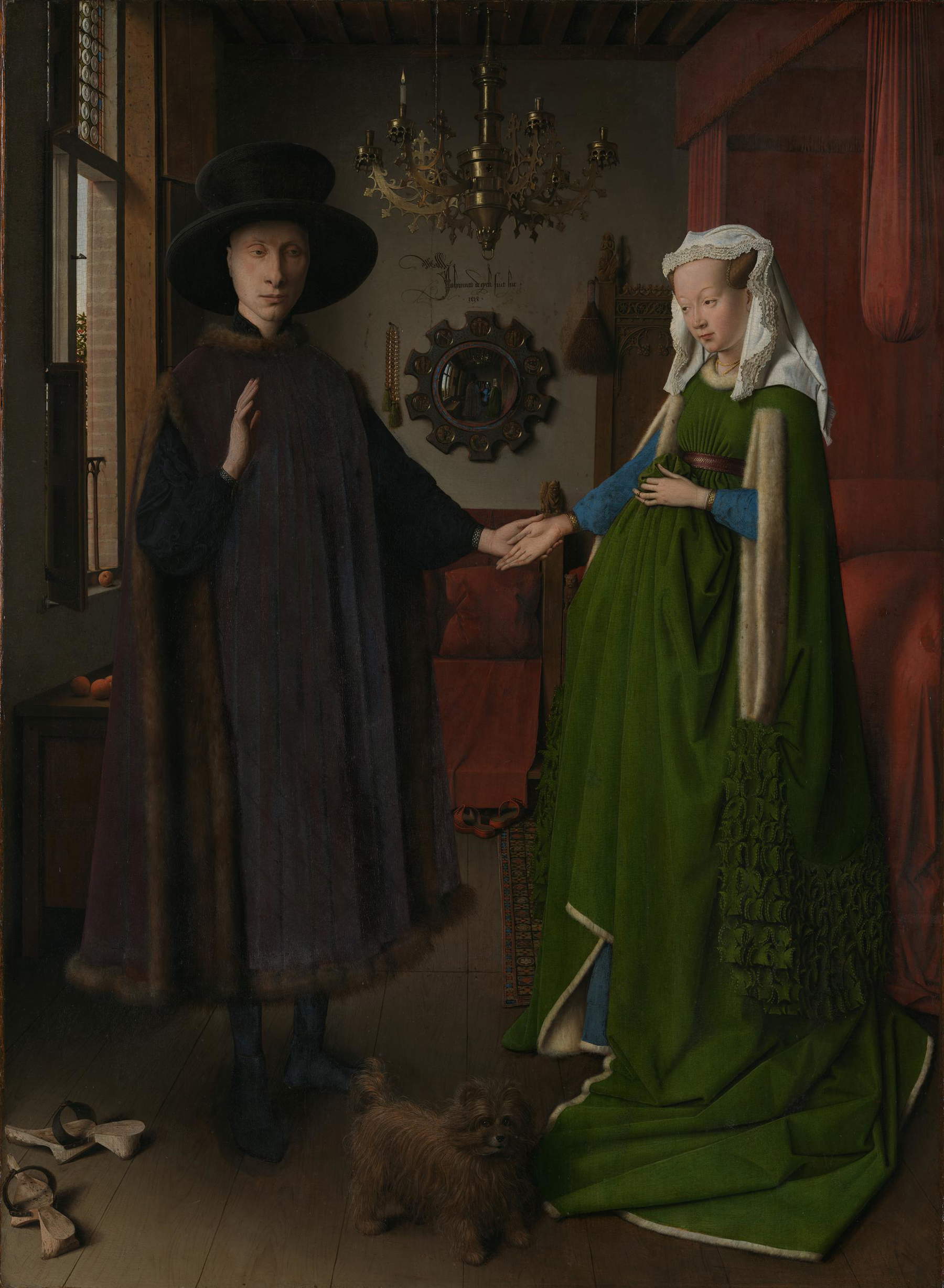
A notable change concerns the most famous work in the London collection: The Arnolfini Portrait (1434). For this exhibition, the museum has decided to remove the imposing neo-Gothic frame that has surrounded the panel since the 19th century. This unveiling restores the painting’s original breathing room and invites a fresh examination of the details for which the Bruges master is renowned, particularly through the digital resources available on Closer to Van Eyck.
Mysteries and Research Hypotheses
The exhibition *Van Eyck: The Portraits* also serves as a forum for reflection on current research, far from setting certainties in stone. While the identification of the subjects remains a subject of debate, the exhibition catalog explores new avenues. Regarding The Arnolfini Portrait, while tradition identifies the subjects as the merchant Giovanni Arnolfini and his wife, one essay examines the minority hypothesis suggesting that the work might be a depiction of Jan van Eyck himself accompanied by his wife Margaret.
Similarly, the identity of the man in the Dresden drawing, though often associated with Cardinal Albergati, remains a working hypothesis contested by some critics; the museum prefers to stick to the descriptive title *Portrait of an Elderly Man*. This scientific caution also applies to the 1433 *Portrait of a Man with a Red Turban*. Although often considered a self-portrait, the institution maintains a methodological reserve, presenting it with a question mark that underscores the uncertainty still surrounding the painter’s biography.
Practical Information and Catalog
Admission to the exhibition is £18.00 (approximately €21.50), which includes a dedicated audio guide to accompany your visit. Admission is free for National Gallery members and for visitors under 18. A 208-page catalog, edited by Emma Capron and Nicholas Flory and published by Yale University Press, accompanies the exhibition and is priced at £40.00 (£35.00 at the official gift shop). The catalog compiles the latest technical analyses, including dendrochronological data, in an effort to better understand the genius of an artist whose body of work remains one of the smallest and most precious in the history of Western art.
For more details on the program and ticketing, information is available on the exhibition’s website: Van Eyck: The Portraits.