Make Texture a preferred source on Google to support us
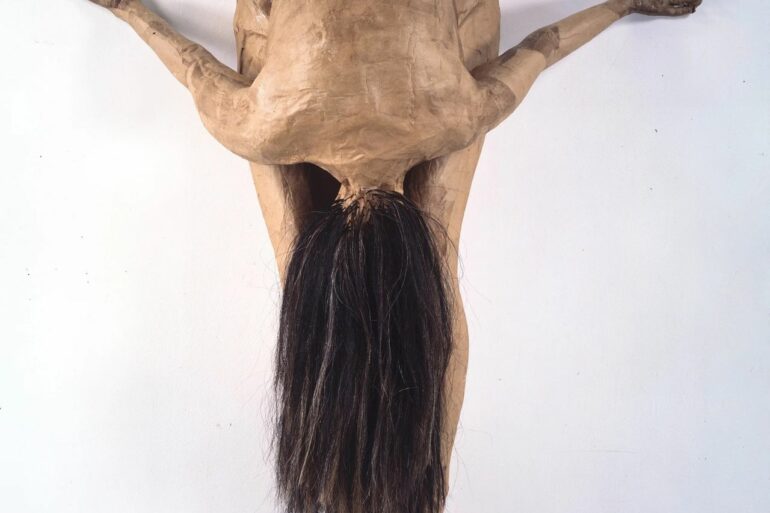
Add Texture to GoogleA face ravaged by tears, captured by a smartphone camera, in front of Kiki Smith’s evocative sculptures. In early November 2026, the Jeffrey Deitch Gallery in Los Angeles became, quite unwittingly, the epicenter of a digital firestorm. In a video that went viral on YouTube and X, Julia James Davis, a leading figure in “The War on Beauty” movement, called the exhibited works “artistic terrorism.” Beyond a mere aesthetic disagreement, the content creator urged the FBI to raid the homes of the artists and curators to seize their hard drives, claiming that only “psychotic” individuals deserving of confinement could produce or support such work. This head-on attack on contemporary art reignites a debate that was thought to belong to the American culture wars of the 1980s.
The Rhetoric of Absolute Aesthetics
At the heart of this offensive lies a platform with an unambiguous name: The War on Beauty. Julia James Davis, who describes herself as an “aesthetic evangelist ” and claims to have studied art history at the University of Southern California (USC) as well as at the Sotheby’s Institute of Art, presents a worldview in which beauty is not a matter of taste but an objective fact. Drawing on Christian transcendentals—the Beautiful, the True, the Good—and the writings of the 19th-century theorist John Ruskin, she argues that Western art institutions are engaged in a deliberate campaign to destroy the classical order.
For proponents of this thesis, contemporary architecture, design, and the visual arts have replaced spiritual transcendence with “institutionalized ugliness.” This planned subversion is said to aim at replacing the sacred with political themes such as feminism, environmentalism, or deconstruction. In this traditionalist worldview, art should no longer question but rather edify. Any transgression thus becomes an attack on the West, justifying the use of martial and criminal rhetoric.
Kiki Smith: A Target Out of Step with the Times
The choice of Kiki Smith as the target of this anger is, however, peculiar. An internationally renowned German-American sculptor and visual artist, Smith is a major figure whose artistic language has been firmly established since the 1980s. Her work on corporeality, myths, and feminism, though at times raw, is now part of the history of contemporary art. The works on view at Jeffrey Deitch are part of an aesthetic continuity that in no way constitutes a sudden break or an unprecedented provocation in 2026.
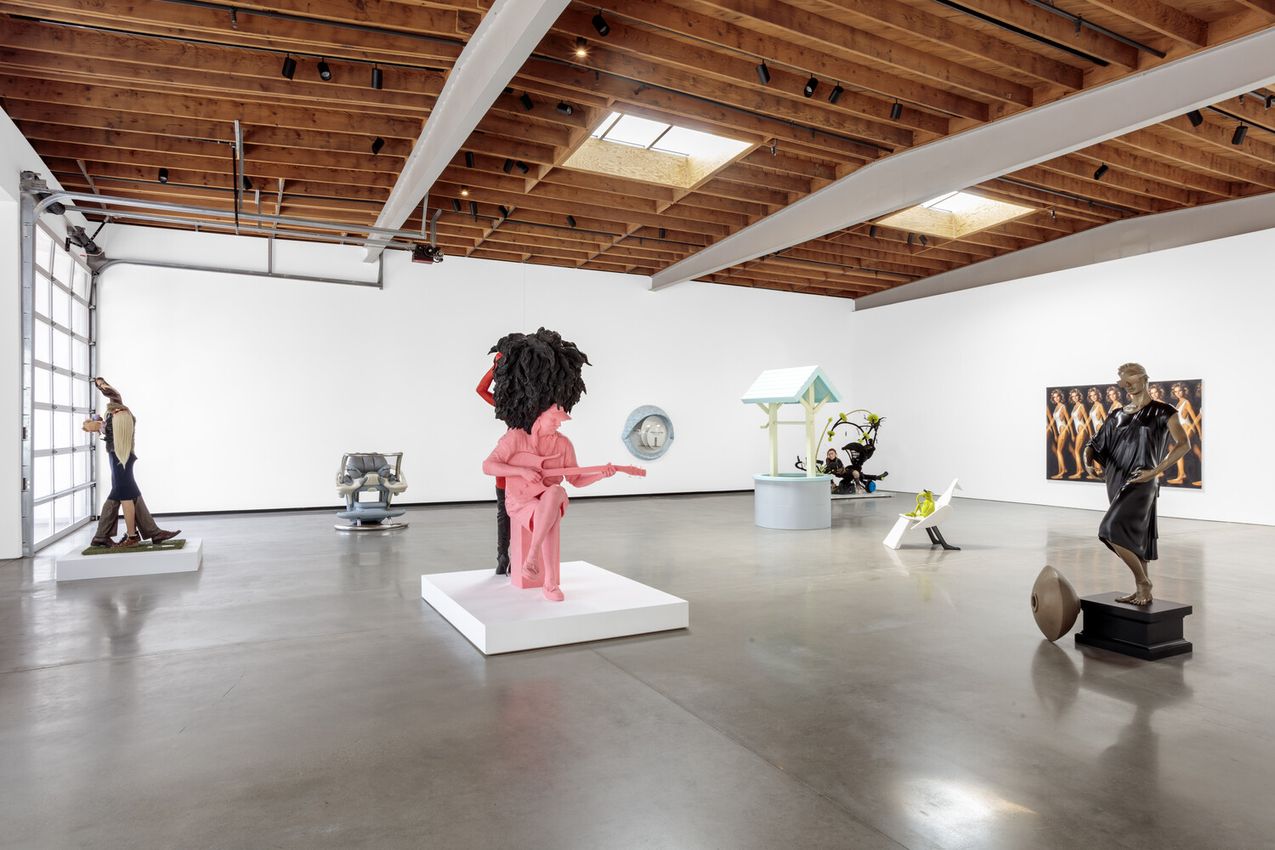
Gallery owner Jeffrey Deitch, former director of MoCA Los Angeles, is no stranger to bold presentations, but the scale of the current reaction highlights a disconnect between the long-term nature of artistic recognition and the immediacy of social media. The market value of Kiki Smith’s works—which generally ranges from tens to hundreds of thousands of dollars on the primary and secondary markets—reflects a level of institutionalization that the rhetoric of the “war on beauty” attempts to portray as a conspiracy by the elites against popular common sense.

The Economy of Outrage
Some observers, such as author and critic Ben Davis, view this controversy as a carefully orchestrated display of moral panic. In an essay published in mid-November 2026, Davis questions the sincerity of this aesthetic crisis. He identifies a “ragebait” strategy—a technique that involves stirring up mass outrage to capture algorithmic attention and convert it into media or economic influence. The controversy is not merely ideological; it serves as a growth engine for alternative platforms.
The ecosystem surrounding Julia James Davis illustrates this hybridization of activism and commerce. With an audience of approximately 188,000 followers on Instagram and nearly 129,000 on YouTube as of November 2026, the movement wields considerable influence. This visibility is monetized through a paid-subscription Substack page and an online store offering items, jewelry, and merchandise centered on traditional craftsmanship and religious themes. Criticism of the art establishment thus becomes a draw for a niche market oriented toward conservative values.
A Polarization with Familiar Echoes
The harshness of the language used—“artistic terrorism,” calls for FBI intervention—evokes the darkest hours of American cultural debates, notably the Jesse Helms affair and the budget cuts to the National Endowment for the Arts (NEA). However, the situation has changed: whereas the attacks of the 1980s originated in legislative circles, those of 2026 emerge from influencers capable of bypassing traditional critics to address directly a community united by a shared aversion to modernity.
While the notion of an institutional conspiracy against beauty remains a militant theory without proven sociological grounding, it nonetheless remains a powerful political tool. By shifting the focus of artistic analysis toward the realms of mental health or national security, critics of contemporary art seek to delegitimize not only the artwork itself but also the very right to existence of forms of expression that fall outside classical canons. The “war on beauty”—whether real or staged—now serves as a mirror reflecting a society incapable of finding common ground on what constitutes meaning, or simply on what constitutes art.