Make Texture a preferred source on Google to support us
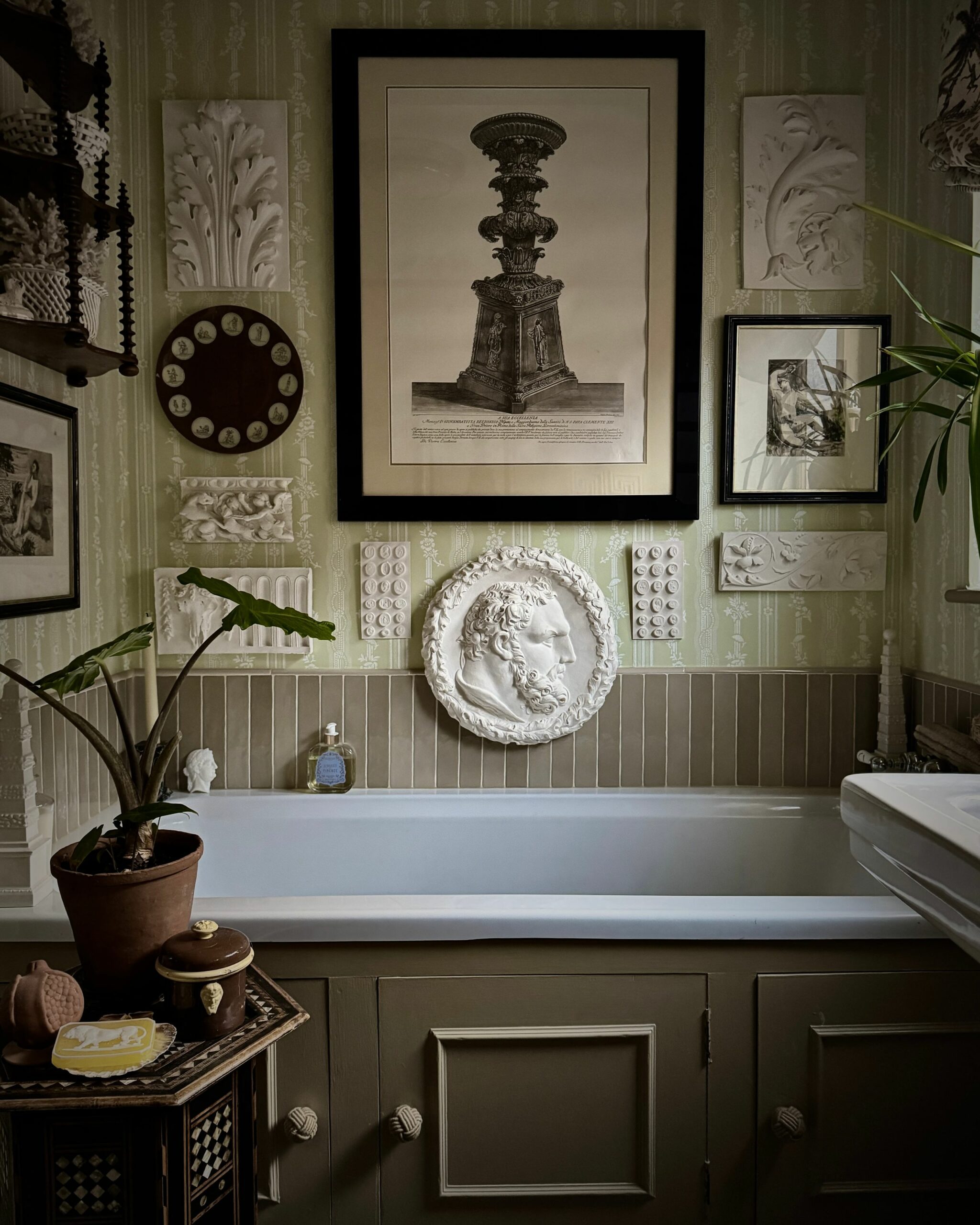
Add Texture to GoogleA profile cast in plaster, a line of shoulders carved from stone or marble. In contemporary interiors, classical statuary is making an unexpected comeback, asserting itself amid clean lines and cutting-edge design. This aesthetic resurgence, which puts the ancient bust back at the center of decorative discourse, owes its origins in large part to the screen. The feature film *The Odyssey* was enough to rekindle the imagination of a generation of viewers, transforming a museum curiosity into an object of desire. In Amsterdam, a city historically linked to the art trade and the circulation of precious goods, dealers are observing this shift very closely. Behind this decorative detail lies a much broader movement: the antiques market is changing, driven by a new generation of buyers for whom an object’s history now takes precedence over its mass production.
The patina of time as a new standard
For a long time, century-old furniture suffered from a stagnant image, associated with dark and cluttered interiors. Today, the trend is reversing. Young buyers are stepping into antique shops with two key goals in mind: to create a strictly personal living space and to reject the cycle of disposable furniture consumption. Aesthetics are no longer the sole driver of purchases; environmental awareness and a desire for sustainability dictate their choices.
Harald and Mirjam van de Goot have a front-row seat to this paradigm shift. The couple has transformed their passion for antiques into a large-scale project called Prinsheerlijk. Their gallery does more than simply display pieces of furniture; it makes the most of a spectacular setting—a former cookie factory whose industrial spaces create a striking contrast with objects that have weathered more than a century of history. It is precisely in this atmosphere that the couple welcomes this new clientele. Buyers who venture into this repurposed factory aren’t looking to recreate a period living room. They’re on the hunt for that standout piece, that heavy piece of furniture, or that ornamental detail—like the famous busts—that will shake up a modern apartment. Antiques become an act of material and ethical self-expression.
The geography of antique hunting: from Hungary to the canals of the Jordaan
Meeting this thirst for authenticity demands rigorous logistics and a constantly watchful eye from dealers. A rare object does not reveal itself; one must go out and extract it from its original context. The Jordaan neighborhood, with its narrow alleys and its working-class history transformed into the epicenter of Amsterdam’s creative scene, is home to some of these tireless curators.
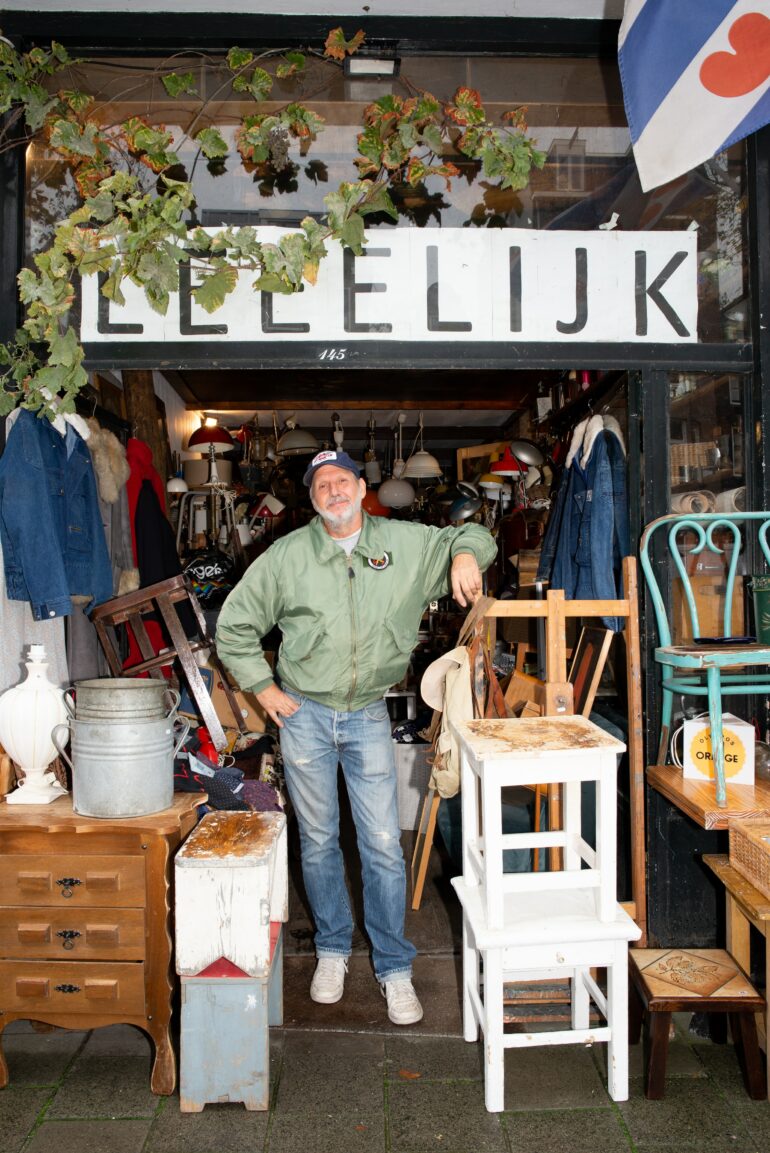
Ari Hoekstra, who runs the Leeelijk and Leeelijker shops, embodies this hands-on approach to the trade. The spaces he manages in the Jordaan function as dense cabinets of curiosities, where antique tableware, solid pieces of furniture, and a bold selection of decorative oddities clash. To maintain this abundance, his hunting grounds extend far beyond the borders of the Netherlands. His sourcing route takes him all over Central Europe, with regular trips to Hungary, to bring back items not found in traditional Western European markets. This approach highlights the raw reality of the contemporary antique dealer’s trade: thousands of kilometers traveled, negotiations in barns or remote markets, all to find the one object that will transform the atmosphere of a room.
Conveying the Intangible: The Voice of Materials
While form catches the eye, it is often the story behind an object that sparks the purchase. Specialists who focus on a specific segment of the market play a crucial role as historians and conduits. At Amsterdam’s Antiekcentrum, a vast hub where dealers and browsers converge, Frida van Boxtel has made antique textiles her signature. Far from imposing furniture, she works with the fragility of threads and weaves. Her pieces—which she meticulously sources as far afield as Paris—attract a younger generation fascinated by the complexity of traditional textile craftsmanship. This renewed interest in antique fabrics—whether delicate embroidery or heavy weaves—proves that the younger generation is capable of appreciating rare finds, which require a trained eye and an appreciation for the slow pace of craftsmanship.

This same desire to tell the story of the material drives Lisa Werkman at her shop, De Colibri. Her area of expertise covers 20th-century ceramics and glass. Unlike wood or bronze, glass possesses a transparency that captures light and immediately reveals the era in which it was made through its reflections, bubbles, or imperfections. Ceramics, through their glazes and forms, document the successive artistic movements of a turbulent century. For Lisa Werkman, the act of selling is inseparable from the act of sharing a story. A vase or a bowl never leaves De Colibri without the new owner being told about the context of its creation, the technique used, or the history of the manufacturer. The customer no longer buys just a decorative object; they become the custodian of a fragment of cultural history.
Training the Eye and the Hand
The current craze for pieces from the past inevitably raises the question of method. Faced with an art and antiques market where the selection can be overwhelming, even the most enthusiastic collector must develop their own criteria for evaluation. Acquiring an antique is not a purely virtual transaction: it requires a physical presence.
The best way to learn is to regularly explore markets and fairs. It is through repetition—by exposing one’s eyes to a multitude of items—that the connoisseur refines their perceptions. A tactile examination is non-negotiable. Lifting a ceramic piece to gauge its weight, running a hand over the back of a piece of furniture to check its construction, inspecting the evenness of a stitch on an antique textile: these gestures reveal the quality of craftsmanship and help identify any clumsy restorations or counterfeits. Age leaves logical traces—asymmetrical wear, a patina in areas of regular friction—that modern industry struggles to reproduce convincingly.
Beyond technique and authentication, the Amsterdam market reminds us of a fundamental rule: the value of a piece lies in the emotion it evokes. An object’s market value, its era, or its signature should never overshadow the pure pleasure of contemplating it. The final choice—whether it’s a theatrical bust glimpsed on the big screen or a modest piece of blown glass from the last century—is validated first and foremost by the instinct and personal taste of the person who chooses to live with it.