Make Texture a preferred source on Google to support us
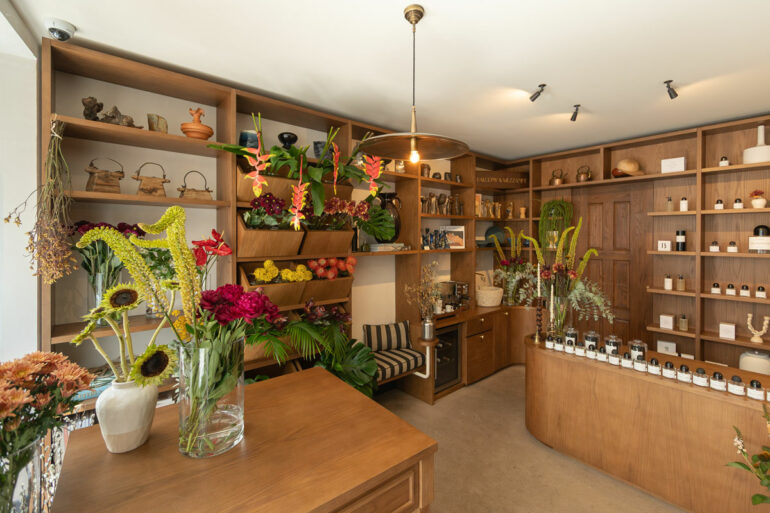
Add Texture to GoogleStepping through the door of the establishment on Rua de Cedofeita is nothing like a formal arrival at one of those standardized luxury hotels that are popping up all over European cities. Here, the welcome is an olfactory and visual experience that begins with the scent of damp earth and freshly cut petals. Before it’s a place to drop off your luggage, Casa Cedo presents itself as a flower shop with a discreet, almost shy facade, where striking anthuriums, lush hydrangeas, and vibrant carnations intermingle. It is only by stepping past the botanical displays, amid the bottles from the Swedish perfume house Byredo—for which the space serves as an ambassador—that visitors discover the dark blue door opening onto another dimension. This journey through plants and fragrance is not merely a decorative device; it is a deliberate transition, a decompression chamber designed to let the hustle and bustle of Porto fade away, giving way to immediate serenity. With a glass of Portuguese wine in hand, guests feel their shoulders relax within the first few minutes, immersed in an atmosphere that Jeremiah Healy, the venue’s co-owner, intended to be soothing from the moment one steps off the sidewalk.
The Reinvention of a Bourgeois Legacy
The project was born from the vision of an Irish-Italian couple, Jeremiah Healy and Massimiliano Salé, whose passion for botany and design permeates every corner of this 19th-century mansion. The restoration of this mansion, located just a stone’s throw from the creative Miguel Bombarda neighborhood, was carried out with a rare level of dedication: to preserve the original character entirely while infusing it with an organic modernity. The interior architecture plays with space and light, particularly through a skylight that floods the heart of the building. Visitors will discover precious historical details, such as traditional azulejos adorned with pineapple motifs—silent witnesses to the historical ties between the founding family and Brazil. Rather than turning the house into a museum, the owners chose to create a dialogue between this heritage and discreet contemporary interventions. For example, the old ridge tiles salvaged during the renovation have found an unexpected new life: they now clad the lounge bar, creating a mineral and historic texture in this welcoming space. It is this respect for what “already exists” that gives the hotel its mere eight rooms and its character as an intimate and unique retreat.
A Manifesto of Local Craftsmanship
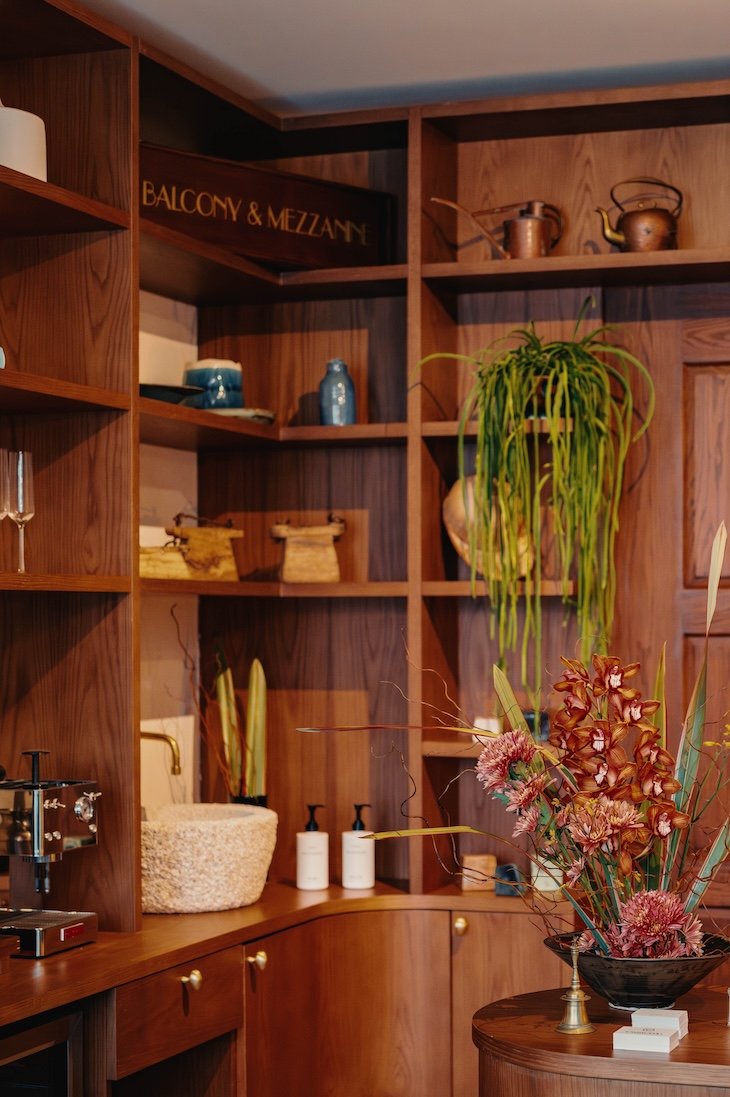
At Casa Cedo, luxury is defined not by ostentation, but by the traceability of every object. Massimiliano Salé emphasizes this commitment to celebrating the resources and talents of Portugal, a country he considers to possess an inexhaustible wealth of artisanal craftsmanship. To bring their vision to life, the duo has surrounded themselves with leading figures from the local scene. Interior designer Daniela Franceschini, of Quiet Studios, designed custom furniture, crafted by carpenters from the Porto region. The light fixtures, the centerpieces of the bedroom decor, are the work of local ceramicist Ayala Braidman. Even the solid oak bookshelves, which hold a selection of carefully chosen books, contribute to this aesthetic centered on raw, noble materials. Salé’s own ceramic creations are also scattered throughout the house as personal touches. This attention to detail extends to the soundscape, with a playlist specifically designed to accompany the different moments of the day, reinforcing the idea of a total experience, conceived by humans for humans.
From the greenhouse to the garden: a table for sharing
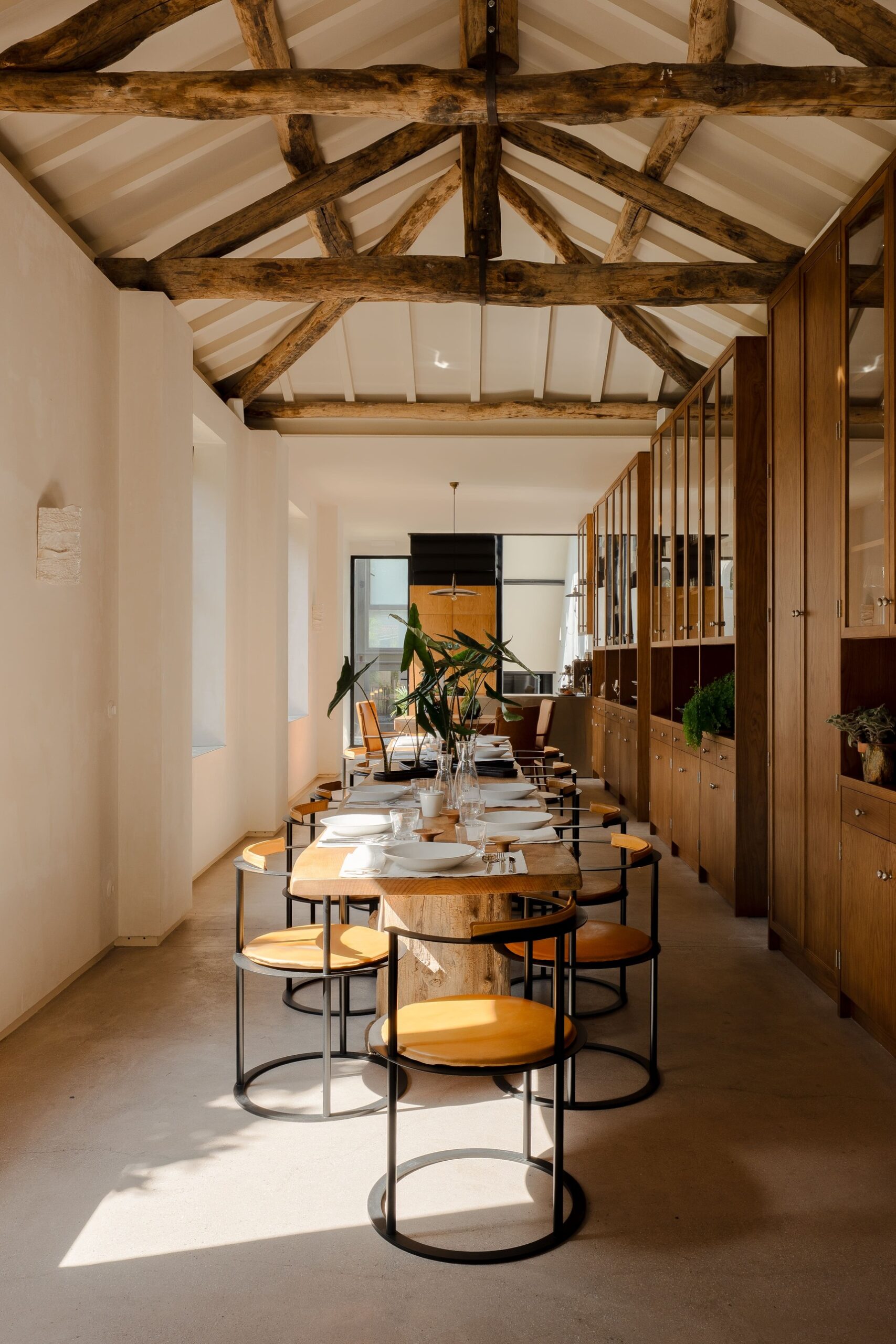
The ground-floor extension into the garden is perhaps where the soul of the establishment expresses itself most freely. A former outbuilding has been connected to the main structure to become a spectacular dining room, where the original wooden beams support a glass structure. This space, bathed in soft, warm light, hosts the breakfast ritual every morning. The scent of bread—kneaded and baked on site—replaces that of the flowers in the boutique. Around a single table set for fifteen, conversations linger, breaking down the usual barriers between travelers. In the evening, the kitchen becomes a hub for encounters: the hotel regularly invites chefs—both local and international—to host pop-up dinners. The idea is to build a bridge between foreign residents and Porto’s creative community. For the owners, it’s not just about providing lodging, but about cultivating an ecosystem where the city’s entrepreneurial and artistic spirit can flourish amid the ferns and olive trees of the lush garden.

Selected Walks in Porto from Casa Cedo
Staying at Casa Cedo also means embracing a certain way of exploring the city, off the beaten path. The Cedofeita neighborhood, with its independent shops and creative energy, offers the perfect playground for those seeking the authenticity of a Porto on the move. Its proximity to art galleries and concept stores allows for an immediate immersion in the local cultural scene. To extend the sensory experience that began in the flower shop, a few must-visit spots allow you to capture the spirit of Porto, blending classical heritage with contemporary vibrancy.
Just a few minutes’ walk away, Livraria Lello remains a must-visit, not only for its flamboyant neo-Gothic decor but especially for its new wing designed by Álvaro Siza. The Pritzker Prize-winning architect has designed a space dedicated to books on design and architecture that harmonizes perfectly with the building’s history. For those seeking a more contemplative break, the Rota do Chá offers a secret garden where time seems to stand still—a welcome respite of silence amid the urban hustle and bustle. It is this same balance between tradition and renewal that can be found at the Mercado do Bolhão. After four years of renovations, this historic market has regained its splendor, now blending stalls of traditional fresh produce with brilliantly restored architecture, symbolizing Porto’s rebirth.
The cultural journey continues at Ó! Galeria, an independent space that, since 2009, has been showcasing the best in contemporary illustration and graphic design, often offering workshops for the curious. At the end of the day, the quest for something unique naturally leads to Capela Incomum. This wine bar, housed in a former 19th-century chapel, lets you savor regional wines in a setting where the altar still serves as a backdrop, offering one of the city’s most intimate experiences. Finally, for a dinner that extends the hotel’s refined aesthetic, the Flow restaurant is a must, especially if you manage to reserve a table in its inner courtyard—a space filled with light and design that echoes Casa Cedo’s philosophy: to transform every moment into a powerful visual and emotional memory.