Make Texture a preferred source on Google to support us
Add Texture to GoogleOrdering a piece of antique furniture online is often a gamble. Grasping the exact shade of full-grain leather, appreciating the curve of a metal base, or anticipating the visual impact of bouclé fabric on a complex piece becomes an abstract exercise when you’re separated from the object by a screen. In the high-end furniture sector, where the physical quality of materials justifies the investment, digital representations can no longer afford to be approximate. It is precisely in this realm of visual precision and behind-the-scenes engineering that the MillerKnoll Group has just undergone a discreet yet massive transformation. Leveraging 3D Cloud technology, the American company is redefining how its classic designs are configured online, consigning the era of isolated developments and disparate interfaces to the past.
Standardization in the Service of Customization
A casual observer browsing Knoll’s website today will notice new three-dimensional configurators that are fluid and responsive. Yet the true revolution lies not in the customer interface—as polished as it may be—but in the very foundations of the digital infrastructure. The challenge for the furniture giant is no longer simply to offer a nice 360-degree rotation of a designer chair. It’s about an industrial restructuring of its visual assets.
Until recently, luxury e-commerce suffered from a chronic problem: fragmentation. Each brand within the same group—or even each distribution platform—developed its own visualization tools. The result was exponential maintenance costs, prolonged time-to-market, and, worse still, visual inconsistencies. An armchair might appear to have a slightly different velvet finish depending on whether it was viewed on the parent brand’s website or that of an affiliated retailer. MillerKnoll cut the Gordian knot by adopting a simple principle well known to software architects: create the resource once and distribute it everywhere. This centralized library now powers all of the group’s digital touchpoints, ensuring absolute consistency in rendering, regardless of the entry point chosen by the buyer.
The Weight of Modernist Heritage on Screen
To launch this shared infrastructure, the selection of models was not random. The historic pillars of the catalog were the first to undergo this centralized digitization. Buyers can now virtually interact with the famous Barcelona chair, adjust the specifications of the dining table designed by Eero Saarinen, or explore the upholstery options for the Womb chair. These are pieces whose visual identity is so deeply rooted in the collective imagination that they tolerate no geometric or textural approximation.
The impact of this new architecture lies in its ability to be deployed simultaneously. These brand-new 3D assets are featured not only on Knoll’s official website but also on that of Design Within Reach (DWR), another flagship brand in the MillerKnoll portfolio. When a new finish option is added to the physical catalog—a new marble for a tabletop, a specific treatment for steel—the update is made at the source, in the central library. Materials, color shades, and complex configuration rules are instantly reflected across all platforms without requiring the involvement of multiple web teams working in silos.

The Systematic Use of the Digital Twin
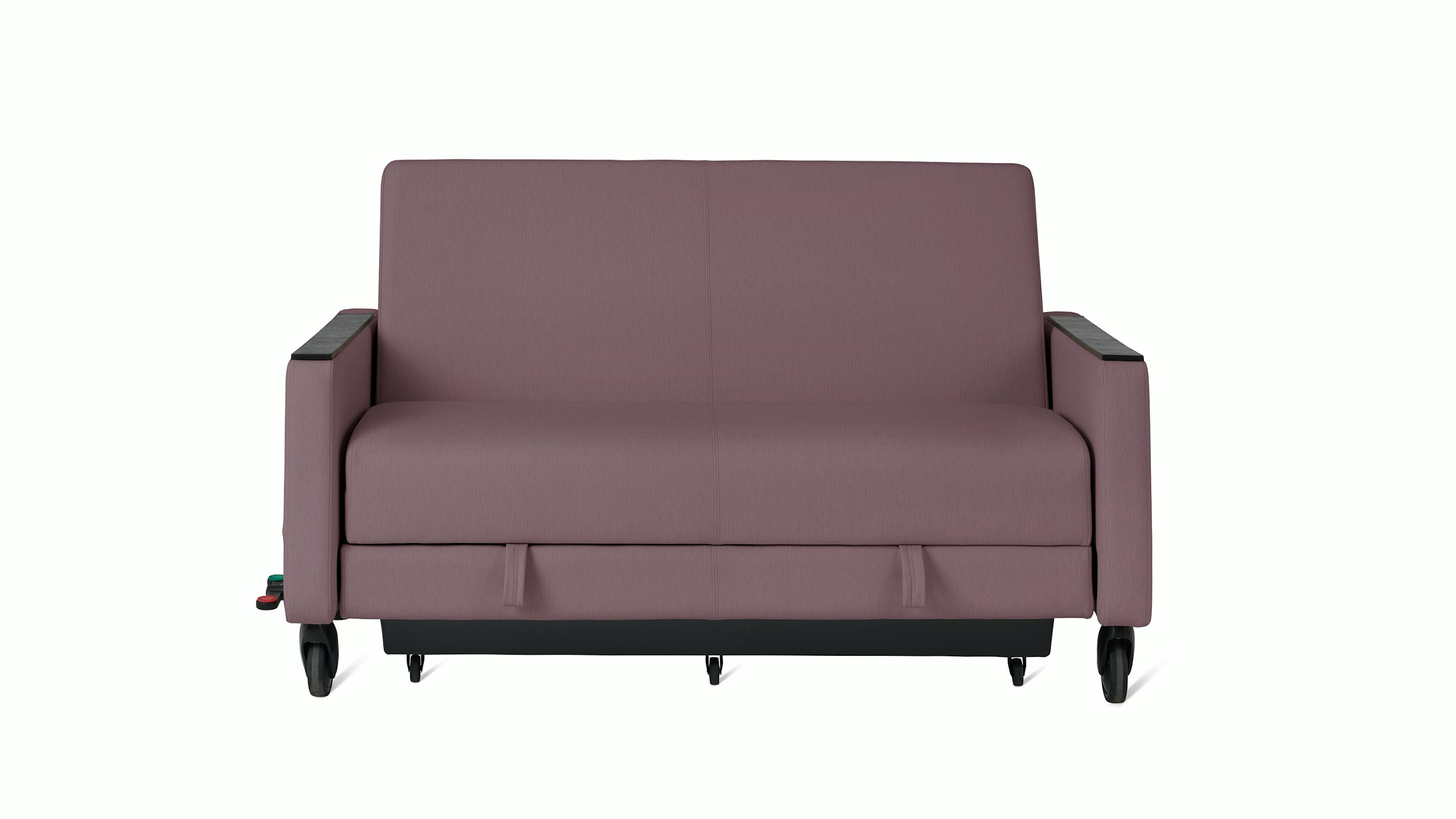
This systemic approach is not a first attempt. 3D Cloud has already been evolving for some time within the American group’s ecosystem. The technology had already proven itself in configurators developed for Herman Miller, for the North American retail and contract sectors (the design of professional spaces), as well as for MillerKnoll’s healthcare division, Geiger. The current rollout across Knoll’s collections is therefore simply the culmination of a learning curve that began several years ago.
Lorna Jean Marcuzzo, who oversees 3D visualization and content at MillerKnoll, sees this method as a major strategic lever. Centralization frees up resources to accelerate the release of new features related to the shopping experience. Above all, it allows the company to fully capitalize on the investment involved in creating a “digital twin.” Perfectly modeling an Eero Saarinen design requires hundreds of hours of work, from the object’s topology to the way light reflects off a chrome base. Reducing this twin to a mere presentation tool on a single web page would make no economic sense. By integrating it into a shared platform, MillerKnoll transforms a simple 3D file into a true specification and sales support tool, capable of informing both interior designers and private collectors.
The Demanding Reality of Data Governance
The theory of centralization is appealing for its elegance, but operational reality demands iron discipline. The promise of perfect fluidity—a seamless customer journey from one site to the next—rests on a fragile foundation: the intrinsic quality of the data. A coding error in a texture, an undetected incompatibility between two customization options—and the entire digital distribution network displays the error simultaneously.
The technology provided by 3D Cloud, as powerful as it may be, does not think for the brand. On the contrary, it requires flawless structuring of catalogs upstream. MillerKnoll had to build a team dedicated solely to managing this single database, tasked with verifying the compliance of every variant, every fabric, and every physical production rule before it is translated online. Technology acts here like photographic developer. It does not mask an organization’s weaknesses; it relentlessly brings them to light. By choosing the efficiency of a shared visual library, the group did not merely give its legendary furniture a new digital veneer; it has also undertaken a complete overhaul of its internal rigor, proving that in luxury e-commerce, form can no longer survive without absolute mastery of substance.