
Make Texture a preferred source on Google to support us
Add Texture to GoogleThirty-six months of production and jobs maintained in Italy: this is the condition that the Italian fashion industry proposes to link to a tax incentive for companies that invest in strategic segments of its supply chain. This detail speaks volumes about its priorities. Behind the powerful image of “Made in Italy” lies a production system whose continuity must be ensured. In the eleven proposals submitted to Giorgia Meloni in preparation for the 2027 budget bill, the Camera Nazionale della Moda Italiana (CNMI), chaired by Carlo Capasa, advocates for a long-term industrial vision. The goal is not merely to increase sales, but to preserve manufacturing capacity.
Retaining businesses, preserving expertise
The issue of ownership plays a telling role in this program. The CNMI is calling for a 30% tax credit for companies that acquire stakes in firms deemed strategic to the industry. This benefit would be contingent on maintaining production and employment levels in Italy for at least thirty-six months. Investment support would thus have an explicit territorial component: strengthening the productive fabric without separating capital from the activities it finances.
This approach extends to a request for tax adjustments for corporate reorganizations and intergenerational transfers. The organization aims to facilitate the continuity of family-owned businesses and maintain a national base for their shareholder structure. No specific rates or amounts are specified for this component. Its intent remains clear, however: to treat succession as an industrial issue, rather than merely a matter of wealth management.
However, businesses must still weather periods of low order volumes. For 2027 and 2028, the CNMI is requesting the option to extend existing wage compensation programs by up to six months. This would apply to companies whose revenue or orders have declined by at least 20% compared to the corresponding period of the previous year, due to temporary market difficulties. This criterion is important: the goal is to support companies through an economic downturn so that manufacturing skills are not lost along with business activity.
Startups also need infrastructure
Preserving expertise is not enough to ensure its transmission. The CNMI therefore proposes greater recognition of in-house training programs within companies. A specific registry of corporate training academies would be established within the Ministry of Enterprise and Made in Italy. This recognition would be accompanied by a tax credit equal to 30% of eligible expenses, capped at one million euros per company per fiscal year.
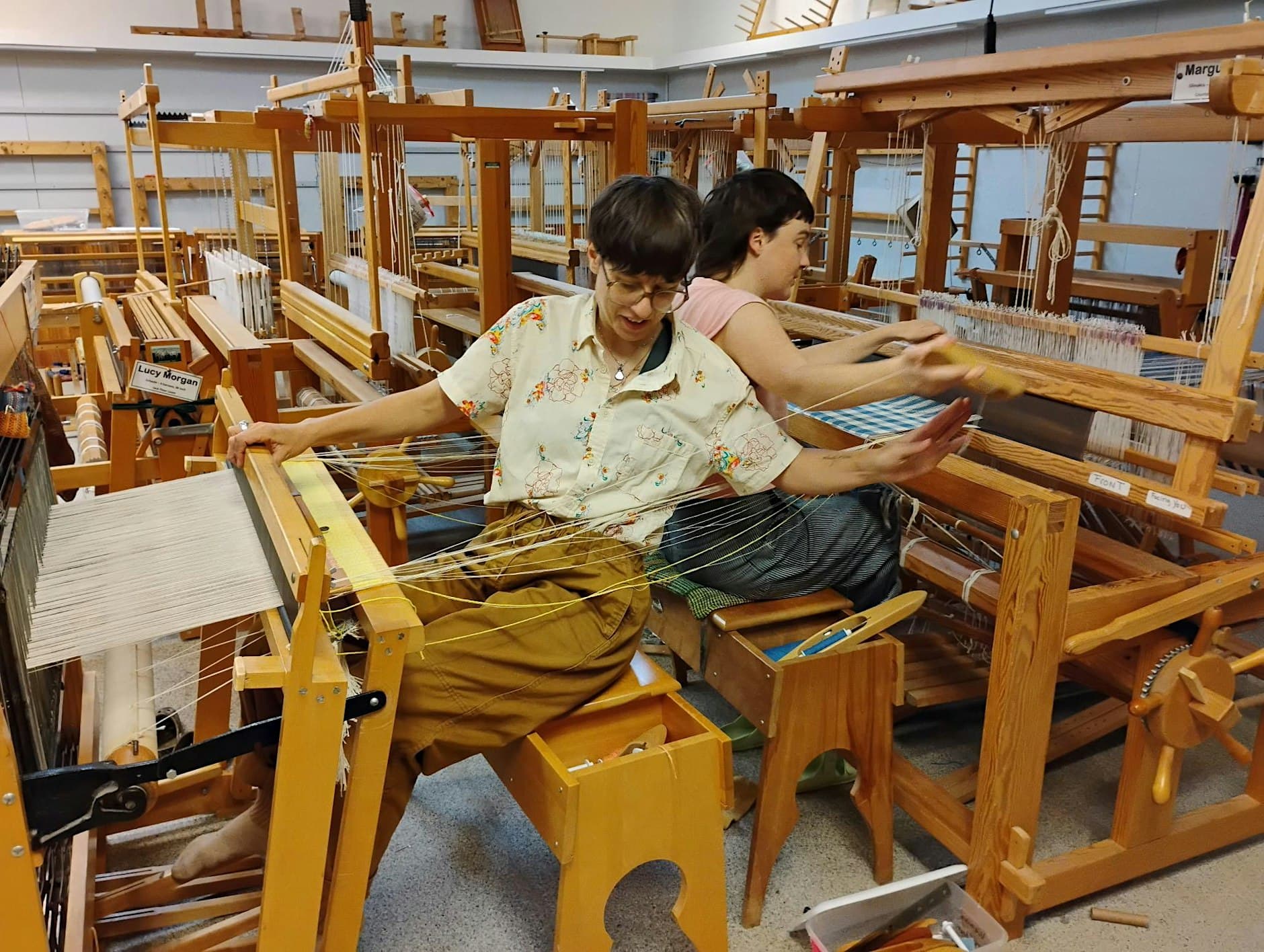
The proposal incorporates training into investment policy. It recognizes companies as places of learning, in addition to their production role. In the same vein, the organization is calling for the tax credit dedicated to design and aesthetic creation to be extended through 2030, at a rate of 10%. The requested funding amounts to 200 million euros per year. This would support creativity over a longer time horizon than that of the 2027 budget alone.
The tax proposal also includes a look back at the past: specifically, the tax credits for research and development earned between 2015 and 2019. The CNMI is calling for a modified regularization procedure, a reopening of the application deadlines, and a rebalancing mechanism for companies that have already repaid the full amounts. It asks that the interpretive framework on which companies relied at the time of their investments be taken into account. The issue at stake is tax predictability, which is essential for any long-term planning.
The United States: A Challenge to Address; Other Markets to Develop
Internationally, the program distinguishes between two urgent issues rather than conflating them. The first concerns the cost of U.S. tariffs. For the year 2027 alone, the CNMI proposes a one-time tax credit covering 50% of the additional costs directly attributable to these tariffs. It would be reserved for fashion companies generating at least 15% of their revenue in the United States. The mechanism would therefore target players with significant commercial exposure to this market.
The second approach involves encouraging diversification. Another tax credit, at a rate of 10%, would apply to increases in exports to Mercosur and Gulf Cooperation Council countries during 2027 and 2028. Its cap would be set at 300,000 euros per company per year. The proposed tax base is worth noting: it would reward growth in export sales, not their total volume.
These two instruments address different time frames. One would offset additional costs in an already significant market for the companies concerned; the other would support efforts to develop new commercial outlets. The CNMI therefore does not propose substituting one market for another, but rather combining targeted protection with market expansion.

Energy: Between Immediate Costs and Self-Sufficiency
In the energy sector, the distinction between emergency aid and investment is just as clear. The organization is calling for a 30% tax credit for purchases of electricity from renewable sources, provided that the average price of the energy component has increased by at least 20% compared to 2026. The support would be triggered by a measurable increase: it would not constitute a general and permanent reduction in the cost of electricity.
A second 30% tax credit would apply to investments in new renewable energy generation facilities and in storage systems intended for renewable energy communities in the fashion sector. Of the 70 million euros requested for 2027, 20 million would be allocated to cost relief and 50 million to these investments. This allocation places greater emphasis on building energy self-sufficiency than on simply offsetting utility bills.
Unsold Inventory: A Test of Brands’ Responsibility
Finally, the program addresses an issue that is less appealing than a new collection but crucial to its future: unsold merchandise. In light of new European regulations prohibiting the destruction of unsold merchandise, the CNMI is calling for a tax framework that makes its reuse more feasible. The ban sets a limit; but we still need to figure out what happens next.
First, securing documentation. For items sent as waste to a reuse preparation facility, a properly documented destination should allow for the tax presumption of disposal to be rebutted. Second, encourage donations of still-usable products to social economy organizations. Under the specified conditions, their normal value would be excluded from the calculation of taxable income. These requests aim to prevent tax treatment from hindering the second life of these goods.
The CNMI also hopes that contributions to extended producer responsibility systems will reward the use of sustainable renewable materials, particularly natural fibers that meet European environmental requirements. This preference would therefore remain tied to compliance with specific criteria, and not solely to the label of “natural.”
There remains a tension specific to brands: allowing the product to circulate while protecting their intellectual property rights. The organization proposes allowing the removal of identifying marks without compromising the product’s suitability for reuse. Among the trade-offs the Italian government is invited to consider, this one is particularly practical: removing the brand mark while preserving the product’s usability.