
Make Texture a preferred source on Google to support us
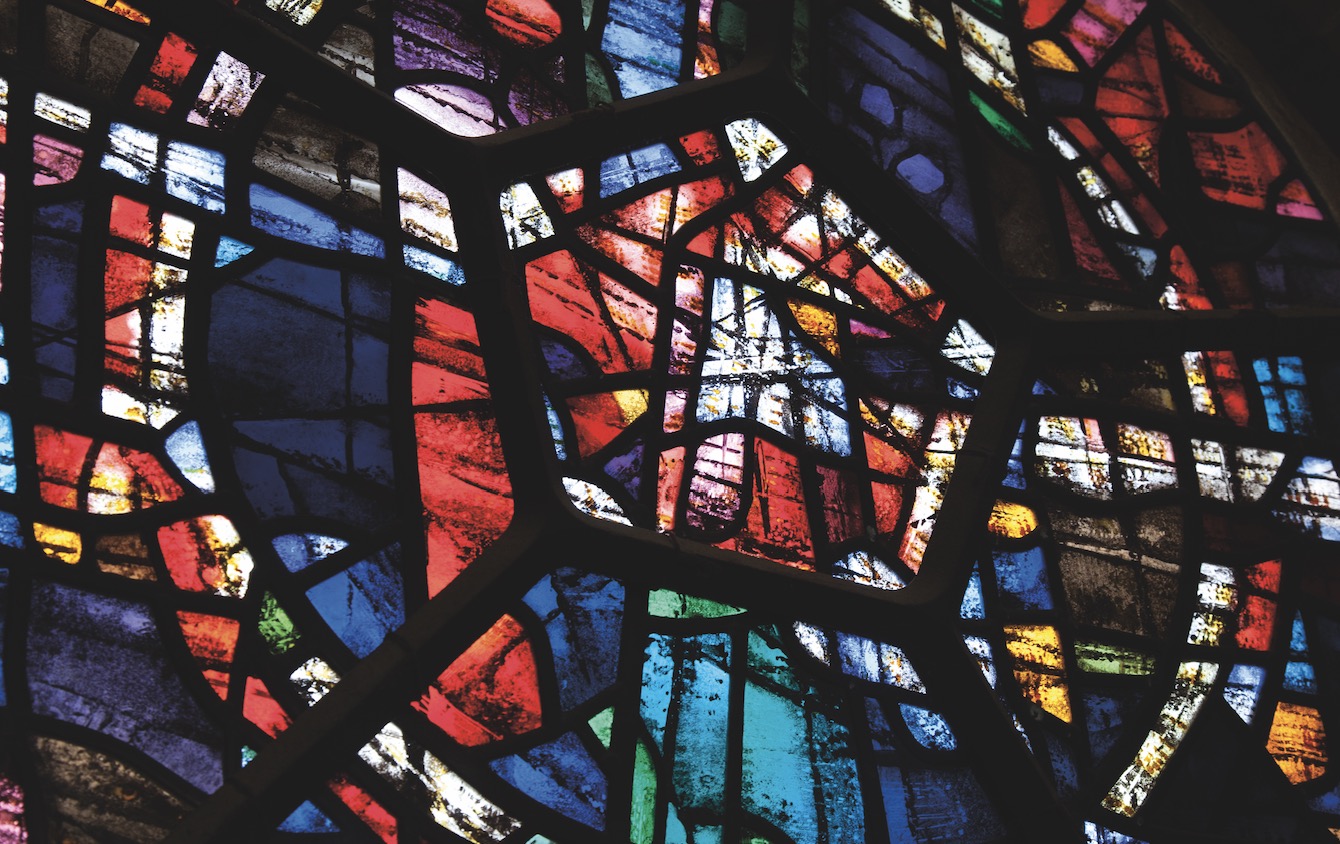
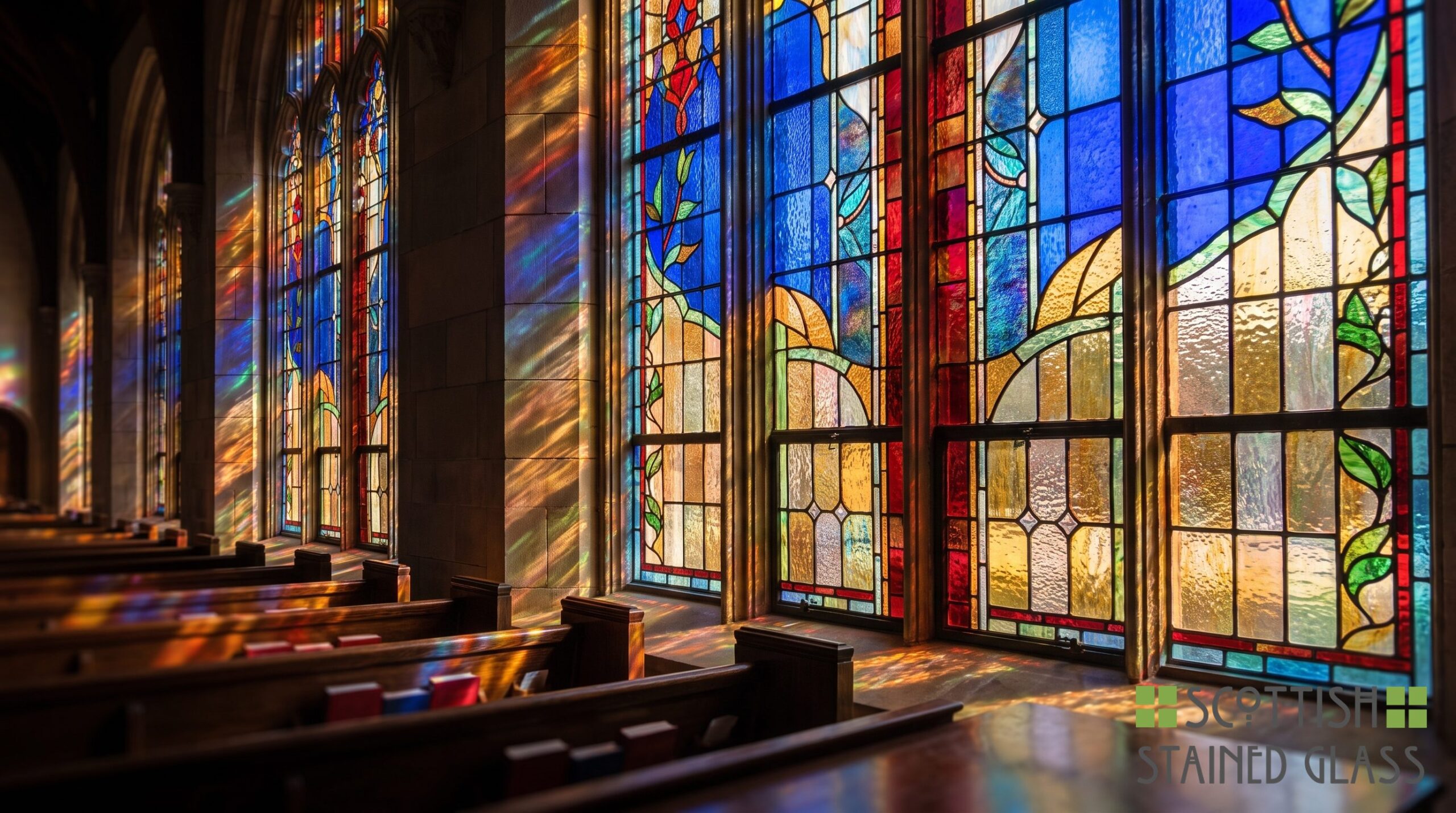
Add Texture to GoogleLong confined to the silence of church naves and the solemnity of religious buildings, stained glass is breaking free from the sacristy to enter the private sphere with unprecedented vigor. This resurgence, often referred to as “Cathedral Core,” reflects a major aesthetic shift: the pursuit of pure craftsmanship and a chromatic narrative capable of breaking the monotony of standardized interiors. Far removed from medieval hagiographic scenes, stained glass now takes the form of geometric lines and abstract compositions, transforming each window into a living filter where natural light becomes the primary decorative element.
The Secularization of a Millennia-Old Craft
Stained glass is no longer the exclusive domain of places of worship. While the earliest documented traces of polychrome glass date back to the year 686 A.D. at St. Paul’s Monastery in Jarrow, England, the technique is now undergoing a secular transformation. This movement, identified by the term “Cathedral Core” in the fall of 2026, is more of an aesthetic label than an academic classification in art history. It draws its strength from a desire to re-enchant domestic spaces by breaking free from industrial mass production.
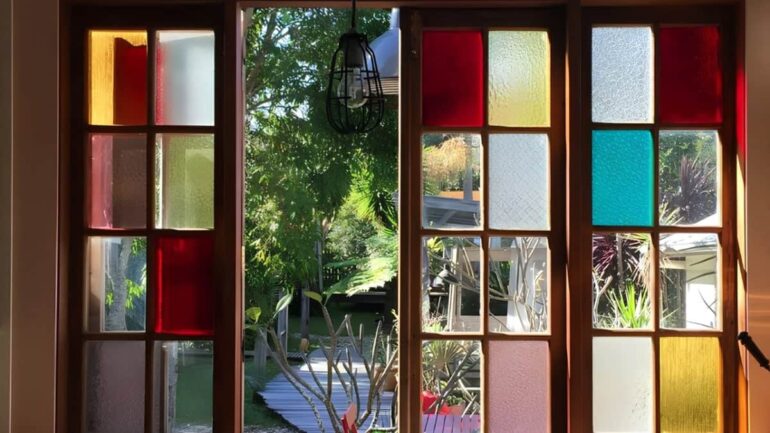
Contemporary designers are reinterpreting this legacy by emphasizing motifs drawn from the Bauhaus or the Arts and Crafts movement. Lead-lined grids, once merely structural supports for biblical narratives, now form minimalist checkerboard patterns and sleek geometric compositions. This shift toward residential use is not unprecedented; the 19th century had already seen stained glass make its way into the bourgeois homes of the Victorian era. Today, this trend is being reinvented to meet a need for uniqueness and visual warmth.
A New Architectural Language
The integration of stained glass into interior architecture is no longer limited to simple facade windows. Designers use it to structure space while playing with transparency. It can be found in transoms above doors, glass stairwells, and skylights that cast colorful halos that shift throughout the day. Openwork interior partitions made of textured or colored glass thus preserve a room’s privacy without sacrificing the flow of light.
The furniture itself embraces this design language. From the fronts of china cabinets to partition windows, glass becomes a narrative element. Rachel Bullock, co-founder of the LAUN studio in Los Angeles, recently incorporated custom stained-glass windows into seven of her projects, including her own home. This approach is part of a quest for absolute personalization, where each panel—whether made of blown glass, opalescent glass, or “cathedral” glass—becomes a one-of-a-kind piece. Sarah Giesenhagen, creative director at The Bureau, notes that this trend has become widespread: the use of colored or patterned glass is now a feature of nearly all of her residential projects.
Workshops at the Heart of the Renaissance
This boom is clearly reflected in the order books of glass artisans. In San Gabriel, California, the Tico Tech workshop, led by Rafael Calvo, exemplifies this shift toward the residential sector. In October 2026, the workshop received an order for 18 stained-glass windows—a project driven primarily by residential rather than religious projects. This momentum reflects a renewed interest in the artisan’s craft, which has the power to transform a simple opening into a timeless work of art.
Other artists are emerging with highly distinctive graphic styles. Leah Ring, through her studio Another Human, has made a lasting impression with her checkerboard-patterned stained-glass installations. For her part, artist Debbie Bean has specialized in custom geometric compositions, applying her art to both residential and commercial settings. Her work illustrates the fluidity across scales: from large-scale architectural stained-glass windows to small, portable objects.
The Accessibility of the Art of Light
While the Sainte-Chapelle in Paris, with its 1,113 panels depicting historical scenes, remains the ultimate heritage landmark, “Cathedral Core” aims to be more accessible, offering different levels of aesthetic and financial commitment. For those who do not wish to commit to permanent installations, hanging objects called “suncatchers” allow light to be captured and diffused at a lower cost. These handcrafted entry-level models, such as those offered by Debbie Bean, retail for around $100 (approximately 95 euros).
However, opting for custom-made fixed installations represents a significantly higher investment. Custom creations by glass artists generally start at around $2,500 (approximately 2,400 euros). The final cost of a complete window, however, remains variable and is not subject to a fixed price, as it depends on specific technical parameters: the total surface area, the rarity of the glass used, the complexity of the lead-sealing, and the specific constraints related to the installation engineering.
Whether it’s a discreet transom or a glass paste light fixture, the appeal of stained glass lies in its ability to bring a space to life. In October 2026, this trend confirms that contemporary luxury is no longer found solely in sleek perfection, but in the vibrant irregularity of handmade glass and in its almost mystical ability to add color to the passage of time on the walls of a home.