
Make Texture a preferred source on Google to support us
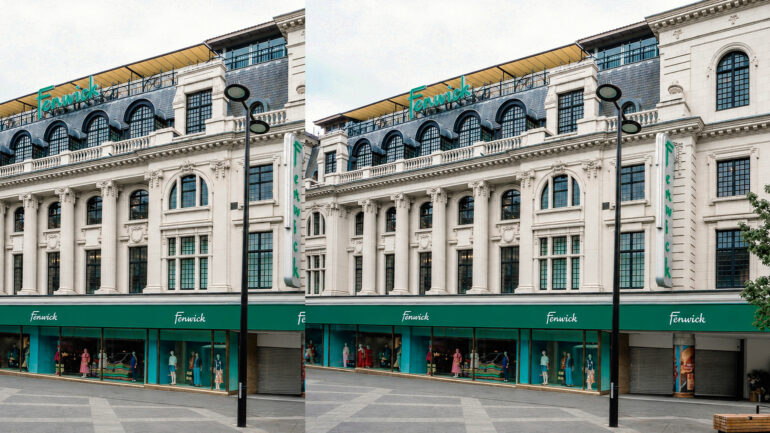
Add Texture to GoogleClosing stores to better defend its position in the luxury market: at Ferragamo, this strategy is taking concrete shape in China. The company plans to reduce its store network there next year—particularly in third-tier cities—while focusing on direct online sales. This decision sheds light on its results for the first nine months of 2026. Behind the decline in revenue lies a reorganization of its distribution strategy, with a clear preference for direct customer relationships. But simply choosing the right retail locations isn’t enough to revive demand. That’s the challenge at hand.
Distribution: The Top Priority
Perhaps the most revealing figure is not total sales, but their breakdown. As of the end of September, the direct-to-consumer (DTC) channel accounted for 79.5% of Ferragamo’s revenue. At 536.5 million euros, it rose by 1.9% at current exchange rates and by 4% at constant exchange rates. Over the first nine months, growth at constant exchange rates was seen across all geographic regions, with two exceptions: China and Japan.
This resilience contrasts with the decline in sales to third-party retailers. Wholesale sales fell by 15% over the period on a reported basis and by 13.4% excluding currency effects. The third quarter marked a sharp acceleration of this trend: the decline reached 24.2%, or 19.1% at constant exchange rates. Ferragamo attributes this contraction to a more selective approach to its distribution network and to the priority given to its strategic partners, in line with the brand’s desired positioning.
It is therefore important to distinguish between two phenomena, without artificially pitting them against each other. Part of the decline stems from a business decision: to consolidate sales channels rather than expand the number of retail locations. The other part is due to a sluggish market. The figures do not allow for a precise attribution of each factor’s share. They do, however, reveal the immediate cost of this transition: the direct channel is holding up, but its growth does not offset the contraction in wholesale.
A Stability That Cracks During the Summer
At the group level, the first nine months resulted in consolidated revenue of 675 million euros. The 2.8% decline at current exchange rates disappears when currency fluctuations are adjusted for: revenue is then stable compared to the same period in 2025. This interpretation paints a less bleak picture of the fiscal year, without obscuring the recent slowdown.
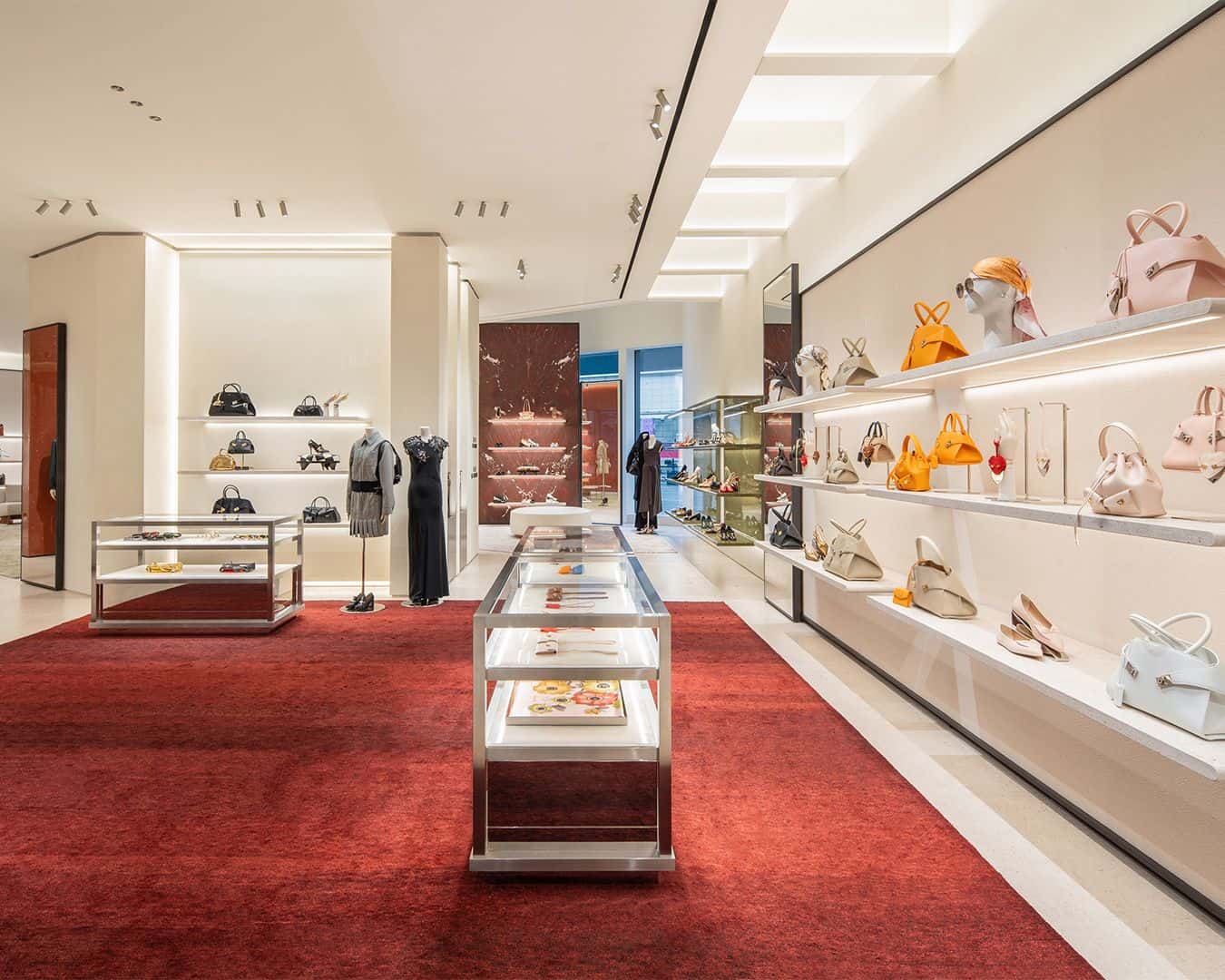
This is because the third quarter was less favorable. Sales totaled 207 million euros, down 6.2% on a reported basis and 3.5% on a constant-currency basis. Even the direct channel, which is still up 2.3% at current exchange rates, is no longer gaining ground when excluding currency effects. It remains supported by the main sales network, where full-price purchases are increasing.
This last figure is key to interpreting the results: commercial resilience relies in particular on sales without price reductions. However, it does not allow us to conclude that profitability has improved, as no indicators are provided here. Ferragamo describes a summer marked by weak demand, declining consumer confidence, and persistent geopolitical tensions. On the financial markets, the stock fell about 4% after an initial drop of nearly 3% in the morning.
The Americas Support Business; Europe Is Changing
North America remains the main source of support. Its nine-month revenue of 222 million euros exceeds the figures recorded in both the Asia-Pacific region and Europe. The region posted a 7.3% increase at current exchange rates, rising to 11.2% at constant exchange rates. The gap with other major markets is clear.
However, North American momentum lost steam in the third quarter: sales rose by 2.3% during that period, or 2.4% excluding currency fluctuations. The direct channel there remains strong. This market thus provides crucial support, but it is not immune to the slowdown observed over the summer.
Europe tells a different story. With 161.7 million euros over nine months, it declined by 8.6% on a reported basis and by 7.4% on a constant-currency basis. However, sales in the main retail network rose, while wholesale sales posted a double-digit decline. The regional total therefore masks contrasting trends across distribution channels. In the third quarter, European revenue fell further by 7.8%, or 5.2% excluding currency effects. In the direct channel alone, however, growth in Europe and North America offset the weakness in Asia.
Central and South America provided another source of growth, albeit a more modest one in terms of value. The region approached 60 million euros over the first nine months, with sales rising both through direct sales and third-party distributors. Growth reached 11.2% at current exchange rates and 4.8% at constant exchange rates. In the third quarter, the discrepancy became particularly pronounced: behind a reported increase of 10.1%, growth excluding currency effects was limited to 0.7%.


Footwear Holds Steady, Leather Goods Decline
A breakdown by product category offers a different perspective on this period. Footwear accounted for 297 million euros in revenue as of the end of September. It rose 1.3% at current exchange rates and 2.6% at constant exchange rates. In an otherwise declining market, this growth—even if modest—provides tangible support.
Leather goods are moving in the opposite direction. Sales in this category reached 270.2 million euros, down 5.8% on a reported basis and 3.5% excluding currency fluctuations. Given the size of this category, its weakness is particularly noticeable for the group. Footwear and leather goods remain, by far, the two largest categories among the product families detailed.
Smaller segments are performing better, though they cannot single-handedly alter the overall balance. Silk and other products totaled 50.8 million euros, representing an increase of 0.3% at current exchange rates and 3.9% at constant exchange rates. Ready-to-wear reached 41.8 million euros, rising by 2.6% and 5.1%, respectively. These results point to uneven resilience in the product mix rather than a uniform decline.
In China, no longer waiting for a rebound
That leaves the Asian market. The Asia-Pacific region posted 166.6 million euros over nine months, down 6.1% at current exchange rates and 5.3% at constant exchange rates. In the third quarter, the decline reached 11.1% excluding currency effects, weighed down by a double-digit contraction in the wholesale segment. Japan, reported separately, posted revenue of 50.4 million euros: its 12% decline on a reported basis narrows to 2.2% at constant exchange rates.
During the call with analysts, Ernesto Greco, a member of the board of directors, primarily questioned the assumption of a Chinese recovery in the second half of 2026. In his view, the expected signs are not materializing. A few players continue to grow for specific reasons, and differences in scope can skew comparisons.
Ferragamo therefore does not intend to simply wait it out. The announced store closures in China will primarily target third-tier cities, while Ernesto Greco expects strong results from direct-to-consumer e-commerce. For 2027, the plan is clear: reduce certain physical store locations and expand digital sales in a market where a recovery remains uncertain.