

Make Texture a preferred source on Google to support us
Add Texture to GoogleA three-point drop in promotional sales: at Mulberry, this modest figure deserves almost as much attention as Christopher Kane’s return to a London runway. The British fashion house is seeking to increase sales, but above all to reduce its reliance on discounts. This is where its turnaround hinges: regaining a customer base willing to pay the listed price, without making discounts the primary selling point. While the relaunch of the ready-to-wear line lends a creative dimension to this ambition, early sales indicators suggest the shift is underway. They do not yet allow us to say whether the company has regained profitability.
Full Price as a Test of Desirability
In Mulberry’s financial report, the decline in the share of promotional sales is a signal worth examining closely. Excluding markdowns, their share of total sales has declined by 300 basis points compared to the same period last fiscal year—a drop of three percentage points. The group presents this trend as supportive of its gross margin, the restoration of which remains a top priority.
The nuance matters. A rise in sales can be achieved at the cost of significant commercial concessions; it then tells a different story than that of growth driven by purchases at full price. Andrea Baldo, Mulberry’s CEO, specifically emphasizes the strength of full-price sales. He sees this as confirmation that the collections are resonating with customers in the brand’s key markets.
This observation gives concrete expression to the plan dubbed “Back to the Mulberry Spirit.” Behind this title, management describes a refocus on the product and the customer relationship, accompanied by rigorous cost management. The goal, therefore, is not merely to get the brand back on track. It is to make this growth economically more sustainable. With no margin data published at this stage, however, improvement remains a work in progress, not a guaranteed outcome.
Christopher Kane: A New Chapter Yet to Be Assessed
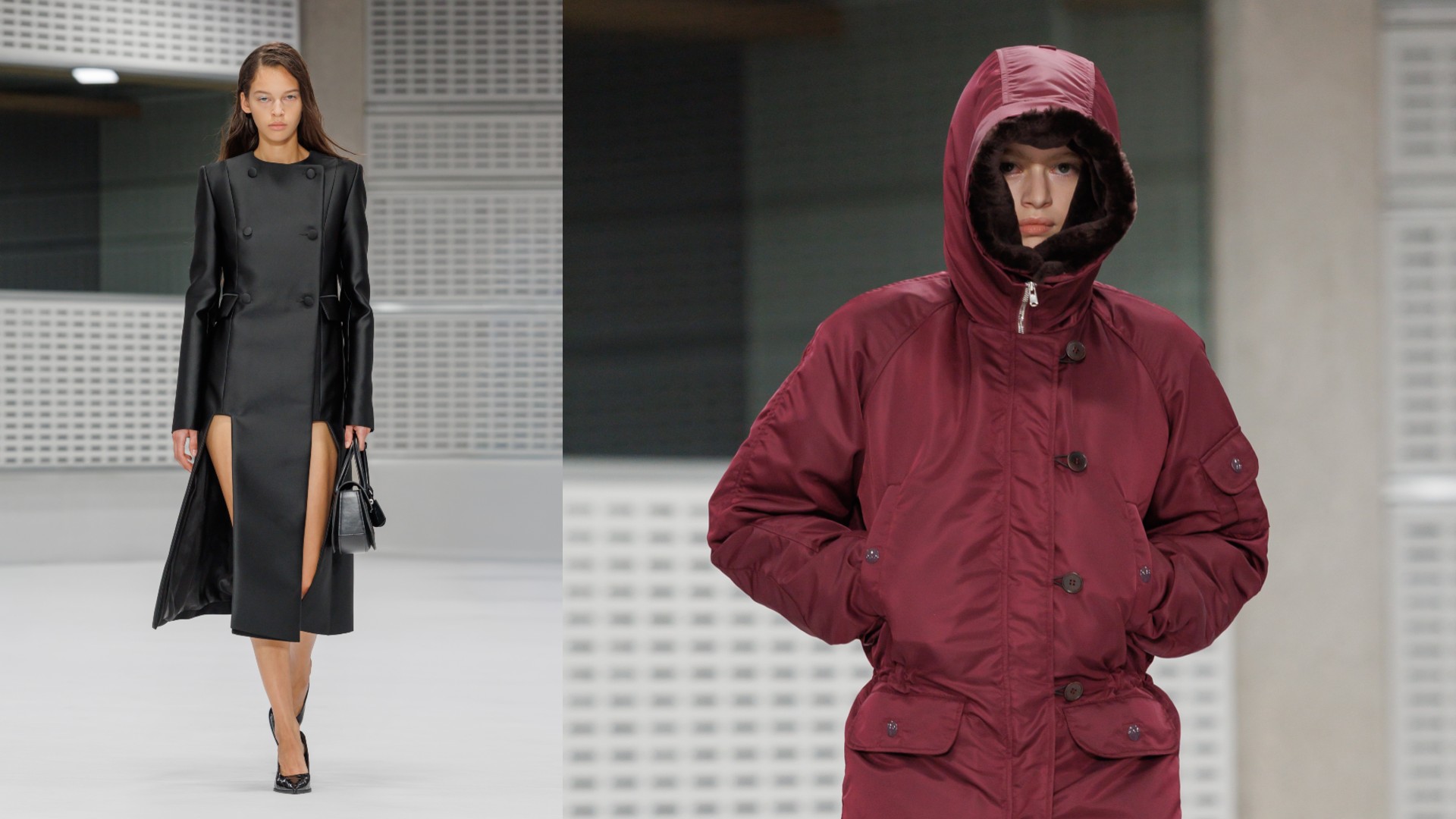
The relaunch of the ready-to-wear line is the most visible part of this strategy. Appointed creative director in March 2026 with this mission, Christopher Kane presented his first “Mulberry by Christopher Kane” collection in London in September. It is scheduled to go on sale in January 2027, both in stores and online. With several months passing between the presentation and the actual arrival of the pieces in customers’ hands, there is a gap between the creative promise and its commercial test.

This timeline precludes a tempting shortcut: attributing the already announced sales increase to the new ready-to-wear line. The relevant half-year ends on September 26, 2026, well before the collection goes on sale. The designer’s arrival is part of the same recovery momentum, but the available figures do not yet reflect sales of his garments. This distinction is essential for distinguishing between the ongoing recovery and the next phase.
For Mulberry, however, this collection opens up a new avenue for expression. Management states that it is entering the second half of the year with a robust upcoming lineup and a more desirable brand. Christopher Kane sets a specific date for this development. In January, the focus will no longer be solely on the reception of a London presentation, but on that of a collection available for purchase.
A Recovery That Extends Beyond the British Market
In the meantime, the sales rebound is already showing measurable momentum. For the first half of the fiscal year ended September 26, sales rose 18.1% at current exchange rates and 18.2% at constant exchange rates, in line with the board of directors’ expectations. The near-identical nature of the two rates shows that this increase is not primarily due to currency effects. All geographic regions are contributing to the growth, though at different rates.
The United States posted the strongest growth: 28%, and as much as 34% on a like-for-like basis. Mulberry attributes this performance to demand, digital expansion, and the expansion of its distribution through partners. The launch on Bloomingdale’s Marketplace is among the initiatives cited. The U.S. market is thus driven by several commercial factors, rather than a single growth channel.
In Europe excluding the United Kingdom, sales rose by 23%, with a 21% increase on a like-for-like basis. The UK market grew more modestly, by 10%, or 9% on a like-for-like basis. This contrast points to a recovery that is not based exclusively on the brand’s home country: international expansion is providing a significant portion of its momentum.

The Asia-Pacific region warrants closer examination. Total growth there reached 5%, while like-for-like growth climbed to 24%. These two metrics do not reflect the same reality and should not be confused. The data provided does not detail the reasons for this discrepancy; nevertheless, it reveals a significantly stronger momentum on a comparable basis than the overall figure alone suggests.
Trading partners are gaining ground
Distribution is another key component of the recovery. Combined, franchise and wholesale operations posted a 52% increase. They now account for 17% of the group’s sales, compared with 16% in the first half of the previous fiscal year. Their growth is strong, even though they remain a minority share of the total.
This trend mirrors the situation in the U.S., where the expansion of the partner network is contributing to results. It also shows that the recovery plan is not limited to the renewal of collections. Making these collections accessible to customers is part of the effort. However, no details on profitability by channel are provided: this sales acceleration alone does not allow us to conclude that there has been a corresponding improvement in profit.
The next verdict will come from the financial statements
The half-year is part of a recovery trend that has already begun. After a 4% decline in the first half of the previous fiscal year, Mulberry posted a 12.8% increase at current exchange rates in the second half, and a 13.6% increase at constant exchange rates. For the full FY26 fiscal year, ending March 28, 2026, revenue reached 125.5 million pounds, compared to 120.4 million in 2025, representing a 4% increase. The growth rate announced today therefore marks an acceleration.
The stock market welcomed these figures: the stock rose as much as 7.4% in early trading on the Monday following the announcement. However, this reaction is based on a business update, not a full set of half-year financial results. Mulberry has not disclosed the absolute revenue figure for the period, nor profit, nor margin. Andrea Baldo acknowledges that the plan still requires work, given the challenging business environment.
In the medium term, the group maintains its goal of exceeding 200 million pounds in annual revenue and achieving an adjusted operating margin of 15%, as measured by EBIT. The gap between this target and last fiscal year’s 125.5 million illustrates how far the group still has to go. Before the Christopher Kane collection goes on sale, there will be another key date to more accurately gauge the strength of the recovery: November 19, when the half-year results are scheduled to be released.