
Make Texture a preferred source on Google to support us
Add Texture to GoogleThe Paris Fashion Calendar for the 2025–2026 season kicked off amid an unusual atmosphere of strategic tension. One year after what industry observers have called the “great reset”—an unprecedented wave of appointments in creative leadership roles—it’s time for an initial assessment. In an economic climate marked by a slowdown in global spending—particularly evident in the Chinese market—and growing customer fatigue in the face of steadily rising prices, luxury houses are striving to strike a precarious balance. The challenge is no longer merely aesthetic: it is about reigniting the desirability of century-old brands by navigating the fine line between scrupulous respect for the archives and the need to break with the past in order to thrive tomorrow.
Chanel and the Era of Flexibility Under Matthieu Blazy
December 12, 2024, marked a historic turning point for the Rue Cambon house with the appointment of Matthieu Blazy as creative director. For the first time since Karl Lagerfeld’s arrival in 1983, Chanel recruited a creative director from outside its internal ranks to succeed Virginie Viard. This choice signaled a desire to renew the brand’s vocabulary while preserving its heritage.
After his first foray into ready-to-wear with the Spring/Summer 2026 collection—presented at the Grand Palais in a cosmic-themed production in October 2025—Matthieu Blazy further developed his vision with his second collection, “La Conversation – Part Three – Different Faces of the Same Coin,” unveiled in October 2026. His approach is distinguished by a clear desire to soften the rigid structures inherited from the brand’s history.
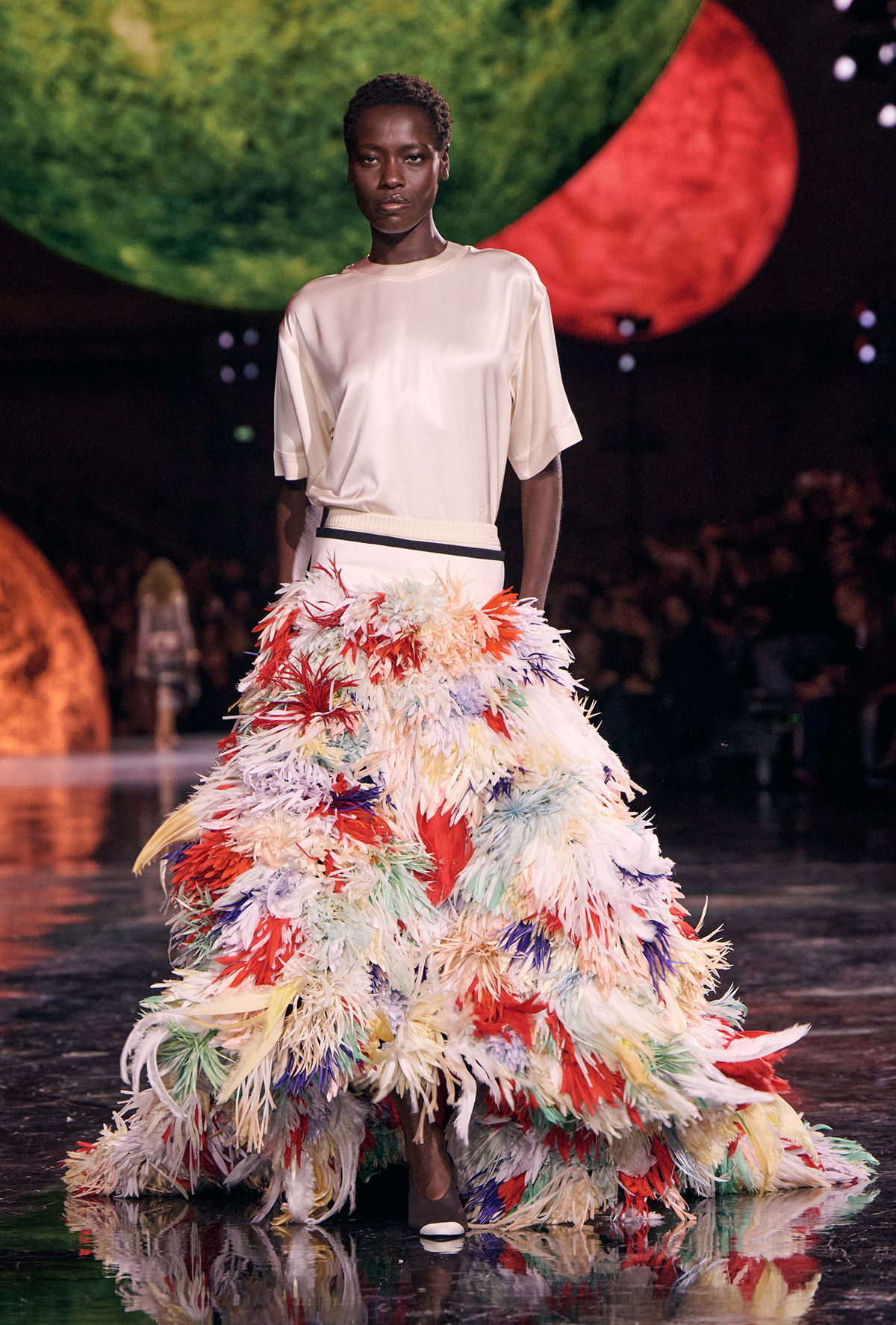
The designer is working on deconstructing the traditional suit. Tweed, a fabric inextricably linked to Chanel’s identity, is smocked; the cuts draw inspiration from a more relaxed menswear wardrobe, while the Edwardian corset—a cornerstone of the brand’s historic style—is radically streamlined to prioritize movement and everyday comfort. Blazy punctuates his silhouettes with direct yet reimagined references: the N° 5 perfume bottle becomes an accessory, and camellia motifs are enlarged or frayed. This approach is rooted in a philosophy championed by Gabrielle Chanel herself: the deliberate wear and tear of her suits, a sign that the garment lives alongside the woman who wears it.
This reinterpretation is accompanied by a strategy of occasional relocation. In December 2025, the house took over a decommissioned subway station in New York’s Bowery neighborhood for its Métiers d’Art fashion show, transplanting Parisian artisanal craftsmanship into a raw and unexpected urban setting.
Jonathan Anderson’s Creative Centralization at Dior
At Christian Dior, the heritage management strategy took on an unprecedented organizational form in June 2025. Under the leadership of Delphine and Bernard Arnault, Jonathan Anderson was appointed creative director of all divisions: women’s, men’s, and haute couture. This marks the first time a single designer has held such authority over all of the house’s collections since the founder himself.
This comprehensive mandate follows a period of divided leadership, previously held by Maria Grazia Chiuri and Kim Jones. This structural change allows for a more coherent interpretation of the archives preserved by Dior Heritage. Anderson has delved into the brand’s foundational silhouettes to extract a technical modernity from them. His work centers on signature pieces such as the Bar jacket—a cornerstone of the 1947 New Look—and the 1949 Junon dress.

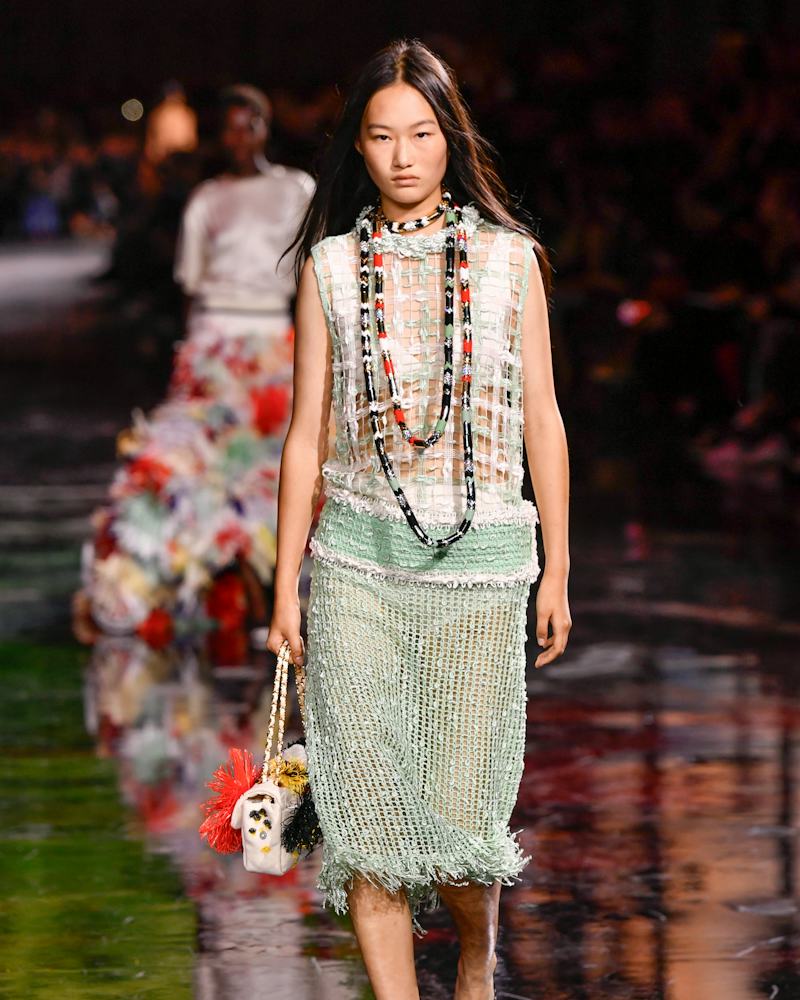
The influence of the archives is also evident in the accessories, such as the Dior Cigale bag, directly inspired by the sculptural structure of the 1952 La Cigale dress. This exploration of the brand’s heritage extends beyond the walls of the Parisian ateliers. The house has already announced that it will present its upcoming Fall-Winter 2027 collection in Dublin on December 4, 2026, in the stately setting of Trinity College’s Old Library. This choice of venue underscores the ambition to juxtapose the history of French haute couture with other cultural and architectural narratives.
Saint Laurent: The End of a Decade-Long Cycle
While some fashion houses are embarking on a new chapter, Saint Laurent is bringing an era of remarkable stability to a close. On October 8, 2026, the Kering Group and Saint Laurent officially announced the departure of Anthony Vaccarello, who had served as creative director since 2016. Over the course of ten years, the designer established an aesthetic centered on clean lines and black, deeply rooted in Parisian nightlife and style.
His final runway show, the Spring/Summer 2027 collection, took place on September 29, 2026, beneath the monumental chandeliers of the Trocadéro Esplanade. For this final show, Vaccarello set aside his signature black in favor of a palette entirely centered on shades of gold. This show served as a synthesis of his work on the brand’s fundamentals, reinterpreting the codes of the Left Bank one last time before the start of a new chapter for the house.
The 2025–2026 period thus confirms a fundamental shift in the industry: the transition from image-driven fashion to fashion rooted in structure and heritage. Whether through the centralization of power at Dior or stylistic flexibility at Chanel, fashion houses are seeking to justify their luxury status through technical mastery of their own history, while striving to attract an international clientele whose priorities and spending power are undergoing rapid change.