
Make Texture a preferred source on Google to support us
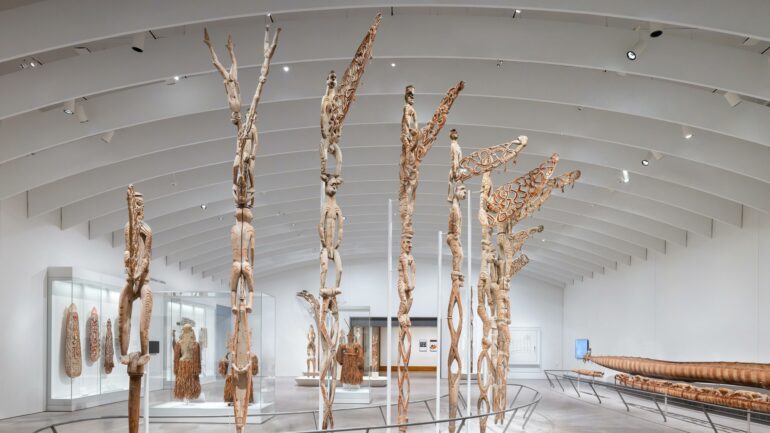
Add Texture to GoogleFor more than two decades, a massive slanted glass wall—sixty meters long and twenty-four meters high—remained hidden behind thick blinds on the south side of Central Park. This “stage curtain,” imposed by preventive conservation requirements, is finally set to rise. In New York, the Metropolitan Museum of Art (Met) is wrapping up one of its most strategic and highly anticipated projects of the decade: the complete renovation of the Michael C. Rockefeller Wing. This $70 million (approximately 64 million euros) project, scheduled to reopen on May 31, 2025, marks a turning point for the Department of African, Oceanic, and American Arts (AAOA). Under the direction of Alisa LaGamma, chief curator who has been with the institution for thirty-one years, this architectural and museographic transformation is accompanied by a profound reflection on the provenance of the works and international cooperation.
Architecture of Transparency in the Heart of New York
The history of this wing dates back to 1969, when Governor Nelson A. Rockefeller announced the massive donation of his collection of non-Western art to the Met, in memory of his son Michael C. Rockefeller, an anthropologist who died during an expedition in New Guinea in 1961. Opened in 1982, the space had not undergone any major renovations since then. To breathe new life into these 3,716 square meters located at the southern end of the museum, the institution enlisted architect Kulapat Yantrasast and her firm WHY Architecture, in collaboration with Beyer Blinder Belle.
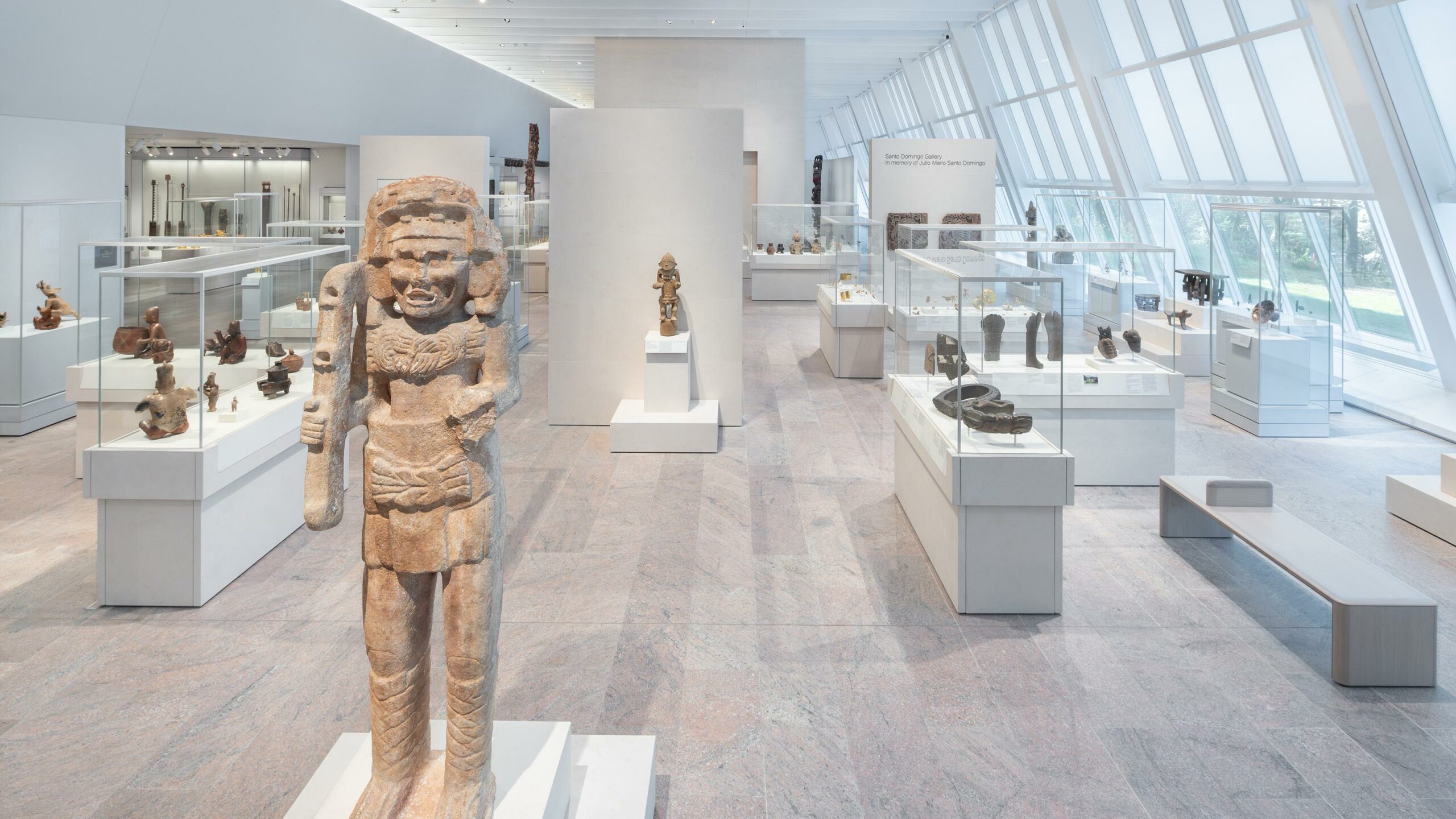
The bold architectural move lies in the restoration of the monumental glass wall. By bringing natural light and views of the park back into the galleries, the project breaks with the idea of a self-contained conservation space. This physical transformation reflects a new curatorial philosophy: the Michael C. Rockefeller Wing should no longer be viewed as a “museum within a museum,” but rather as an open crossroads. From now on, the collections from Africa, Oceania, and the Americas engage in a physical dialogue with the adjacent departments dedicated to Greco-Roman antiquity, the European Renaissance, and modern art. This spatial fluidity aims to reintegrate these cultures into the broader narrative of global art history, rather than isolating them in an ethnographic ghetto.
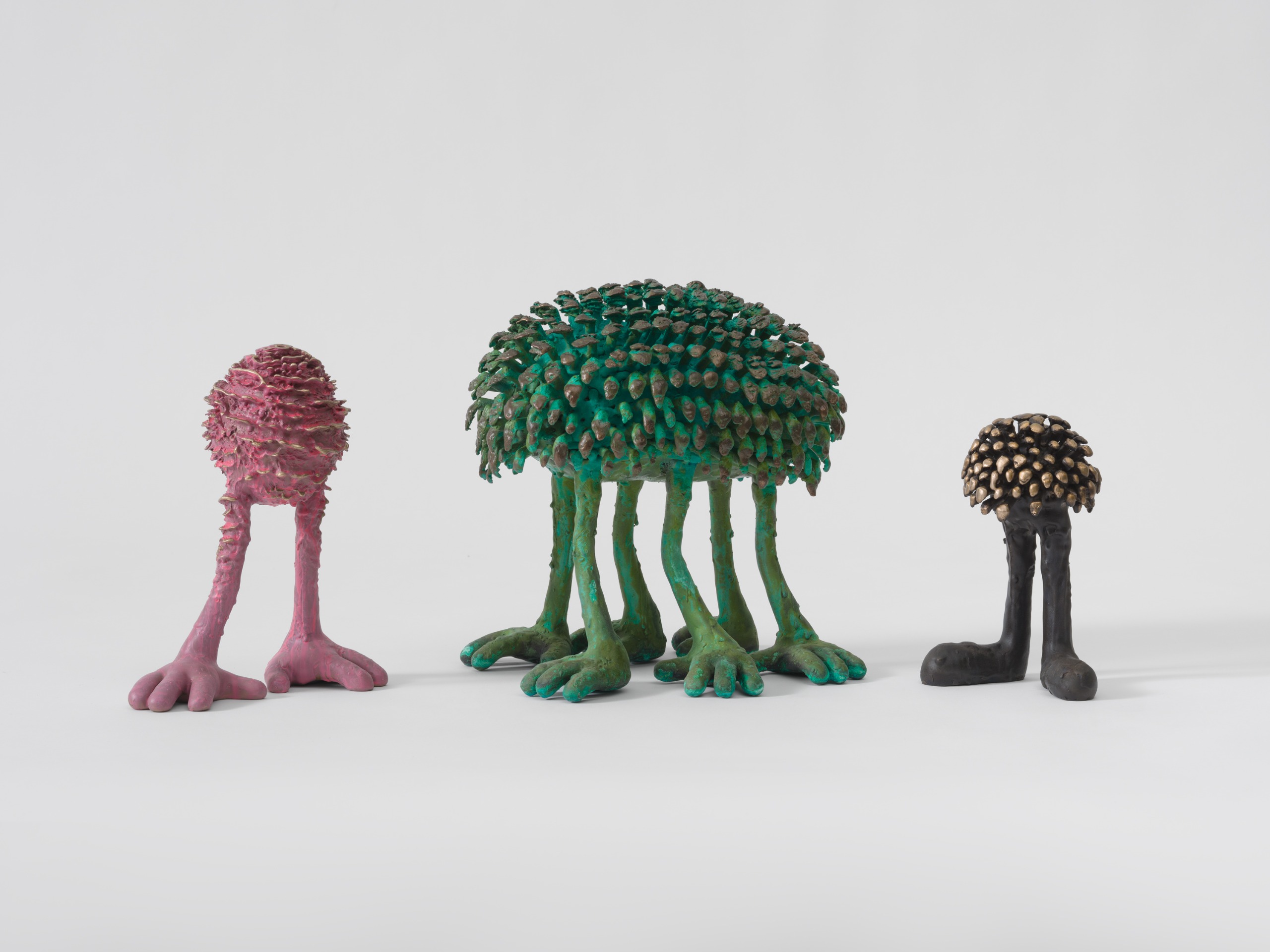
Funded by a consortium of private donors and the City of New York, the renovation project made it possible to completely rethink the visitor experience. Of the 1,800 works on display, organized into three distinct geographic sections, the section dedicated to sub-Saharan Africa takes center stage with approximately 500 pieces. Notably, nearly 25% of these African works are recent acquisitions or donations, on display here for the first time, reflecting the department’s sustained momentum under the leadership of Alisa LaGamma.
The Truth of the Matter: The Imperative of Provenance
Beyond the glass and steel showcase, it is the content and origin of the collections that are the focus of increased attention. Alisa LaGamma, who has headed the AAOA department for twelve years, places provenance research at the top of her priorities. For the curator, rigorously documenting a work’s history is not merely an academic obligation but a necessary act of transparency to establish the truth of historical facts, particularly those related to the colonial period.
This approach is most clearly evident in the complex case of the Benin bronzes. Most of the royal artifacts from the Kingdom of Benin held by the Metropolitan Museum of Art originated from a donation made in 1991 by art dealer Klaus Perls. However, some of the works bore the scars of the British punitive expedition of 1897. In November 2021, the museum took a historic step by formally returning two of these pieces to the Federal Republic of Nigeria, while facilitating the repatriation of a third work held by a private collector.
Rather than adopting an approach based on confrontation or automatic restitution, Alisa LaGamma advocates for “imaginative” and shared solutions. This vision is embodied in a memorandum of understanding signed with Nigeria’s National Commission for Museums and Monuments (NCMM). This partnership is not limited to physical returns; it includes the Met’s participation in the Digital Benin digital archives project, joint training programs, and reciprocal loans. For example, the New York museum is currently hosting a Yoruba horse head dating from the 12th–15th centuries on loan, illustrating a commitment to the two-way circulation of artworks.

Contemporary Outreach and Historical Awareness
To accompany this reopening, the Met is rolling out new educational tools designed to ground the works in their living context. The museum commissioned filmmaker Sosena Solomon to create a series of short documentary films exploring twelve major cultural landmarks in sub-Saharan Africa. These films, complemented by regional workshops held from Gaborone to Zanzibar, offer a contemporary perspective on heritage often perceived as static. Visitors will also have access to three new audio guide tours designed in collaboration with international intellectuals and scholars.
This commitment to confronting history head-on also leads to a look at Europe and its own colonial institutions. Alisa LaGamma thus highlights the difference in nature between the Met’s collections and those of museums such as the Royal Museum for Central Africa in Tervuren, Belgium. Founded in 1898 by Leopold II, the museum in Tervuren long served as an instrument of state propaganda, acting as a repository for the Congo’s mineral and ethnographic resources.
The curator points out that the archives of these institutions, although linked to violent seizures, constitute indispensable historical documents. She cites, in particular, the case of the *nkisi nkonde* (statue of power) belonging to Chief Ne Kuko, which was confiscated by the merchant Alexandre Delcommune. For Alisa LaGamma, these detailed inventories found in colonial records must be made publicly accessible and analyzed. Rather than erasing the traces of these forced seizures, the challenge is to keep the collections open to global research in order to document history in all its complexity.
Through this renovation, the Metropolitan Museum of Art seeks to define a new model for universal museums of the 21st century. By reconciling architectural prestige, rigorous scientific standards regarding provenance, and an educational approach that incorporates the voices of source cultures, the Michael C. Rockefeller Wing is set to offer an experience in which the art of Africa, Oceania, and the Americas is no longer merely admired for its aesthetic qualities, but understood in the full depth of its historical context.