
Make Texture a preferred source on Google to support us
Add Texture to GoogleTaking stock of a life devoted to the stage sometimes reveals unexpected gaps. In 2024, as Dolly Parton’s team was busy organizing the artist’s archives in preparation for the opening of her new museum in Nashville, a discovery upended the star’s official timeline. Inside an old military trunk that had belonged to her husband, Carl Dean, from his time serving in the National Guard, lay a secret nearly sixty years old. Inside a simple brown paper grocery bag, Rebecca Seaver, the artist’s niece and director of the archives, came across the most intimate item in her aunt’s wardrobe: the dress she wore on May 30, 1966, the day of her secret wedding.
For Dolly Parton, the item was thought to be lost forever. Since that spring Monday in Georgia, the dress had never resurfaced, buried beneath the rhinestones and elaborate stage costumes that built her legend. When she was presented with this relic, emotion took precedence over archival protocol: the artist grasped the dress by its delicate straps, pressing it against her in a gesture of immediate recognition. This garment, preserved by chance in the darkness of a trunk, reveals another side of the woman known as the “Queen of Rhinestones”: a time when pomp gave way to the need for secrecy.
Ringgold’s Secret Life: A Contract Marriage
The story of this dress begins with an escape. In 1966, Dolly Parton was 20 years old and her career was at a turning point. She had just signed with Monument Records, and her boss, producer Fred Foster, saw her as a rising star. In his view, the image of a young married woman could hinder her rise to fame and distract her burgeoning fan base. He therefore asked her to postpone her wedding to Carl Dean, a 23-year-old man. But the couple refused to wait. On May 30, 1966, they crossed the Tennessee state line to Ringgold, Georgia, to escape the scrutiny of the local press and the singer’s professional entourage.
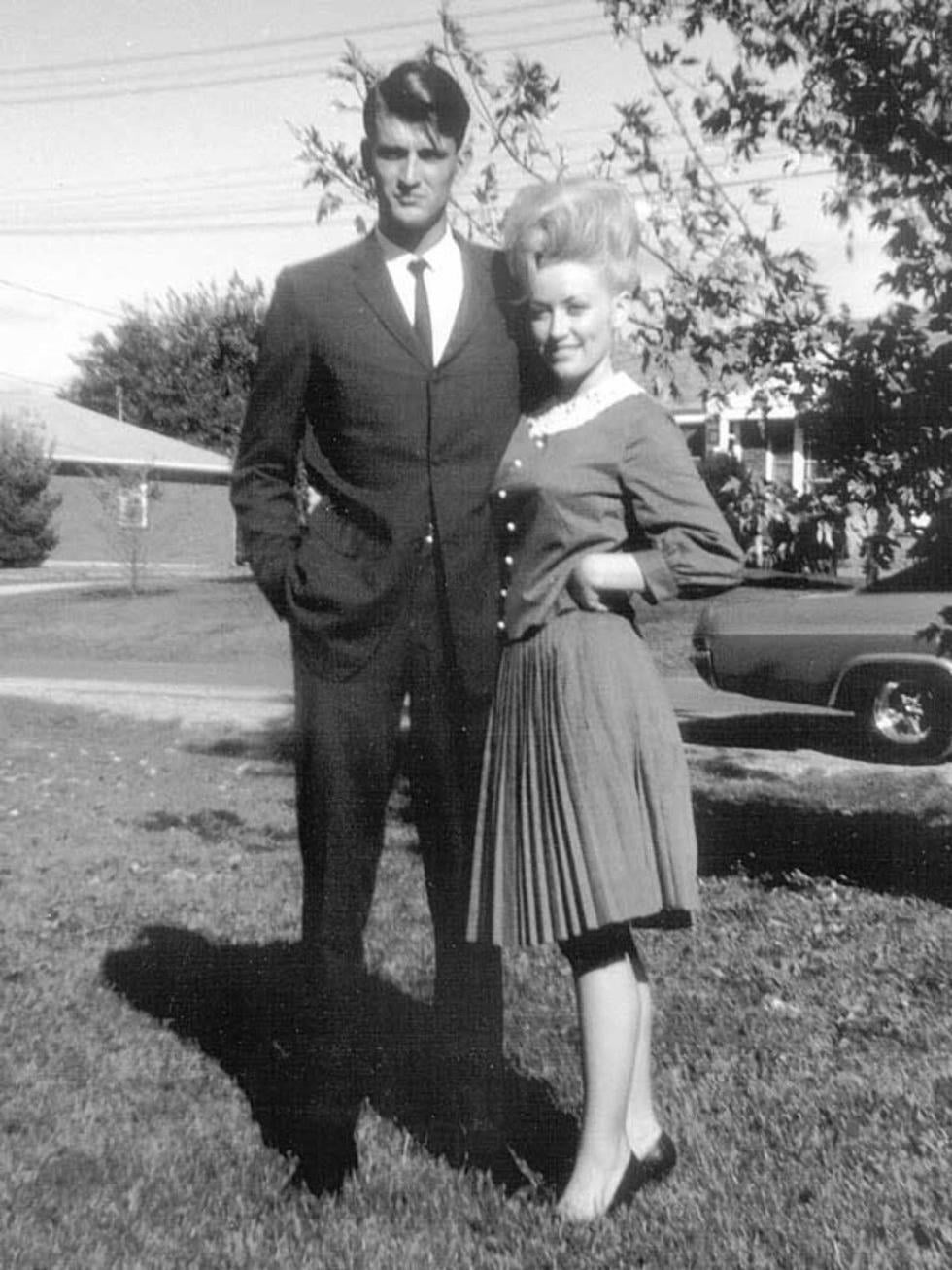
The ceremony took place with the utmost simplicity at Ringgold Baptist Church. The guest list was kept to an absolute minimum: Avie Lee Parton, Dolly’s mother, the pastor, and his wife were the only witnesses to the union. The atmosphere was a far cry from the glitz and glamour of Nashville. As soon as the vows were exchanged, pragmatism took over. Dolly Parton drove her mother to the Chattanooga bus station, took off her wedding dress to change into everyday clothes, and went straight to the recording studio to continue her work. This sense of duty and discretion likely explain how the dress came to be tucked away, almost by accident, in a paper bag before being forgotten for fifty-eight years.
An Aesthetic of Radical Simplicity
The appearance of the dress rediscovered in 2024 stands in stark contrast to the monumental aesthetic typically associated with Dolly Parton. One might have imagined intricate embroidery, beads, or a spectacular train. The recovered garment is the opposite of this fantasy. It is a simple white, A-line dress that falls to the knee and features thin straps. No sequins or crystals disrupt the fabric’s clean lines. This simplicity reflects not only the modest means of the time but also the urgency of a ceremony that was meant to remain out of the public eye.

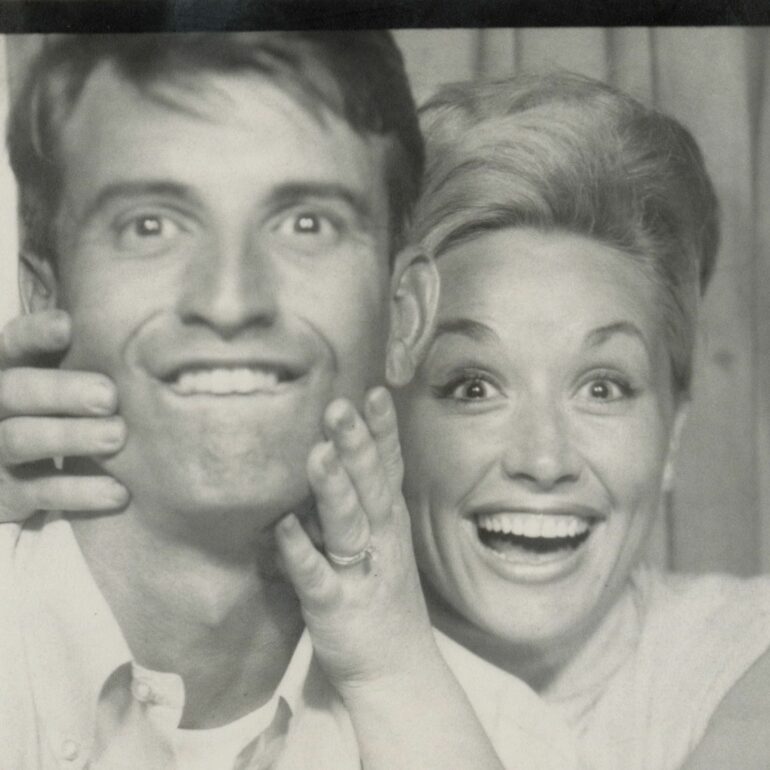
Carl Dean’s trunk contained other mementos from that day. In addition to the original veil, archivists unearthed the Bible that Dolly held in her hands during the exchange of vows—the book serving as a substitute for the traditional bouquet of flowers. A handwritten letter from the pastor who officiated the wedding was also found, along with a more personal item: a strip of black-and-white photo booth pictures. In these previously unseen photos, we see the young couple pulling funny faces, a far cry from the stiff poses of conventional wedding portraits. These items complete the portrait of a couple who, despite pressure from the music industry, chose to protect their privacy with remarkable effectiveness.
Showcasing a Legacy at the SongTeller Hotel
Now restored and documented, the dress has made its way to Nashville for its first public exhibition. It is one of the centerpieces of the Dolly’s Life of Many Colors Museum. This space, spanning more than 1,800 square meters, occupies the third floor of the SongTeller Hotel, a 240-room themed hotel located at 126 3rd Avenue North, in the heart of downtown Nashville. The museum, which officially opened on October 6, 2024, following a public preview in late September, was designed to trace the key milestones in the artist’s life through her personal archives.
The display chosen to showcase the wedding dress avoids a simple museum-style presentation. It is displayed in a glass case within a faithful reproduction of the Ringgold Chapel’s interior, as it appeared in 1966. This contextualization allows visitors to appreciate the contrast between the simplicity of the setting and the extraordinary destiny of the woman who said “I do” there. Although the original purchase price of the dress in 1966 remains unknown, its historical value is now inestimable to American cultural heritage. Admission to the museum follows a standard pricing structure with time-slot reservations; admission remains free for children 5 and under accompanied by an adult.
The serendipitous rediscovery of this gown—preserved in a simple grocery bag for nearly six decades—brings to a close a chapter that began the day a 20-year-old woman chose the authenticity of a secret commitment over the demands of her brand. Now on display in Nashville, Ringgold’s dress is no longer a lost object, but a symbol of a career built on an iron will concealed beneath an apparent lightheartedness.