
Make Texture a preferred source on Google to support us
Add Texture to GoogleBuying furniture online is often a shot in the dark. Your eyes glide over digital renderings, gauging virtual proportions without ever feeling the texture of a fabric, the weight of a drawer, or the resonance of a solid-wood tabletop. In the face of the dominance of the immediate, disembodied image, the high-end furniture industry is making a marked return to physical interaction. The premise is simple: a piece of furniture reveals its true value only when the body interacts with it within a carefully curated environment. It is precisely this logic of total immersion that guides Molteni&C’s recent strategy in New Zealand.
The Italian furniture manufacturer has just set up shop in Auckland, opening a 450-square-meter space entirely dedicated to its own design language. For this strategic expansion into the Southern Hemisphere, the brand has relied on the local expertise of Dawson & Co, a distributor with a well-established presence in the New Zealand market. Far from being limited to a mere wholesale transaction, this partnership reflects a commitment to becoming a lasting part of the region’s design landscape. The choice of location is no coincidence. The showroom is situated on The Strand, the main thoroughfare of the Parnell neighborhood. This area serves as a true barometer of the city’s architectural trends, home to independent galleries, architectural firms, and specialty stores. Establishing a presence there is tantamount to claiming a central position on the Pacific design scene.
The End of the Standard Catalog
Stepping through the doors of this space, designed in collaboration with Dawson & Co, is first and foremost an experience of rejection—a rejection of commercial juxtaposition. Traditional furniture retail has long suffered from “catalog syndrome”: sofas lined up in neat rows, isolated chairs on platforms, and kitchens stripped of any context. In Parnell, the approach is reversed. The vast open space has been meticulously partitioned to simulate a succession of complete, livable interiors.
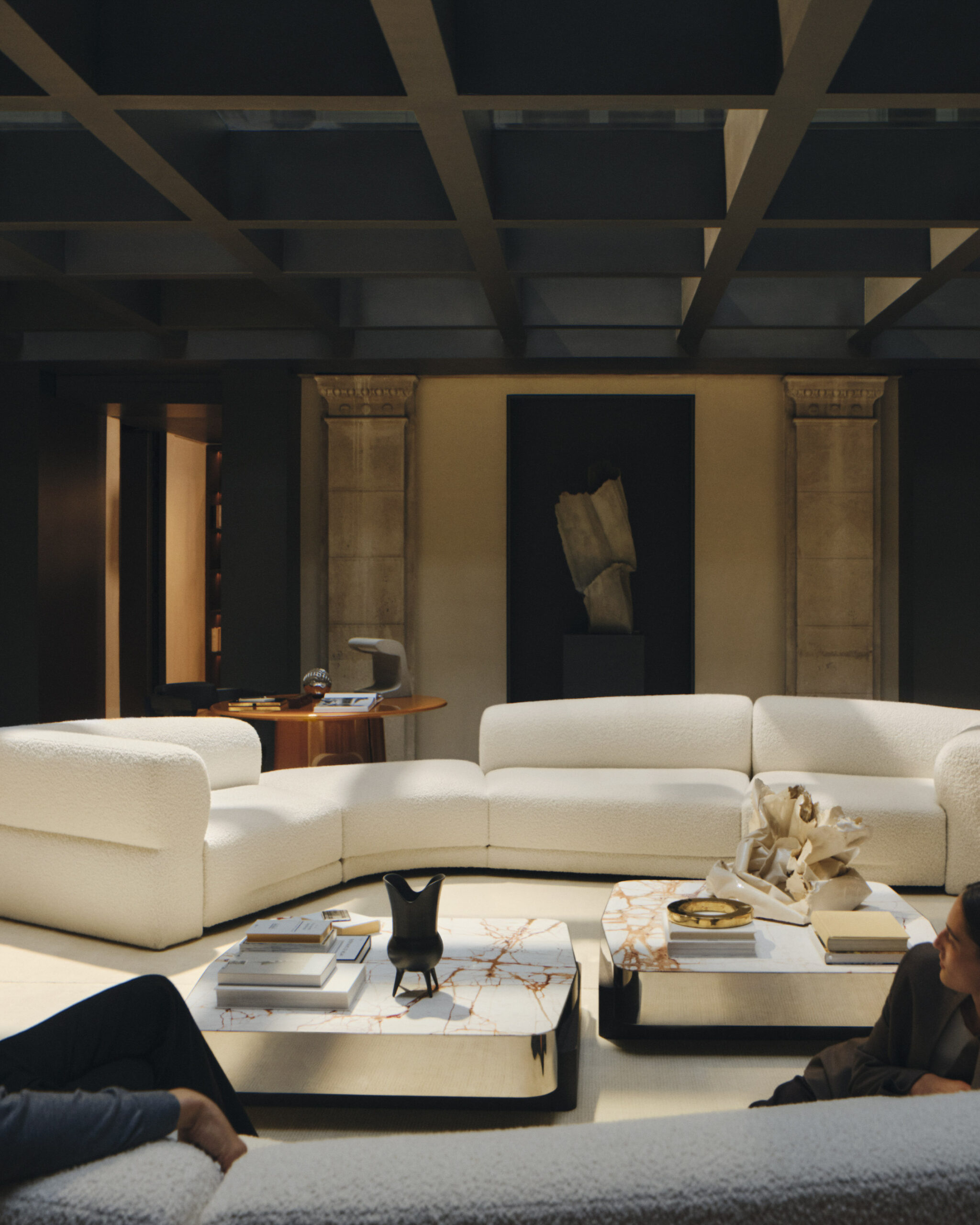
This fluid layout blurs the boundaries between the different areas of the home. The seamless flow between the living room, dining room, sleeping area, and kitchen becomes evident. You wander through it as if in the private residence of a meticulous collector. This immersive experience meets a growing demand among premium clients: people no longer buy a table or an armchair simply to fill a void; they invest in a holistic ecosystem. The interior designers and highly discerning private clients who frequent The Strand seek, above all, cohesive design solutions. They demand a formal vocabulary that can flow seamlessly from one room to the next without a break in style. Molteni&C meets this expectation by transforming its showroom into a manifesto of the Italian art of living, where the object almost fades into the background in favor of the atmosphere it creates.
A Lesson in Interior Design
The layout conceived in Auckland serves as a showcase for the brand’s artistic director, Belgian architect Vincent Van Duysen. Upon entering, the living area exudes geometric precision softened by warm textures. The eye is immediately drawn to the Marteen sofa, a generously proportioned piece that structures the space without overwhelming it. It is flanked by the Logos system, also designed by Van Duysen, whose clean lines ensure a natural transition to the other areas of the room. To break up this strict orthogonality, the design incorporates the Lia armchairs from the GamFratesi studio. Their organic curves provide a much-needed breath of fresh air, proving that coherence does not preclude diversity of form.
The journey through the 450 square meters leads naturally to the reception areas. The Hector shelving system, another masterpiece by Van Duysen, acts as a porous membrane between the living room and the dining room. This light partition allows light to flow while clearly defining the different functions of each space. Beyond this subtle boundary, the dining room centers around the Lise table by French designer Christophe Delcourt. The carved wood of its base resonates with a true historical reference: the Monk chairs, created by the legendary duo Afra and Tobia Scarpa. This juxtaposition of Delcourt’s contemporary design and the Scarpa’s modernist legacy encapsulates the publisher’s philosophy.


Heritage Without Nostalgia
The integration of historic pieces into ultra-contemporary environments raises the question of how to manage heritage in the furniture industry. The main pitfall is turning the showroom into a mausoleum, freezing icons of the past behind glass domes. The approach taken at Parnell demonstrates exactly the opposite. The Monk chairs are not presented there as untouchable relics, but as everyday, functional objects rooted in the present.
This updated Italian classicism is built on formidable industrial precision, masked by high-end artisanal finishes. The materials are selected for their ability to age gracefully, develop a patina, and absorb New Zealand’s natural light. The collection on display covers the full range of needs for a complex architectural project, incorporating not only furniture but also major fixtures: functional kitchens, modular bookcases, and custom walk-in closets. This broad product range allows the company to directly target the “contract” market and large-scale residential projects—a vital economic segment for ensuring the long-term viability of such a retail space.
The Enduring Nature of the Space
In a globalized world where consumer attention is constantly fragmented by digital overload, the physical showroom now serves as an anchor. It is no longer used merely to finalize a sale, but to validate an intuition. Auckland’s discerning clientele, familiar with international brands, no longer visits simply to confirm a product’s existence. They come to experience the silence of a closet door closing, to assess the actual ergonomics of a seating system, and to understand how the low-angle light catches the varnish on a table.
By entrusting the reins of this strategic location to Dawson & Co, the Milanese brand secures its connection to the local community while upholding its own presentation standards. This commitment to the tangible experience serves as a reminder that interior architecture, by its very nature, resists dematerialization. While a screen allows one to discover a design signature or study a type of interior layout, only the lived-in space possesses the persuasive power needed to transform aesthetic interest into a genuine act of claiming the space as one’s own.