Make Texture a preferred source on Google to support us
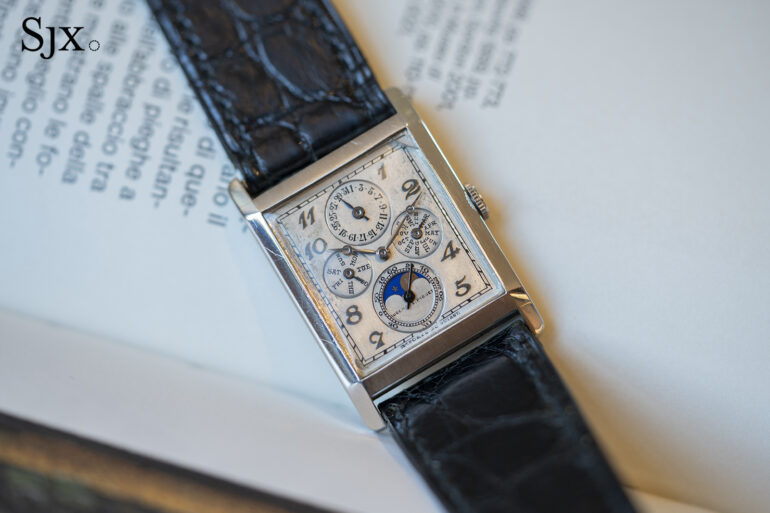
Add Texture to GoogleThe lighting in an auction house tends to flatten out subtle nuances, often highlighting immediate brilliance or a flashy logo. Yet on November 1, the hammer at Monaco Legend Auctions will seal the fate of an object whose rarity whispers rather than shouts. Lot 208 has neither the massive proportions nor the water resistance of the contemporary market’s iconic giants. It is a 1927 Audemars Piguet triple calendar watch, housed in a rectangular case. The metal? Platinum. To date, it is the only known example in this material for this specific series. Beyond its estimate, set between 200,000 and 400,000 euros, this piece embodies an era when wristwatchmaking was still forging its own rules, navigating by sight between technical audacity and sophisticated elegance.
The Wrist as a Testing Ground
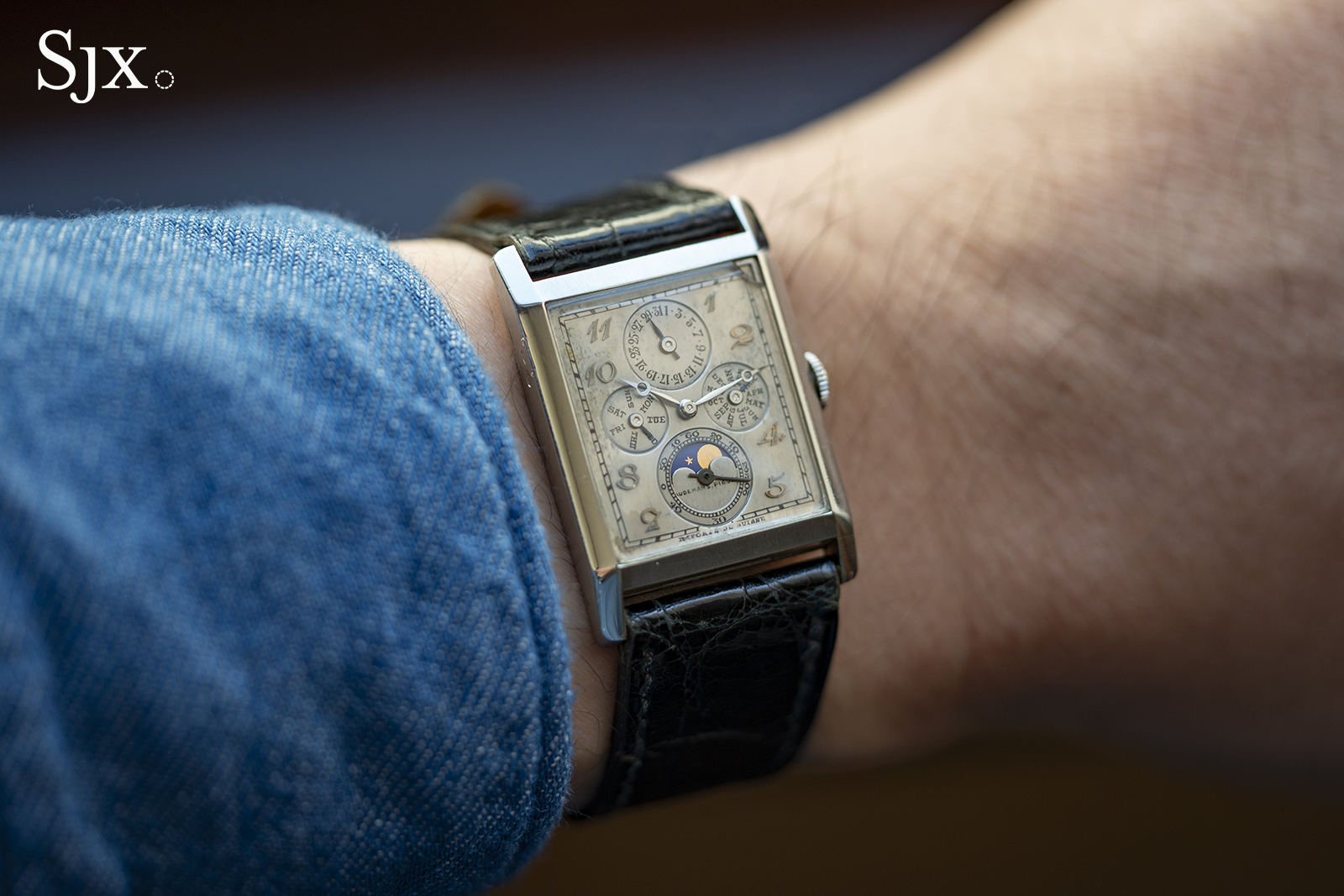
To understand the anomaly that such a watch represents, one must delve back into the aesthetics of the 1920s. The industry had not yet fully embraced the transition from pocket watches to wristwatches. While competing brands were already establishing timeless geometric silhouettes with models like the Tank, the Santos, and the Tonneau, integrating complex mechanical complications into such tiny spaces remained an immense challenge. The wrist was a laboratory.
It was in this context that Audemars Piguet undertook the production of an extremely limited series. Between 1924 and the 1950s, the manufacture produced fewer than fifty rectangular wristwatches equipped with a triple calendar. This minuscule number reflects an industrial reality far removed from today’s standards: nearly every piece required human adaptation—a specific adjustment. The uniformity of the series is merely a superficial illusion. Collectors and experts on the Watches by SJX platform point out that the hour markers, the shape of the hands, and the layout of the dials varied from one batch to the next. Standardization had not yet stifled the art of watchmaking.
The Platinum Anomaly
The piece to be offered for sale in Monaco derives its prestige from its unique case material. While the rest of the production was predominantly made of gold, this specific commission required the use of platinum—a dense metal that is difficult to machine and particularly expensive. The dial, for its part, features applied Breguet numerals, topped by Breguet-style hands crafted from white gold. The watch exudes an elegant coolness, an aesthetic restraint that stands in stark contrast to the complexity of what beats within.
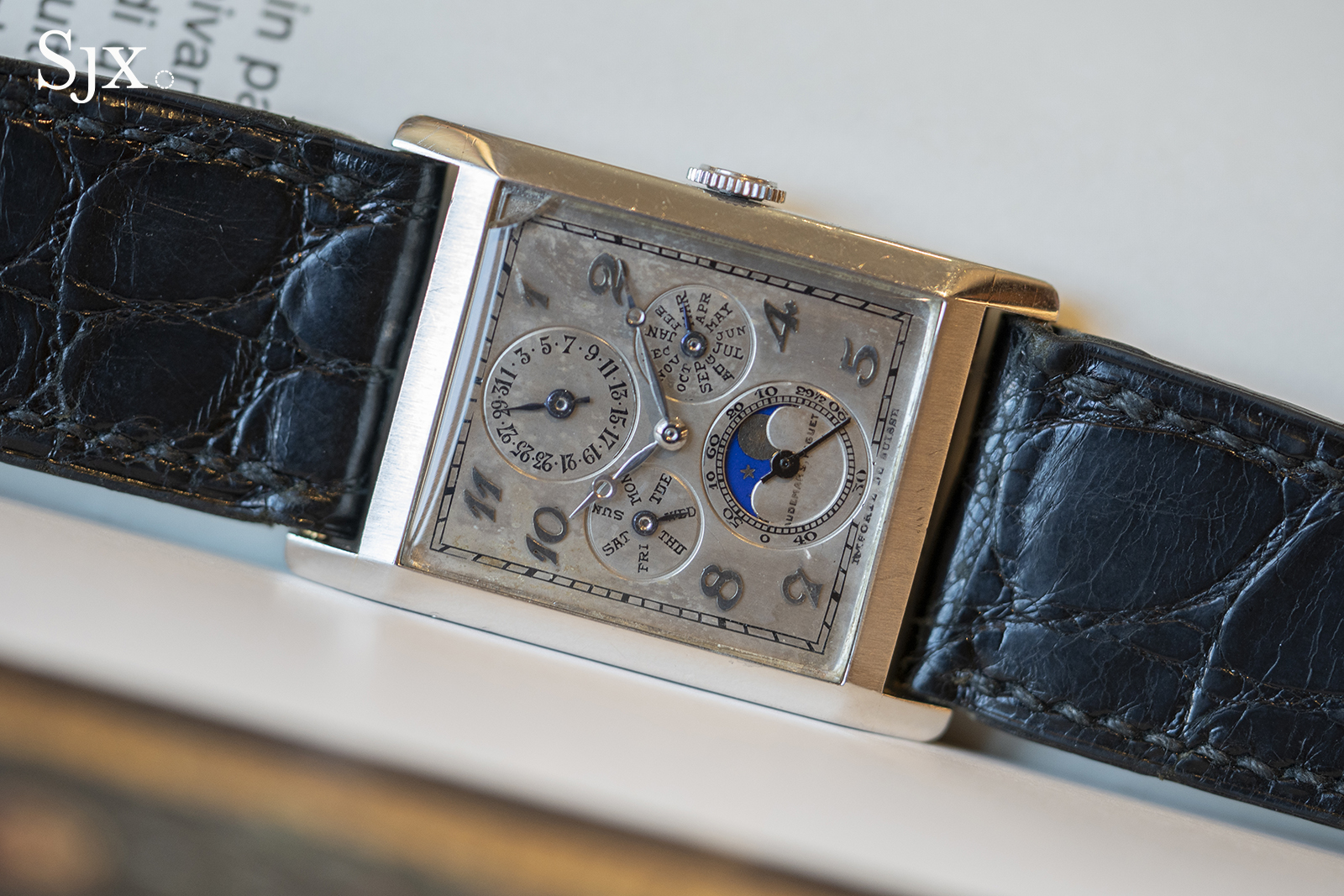
The heart of this design is the 10GHSM caliber. This mechanical movement is shared by the entire short lineage, with the sole exception of the very first prototype assembled in 1924—an original prototype that now rests safely in the display cases of the Audemars Piguet Museum. The movement demonstrates the brand’s unwavering determination not to succumb to the mere trend of shaped watches, but rather to imbue them with a mechanical nobility inherited from the great tradition of pocket watches.
The Scars of Excessive Cleaning
While the technical specifications border on historical perfection, the physical object bears the scars of a century of existence. It would be misleading to imagine a watch frozen in a pristine state. The patina on the dial bears witness to a tangible past, marked by obvious signs of wear. Analysis points to a past intervention—likely a cleaning carried out with misplaced vigor that has irrevocably altered the surface.
Far from being a deal-breaker, this physical blemish challenges our relationship with restoration. Erasing this excessive cleaning would be tantamount to erasing part of the watch’s story. The vintage market is constantly torn between the quest for “new-old-stock”—a futile fantasy—and the acceptance of an object that has lived. Here, the watch exudes its age.

The shadow of a vanished distribution network
The back of the case reveals other crucial clues: a French hallmark and a discreet inventory number. These engravings trace the watch’s commercial journey—a distribution network that would be unthinkable today. In 1927, Swiss watchmakers did not operate massive international flagship stores. The distribution of exceptional timepieces depended on a complex network of brokers, importers, and jewelers.
It was Van Cleef & Arpels that delivered this Audemars Piguet to its first owner at its Paris boutique. But the watch did not travel directly from Le Brassus to Place Vendôme. It passed through a company that no longer exists: Egouvillon, Lafont & Cie. This diamond dealer, based in the French capital, served at the time as the official representative for Audemars Piguet. This prestigious status would not save the company from bankruptcy, as it was swept away by the economic collapse of the Great Depression a few years later. The watch remains as a relic of a commercial ecosystem that was cut down in its prime.
A Value Out of Step with Its History
The most striking aspect of this triple-calendar watch’s history is its absolute stability. From the moment it left the counters of Van Cleef & Arpels in 1927, the watch has had only two owners. This private, family-held legacy was broken for the first time in 2022, when the direct descendants of the original buyer decided to part with it. The auction then closed at just over 170,000 euros.
The current estimate, set between 200,000 and 400,000 euros by Monaco Legend Auctions, perfectly illustrates the schizophrenia of the watch market. Steel sports watches from the 1970s, produced in the thousands, easily exceed these figures. Pieces from the interwar period suffer from their own limitations: they are considered too small by contemporary standards, extremely fragile, and must be kept away from even the slightest drop of water. They are not designed to keep pace with a frenetic lifestyle, but rather to set a different rhythm.
This disconnect between the watch’s historical significance and its almost rational price serves as a reminder that high-end collecting remains the domain of a niche group of connoisseurs. Acquiring Lot 208 will not merely be an investment in precious metal or a weathered dial. It will mean acquiring a fragment of 1927, a solitary watchmaking endeavor, the product of an era when the invention of a wrist calendar was a matter of the utmost discretion.