Make Texture a preferred source on Google to support us
Add Texture to GoogleMay 19, 2026 marks a turning point in the geography of American ambition. While major coastal cities have long embodied the culmination of a social journey, data released this spring reveals a profound shift in citizens’ aspirations. Through an analysis of 859 municipalities, a new map of quality of life is emerging, now favoring residential suburbs on a human scale over historic urban centers such as New York, Los Angeles, and Chicago, which are absent from the prestigious Top 25.
This ranking is based on a rigorous methodology that cross-references statistics from Applied Geographic Solutions (AGS), the Census Bureau, and the Bureau of Labor Statistics. For the 2026–2027 edition, a national survey conducted in February 2026 redefined priorities: the cost of living has become the primary concern. As a result, the criteria of financial value and affordability now account for 28% of the final score, followed closely by quality of life (27%), desirability (24%), and job market strength (21%).
Indiana’s Unexpected Dominance
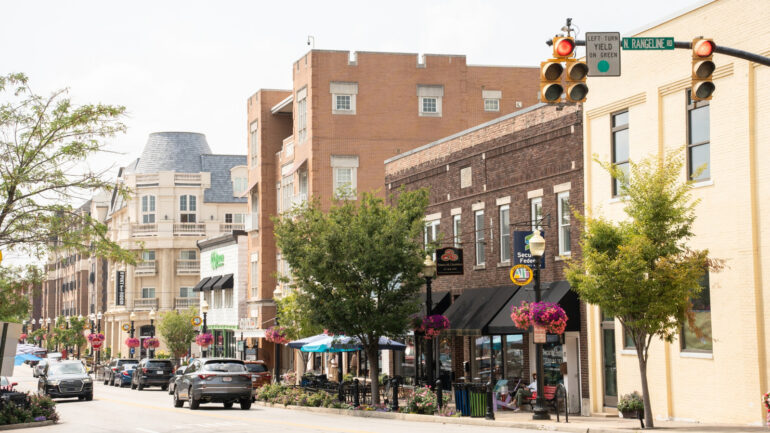
For the first time in the history of this annual survey, two neighboring cities have claimed the top two spots on the podium. Carmel and Fishers, located north of Indianapolis, posted an overall score of 7.2 out of 10. This unprecedented one-two finish underscores the growing appeal of the Midwest, where the balance between high incomes and affordable housing seems to have found its ideal sweet spot.

Carmel, which takes the top spot, perfectly illustrates this new reality. With a median household income of $144,615 (approximately €133,300), the city offers a quality of life where the median home value stands at $477,625. The local economic vitality is reflected in a particularly low unemployment rate of 3.28%. Even more significant for daily quality of life, the average commute time between home and work does not exceed 21 minutes. Its immediate neighbor, Fishers, follows closely behind with similar indicators: a median home price of $405,882 and an average rent of $1,404, with an annual household income of $136,502.
Texas, the Epicenter of Residential Growth
While Indiana shines for its top rankings, Texas dominates in terms of volume. The Lone Star State places four municipalities in the Top 10 and makes a massive showing with eight cities in the final ranking of the top 25 destinations—a figure that rises to ten when considering the broader metropolitan areas. Flower Mound climbs to third place with a score of 7.1/10, closely followed by Leander (8th), Frisco (9th), and Sugar Land (10th).
This Texas performance is not an isolated case. It is part of a broader trend in which suburbs linked to powerful employment hubs such as Dallas-Fort Worth, Houston, or Austin are attracting internal migration. This includes League City (13th), Pearland (16th), McKinney (17th), Allen (23rd), Cedar Park (24th), and Mansfield (25th). These communities are benefiting from a shift in desirability away from city centers, offering modern infrastructure and easy access to the job market without the density constraints of megacities.

The Decline of the Historic Strongholds of the Northeast
An analysis of 2026 data highlights a marked decline in Northeast and coastal communities. Soaring real estate prices have heavily weighed on their affordability scores, leading to notable drops in the rankings. Ellicott City has fallen to 41st place, while West Hartford and Bethesda have slipped to 49th and 50th places, respectively. This statistical decline also affects former leaders: Johns Creek, Georgia, which held the top spot in the 2025–2026 edition, drops to 5th place this year despite a solid score of 7.1 out of 10.
The American urban landscape is now divided between hubs of economic stability—such as Ankeny, Iowa (4th), Hoover, Alabama (6th), and Rochester Hills, Michigan (7th)—and traditionally prestigious areas that have become unaffordable for the upper middle class. The inclusion of data from FEMA (Federal Emergency Management Agency) and NOAA (National Oceanic and Atmospheric Administration) in the quality-of-life assessment reinforces this emphasis on safety and environmental sustainability, which now appears to take precedence over the cultural vibrancy of major cities.
A New Definition of Desirability
This year’s Top 25 confirms the rise of “mid-sized cities” and affluent suburbs. Cary, North Carolina (11th), Troy, Michigan (12th), and Parkland, Florida (14th) share common characteristics: rigorous management of urban space and a strong correlation between local wages and the cost of local services. In Illinois, Buffalo Grove has managed to climb to 15th place, proving that certain enclaves in the Midwest remain highly attractive compared to the hubs of the South.
The ranking is rounded out by towns such as Noblesville, Indiana (18th), Broken Arrow, Oklahoma (19th), and Apex, North Carolina (20th). Further west, Sammamish in Washington State (21st) and Edmond in Oklahoma (22nd) manage to maintain their rankings. This geographic diversity, though dominated by Texas and the Midwest, reveals that the recipe for residential success in 2026 lies in a simple yet demanding equation: offering job security and financial peace of mind in an environment where commute times no longer sacrifice personal life.