
Make Texture a preferred source on Google to support us
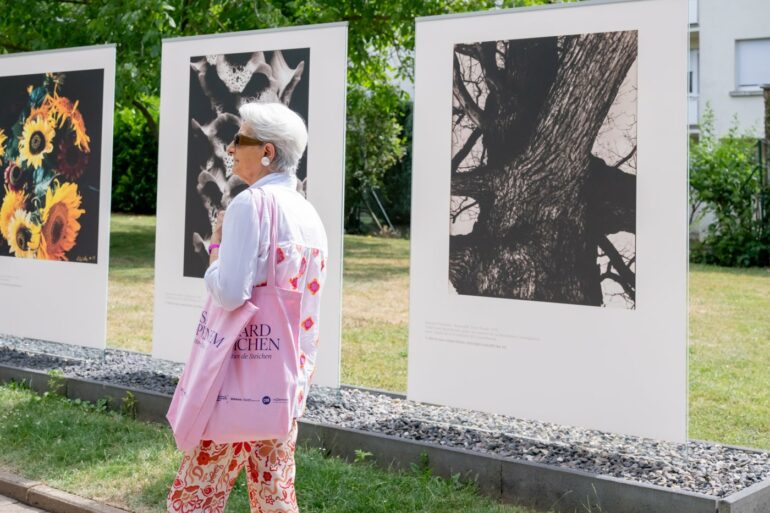
Add Texture to GoogleAt Merl Park in Luxembourg, an open-air exhibition reveals a lesser-known side of photographer Edward Steichen. This immersive experience highlights his intimate connection to nature, the refinement of botany, and the play of light, presented in a setting that is both unique and accessible.
The renowned photographer steps outside the confines of institutional walls to gracefully become part of the daily lives of park visitors. Through this open-air exhibition, the City of Luxembourg celebrates a little-known aspect of the work of this artist, born in the Grand Duchy in 1879: his fascination with the plant world, landscapes, and that subtle mastery of chiaroscuro that is the hallmark of his genius.
An organic installation in public space
The opening in mid-July brought together prominent figures from the cultural and institutional spheres—including Maurice Bauer, Cécilia Zunt-Radot, Ruud Priem, and Tania Brugnoni—marking the launch of this installation, which will be on view through October 25. An aesthetic experience open to all, without the constraints of a ticket office or a predetermined route.
The choice of this lush green setting is by no means coincidental. By freeing the image from its traditional museum setting, the park transforms a stroll into a true artistic experience. Visitors don’t just come to admire Steichen’s work—they encounter it, almost by chance, as they round a leafy path. It’s a subtle dialogue with the surrounding nature, whose charm takes hold instantly.
The Poetry of Plants: The Master’s Other Face
While Edward Steichen’s name remains inextricably linked to his high-society portraits, his aura in the world of fashion, and his influence on photographic curation, this retrospective reminds us that his visual acuity was never confined to the closed doors of the studio. Nature was his eternal refuge, a fertile ground nourished by the constant observation of blossoms, branches, and fleeting reflections.
The exhibition reveals an unexpected side of Steichen—deeply contemplative yet undeniably modern. Far from being a mere exercise in technical style, his images bear witness to a delicate attention to the organic. Through his lens, botany transforms into a true visual language, where light asserts itself as the most precious raw material.
An exceptional curation drawn from prestigious collections
These majestic prints, presented in very large format, draw from archives of immense richness: those of the MNAHA, the Spuerkeess, the Edward Steichen Estate, and the Photothèque de la Ville de Luxembourg. This diversity of sources underscores the project’s rigor, while reminding us that the legacy of this master of the image flourishes as much in public institutions as it does in the privacy of family collections.
Continuing the dialogue begun this summer at the Rencontres d’Arles, the exhibition layout has been redesigned to harmonize with the spaces and perspectives of Merl Park. The ambition remains unchanged: to shed light on a hidden facet of the photographer’s work, one that is all too often overshadowed by his most iconic prints.
An aesthetic stroll through the seasons
To enrich this stroll, free guided tours are offered on select Sundays (August 30, September 20, and October 18, at 12 p.m. and 5 p.m.), starting at the introductory panel on the Avenue du X-Septembre side. This initiative underscores the desire to demystify art without compromising its elegance: the exhibition aims to be fluid, welcoming, and free of any unnecessary solemnity.
This philosophy resonates perfectly with the spirit of Edward Steichen. A leading figure of the 20th century, an aesthete, and a visionary curator, his place in the pantheon of art is unshakable. Yet this photographic journey gracefully demonstrates that even such a monumental figure still holds delightful mysteries. In the heart of Merl Park, the nature he so beautifully captured becomes, in turn, the ideal canvas for rediscovery.