Make Texture a preferred source on Google to support us
Add Texture to GoogleA glossy photo of a sun-drenched patio consistently obscures the harshness of the elements. An outdoor space is constantly battered by moisture, the bite of frost, and the wear and tear of repeated foot traffic. Yet the temptation to choose a surface based solely on first impressions plagues many architectural projects. Catalogs are full of visual allure, depicting idyllic lifestyle scenarios. But designing the flooring for a garden, a loggia, or an interior courtyard first requires an engineer’s precision. Before it can serve as a backdrop for summer dinners, this space demands careful consideration of durability, water drainage, and long-term wear and tear.
Residential architecture is increasingly designed with the long-term needs of its occupants in mind, and the design of outdoor flooring is no exception to this requirement for durability. In fact, research published by MDPI highlights the direct impact of outdoor landscaping on enabling older adults to remain in their homes. The accessibility and safety of walkways determine freedom of movement over the decades. An uneven surface, a poorly calculated slope, or a material that becomes slippery in the rain renders a patio unusable. Spatial planning must therefore be grounded in the mechanics of the human body: the space needed to pull a chair back from a table, the traction of a walkway under autumn leaves, and the perfectly level threshold connecting the living room to the garden. Thinking about materials without considering ergonomics inevitably leads to functional failure.
Confronting reality: moving beyond the material library
Through its Gather platform, the OUTERclé distributor provides a comprehensive overview of the options available for patios. By combining filters for shapes, finishes, and properties, the brand presents a range that resembles a museum collection. Ceramic, cement, stone, terrazzo, as well as glass, brick, and slate make up a rich architectural lexicon. This abundance allows for the creation of bold designs and a departure from the standardized paving that has long dominated residential construction.
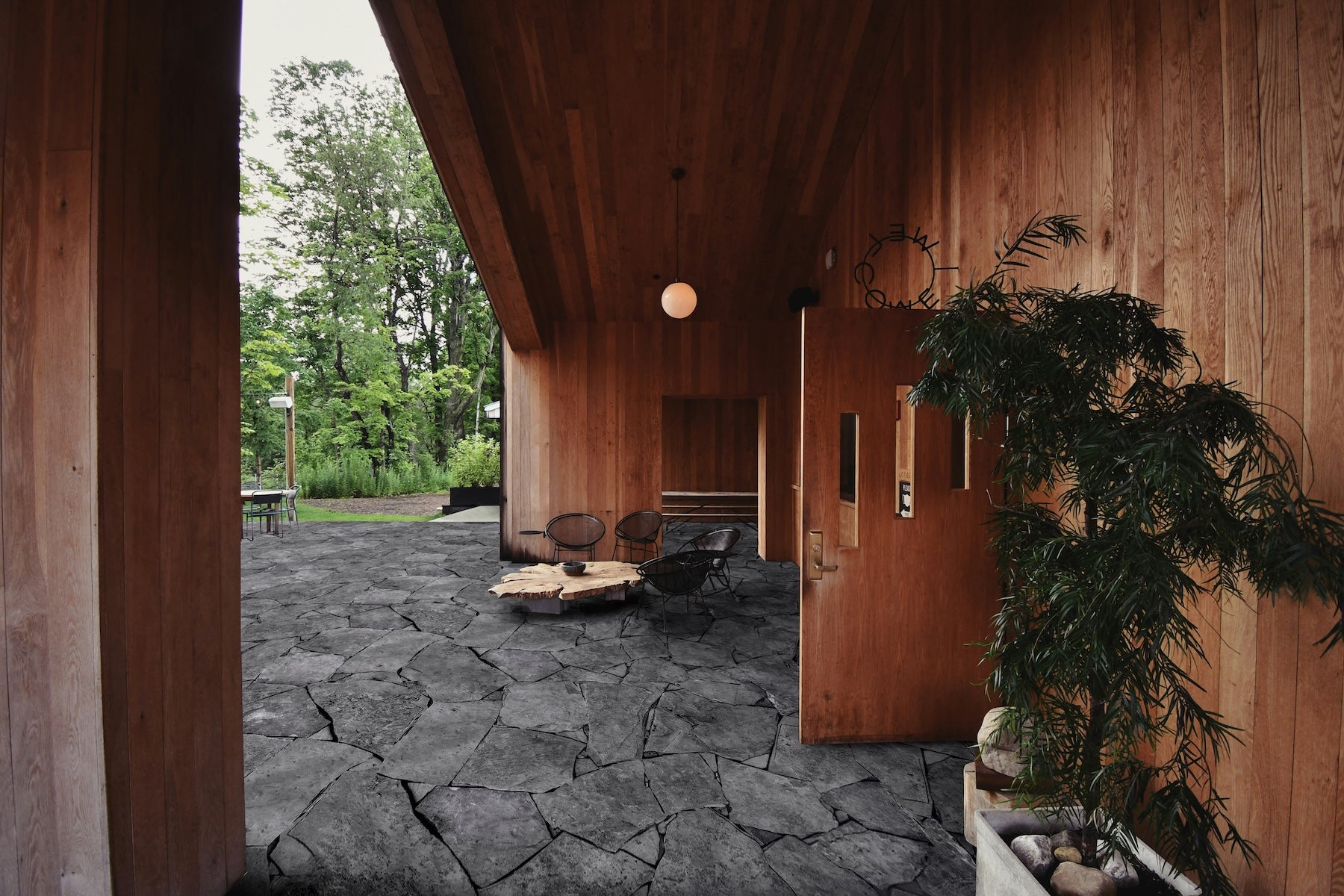
However, judging a material based on an isolated sample or a web page often leads to errors in scale. A square of speckled terrazzo sitting on a designer’s desk reveals nothing about how it behaves under low-angle light. The exercise requires bringing these materials into the real world. The practice of dry layout proves to be a lifesaver. Laying out the samples, observing the rhythm of the cuts, evaluating the contrast with existing furniture, and anticipating the thickness of the joints helps avoid the shock of haphazard geometry. The color of a rough brick or the sheen of porcelain stoneware takes on a radically different character when set against the facade’s woodwork and the surrounding vegetation.
The Dual Nature of Terracotta
The charm of artisanal firing immediately catches the eye. Terracotta embodies this mineral aesthetic, capable of blending seamlessly with a landscaped environment. The raw, unglazed versions absorb light and project a subdued presence, often preferred near plantings. Conversely, glazed surfaces fragment reflections and introduce sharp chromatic contrasts.
But geography dictates its own rules. The OUTERclé catalog emphasizes an absolute requirement: verifying resistance to freezing and thawing. Cold temperatures cause infiltrated water to expand, risking the rupture of a piece whose porosity has not been calculated to withstand winter conditions. Validating these thermal characteristics remains a non-negotiable prerequisite, lest a Mediterranean-inspired design disintegrate at the first frosts.
The distinction between artisanal craftsmanship and industrial expertise takes on its full meaning in these sophisticated collaborations. The joint effort between the Italian manufacturer Fornace Brioni and designer Cristina Celestino perfectly illustrates this duality. Within a single creative proposal, the Righe line—crafted from terracotta—coexists with the Tivoli Tech model. The latter, though inspired by the rigorous layout of classical Italian gardens, belongs to the porcelain stoneware family and is produced mechanically. To conflate these two material categories would be to ignore their respective limitations. A sculptural profile or a pronounced fluting will subtly enliven a perimeter wall, whereas the floor requires a radically different level of flatness and physical density.

Topography Under Strict Control
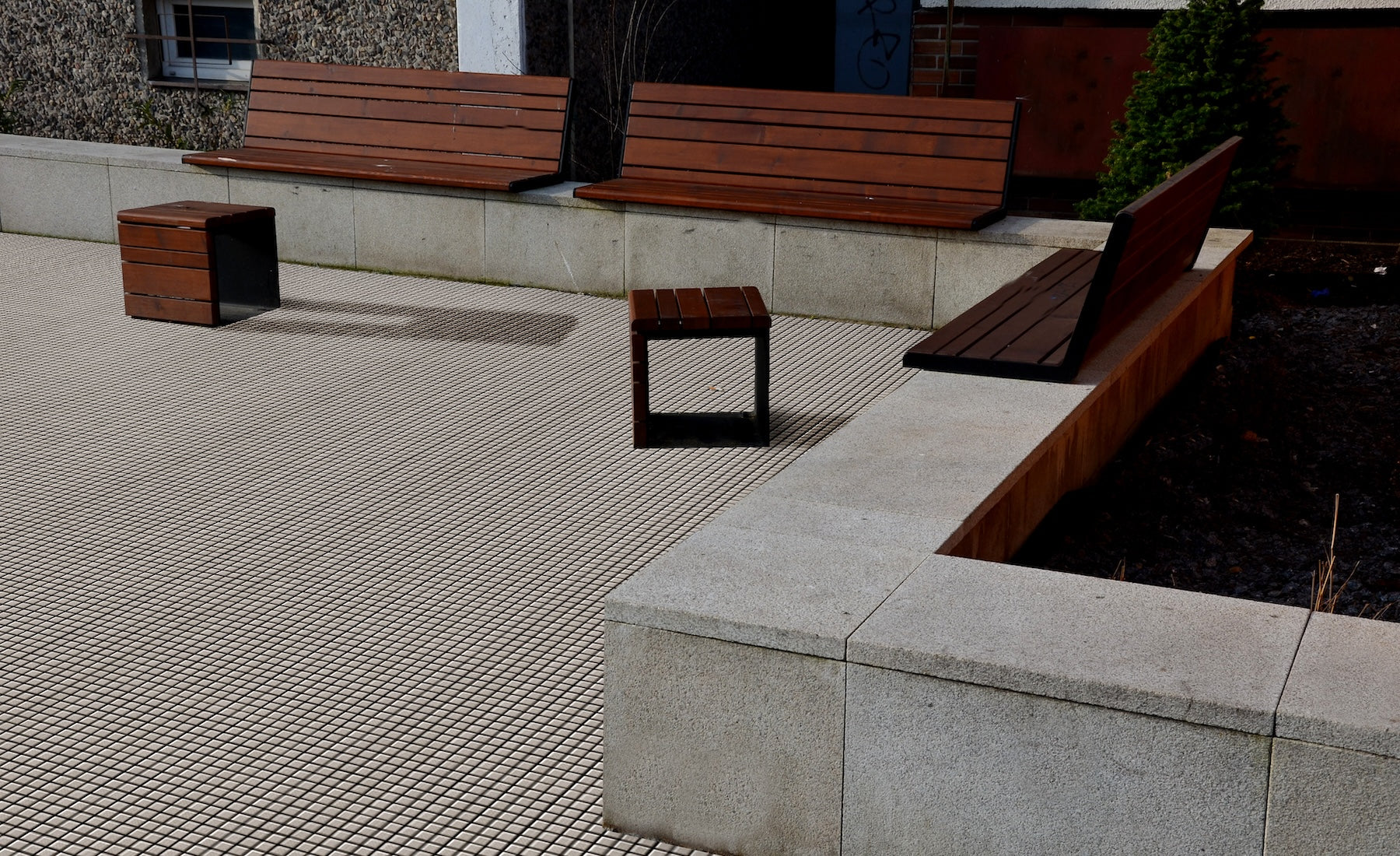
Installing tiles outdoors falls under the category of public works applied on a private property. The standards that govern interior spaces take a back seat to the harshness of the climate. The Tile Council of North America emphasizes a fundamental principle that is, however, often overlooked on construction sites: explicit certification from the manufacturer for outdoor use is mandatory. Installation methods, mortar composition, and the calculation of expansion joints differ fundamentally from those used in a living room.
Water management is the key to success. Insufficient slope or a lack of drainage can quickly turn a sophisticated project into a retention pond. Standing water corrodes fasteners, seeps under the tiles, and promotes the growth of microorganisms. The design of the space must take these physical factors into account even before colors are chosen. The topography of the substrate, rainwater runoff, and the paving’s absorption rate carry infinitely more weight in the project’s success than pure aesthetics. On a site exposed to the elements, gravity and thermodynamics have the final say.
The Chemistry of Maintenance and Anticipating Weathering
The completion of a project marks only the beginning of the material’s ordeal. Its daily maintenance determines whether it will develop a patina or suffer premature deterioration. In this regard, the Natural Stone Institute points out that each type of rock has its own unique properties. Limestone slabs, for example, react strongly to acidic solutions, requiring specific cleaning protocols. Meticulous rinsing and mild cleaning solutions ensure the preservation of their mineral structure.
This rigor applies equally to cement and terracotta, for which water-repellent treatments must be carefully planned. Improvising when cleaning a patio often results in irreversible damage to the surface or grout lines. Keeping technical data sheets on file, noting the exact color codes, and setting aside a few square meters as a reserve helps mitigate inevitable mishaps. A patio is not something that can be conceived in the fleeting moment of delivery; it must withstand the friction of metal furniture, seasonal temperature fluctuations, and the passage of time while retaining its architectural integrity.