Make Texture a preferred source on Google to support us
Add Texture to GoogleThe world of fine jewelry has long revolved around the infinitely small. It is an exercise in extreme concentration, where all attention is focused on the millimeter, on the purity of an inclusion, on the size of a facet. The velvet lining of a jewelry box or the padded display case in a cozy salon was enough to contain this world. For the presentation of the 2026 collections, this intimate geometry shatters. Today, the gemstone demands foundations, vaults, and facades. It demands a sense of place. From the Venetian lagoon to the avenues of Manhattan, the industry is shifting the center of gravity of its launches: the value of a piece is no longer measured solely by its carat weight or the complexity of its setting, but by the physical and cultural space it manages to inhabit. Architecture has become the jewel’s primary setting.
Intimate Geography: When Heritage Dictates Location
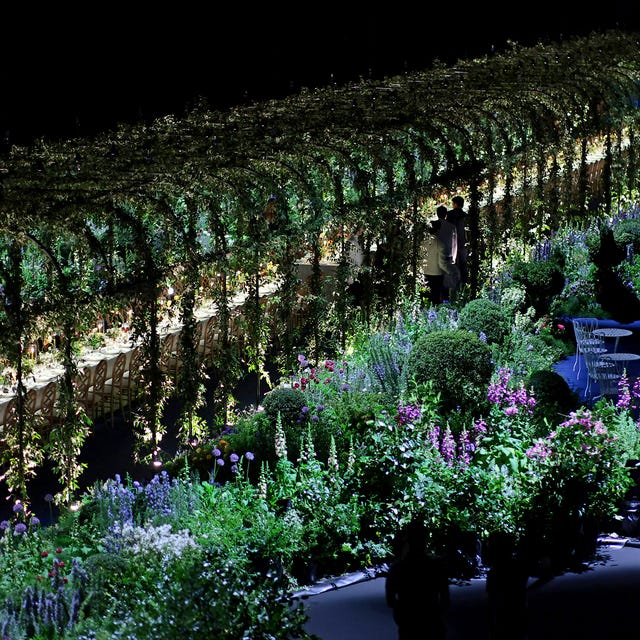
In this race toward monumentality, some houses choose to play the introspection card by investing in places that already bear their mark. The approach consists of transforming a brand’s history into a tangible territory. In New York, Tiffany & Co.’s choice of the Park Avenue Armory to unveil *Blue Book 2026: Hidden Garden* follows this circular logic. The venue offers more than just a spectacular space; it houses the Veterans Room and the Silver Room, two spaces whose interior design was entrusted to Louis Comfort Tiffany in 1881. The American brand is therefore not merely renting a reception space; it is reintegrating its own decorative past.
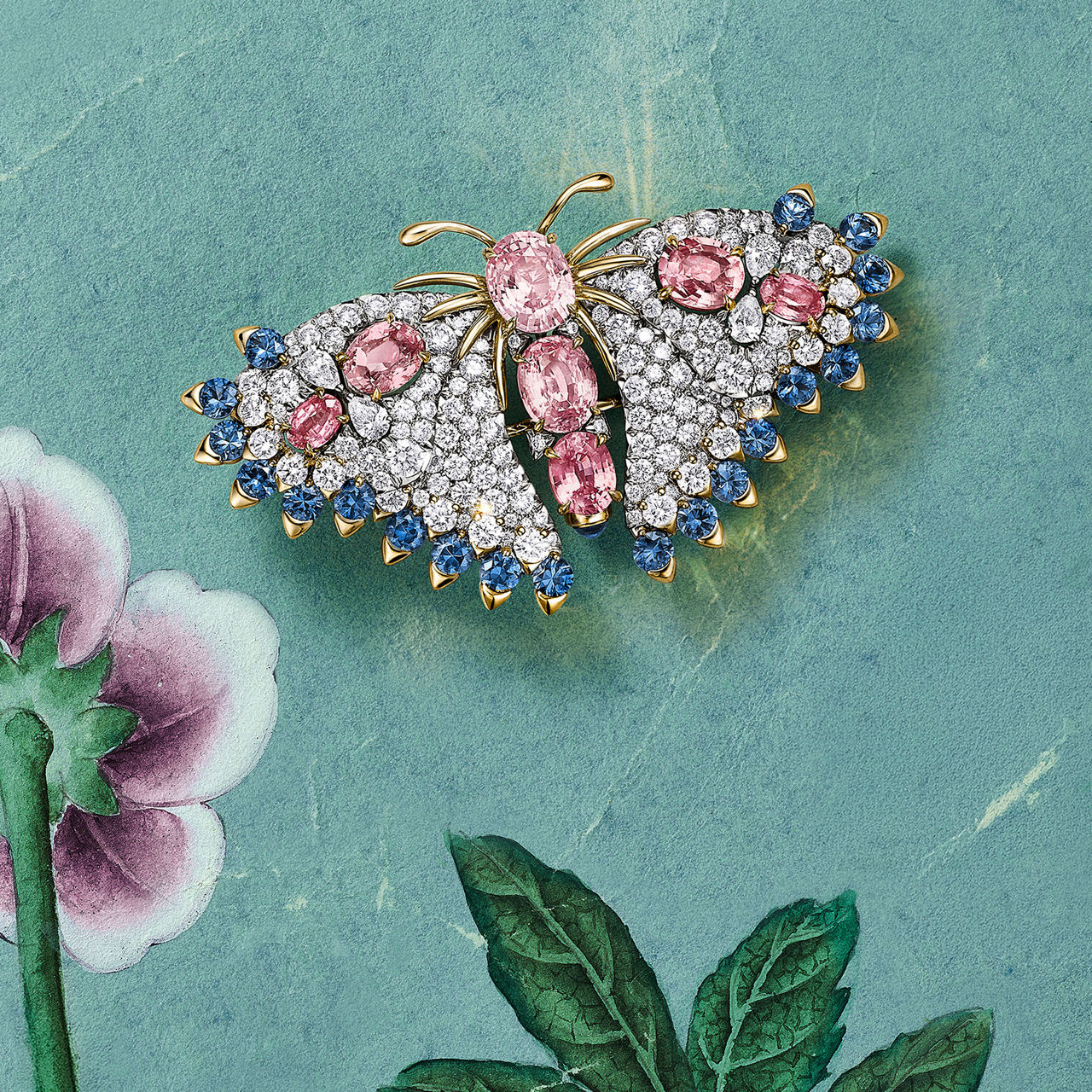
Beneath these historic ceilings, creative director Nathalie Verdeille unfurled a fantastical bestiary and flora, featuring jasmine, palm trees, and butterflies. The shadow of Jean Schlumberger and his organic creations loomed over this presentation, which culminated in an appearance by Mariah Carey. The contrast between the naturalistic refinement of the pieces and the power of a pop performance perfectly sums up the New York equation: the weight of heritage never precludes media buzz.
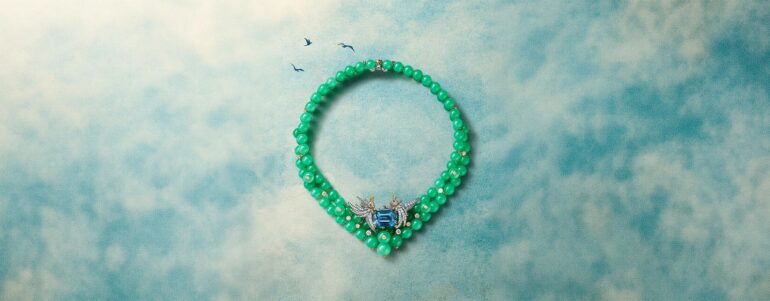
On the Mediterranean coast, the style is different, but the emotional resonance remains the same. With “Signes & Symboles,” Chanel brings its jewelry back to its home turf on the French Riviera, at Villa La Pausa. The focus of this 85-piece collection lies in a vocabulary the public knows almost by heart: the lion, the camellia, the sun, the star. All of Gabrielle Chanel’s talismans are brought to life. The risk of self-referentiality—inherent in this type of exercise centered on the founder—is circumvented through mechanical ingenuity. The house translates these talismans into kinetic elements. The pieces transform, the motifs move, thus avoiding the pitfall of a static relic to offer a lively dialogue with the harsh light of the Riviera.
Institutional Endorsement: Jewelry as an Object of Study
While memory dictates certain geographical choices, the museum’s ambition drives others. Paris remains the preferred arena for this quest for academic legitimacy. The French capital’s cultural authority offers an ideal setting for houses eager to prove that their workshops produce works of art before they produce jewelry sets.
Van Cleef & Arpels’ exhibition at the Palais de Chaillot illustrates this shift from boutique to museum. “Fascinating Egypt,” the result of four years of technical and creative development, brings together approximately 180 creations centered on a long-standing theme for the house: Egyptomania. The choice of an aesthetic inspired by the banks of the Nile called for a cautious approach. A literal interpretation would have turned the collection into a pastiche. The solution lies in the sophistication of the design. The architecture of the temples, the distinctive color palette of ancient frescoes, and the geometry of hieroglyphs are rendered in an abstract style. The inspiration is filtered through the contemporary demands of jewelry design, proving that a well-assimilated historical reference always strikes a more accurate chord than a simple copy.
Just a stone’s throw away, the Palais de Tokyo provided a brutalist setting—the polar opposite of classicism—to host Pomellato. There, the Milanese house unveiled “Stile Libero” alongside its retrospective, “The Revolutionary Jeweler.” By setting up shop in the Parisian institution dedicated to contemporary art, the brand asserts its distinctiveness. Since 1967, its design language has revolved around bold volumes, interlocking links, and bold colors. The exhibition features photographs by Herb Ritts, Snowdon, and Helmut Newton to document this stylistic approach. The message is clear: in the face of competition that sometimes veers into ornamental excess, Pomellato champions a sculptural, almost defiant approach, where style takes precedence over the display of wealth.

Excessive Theatricality and Botanical Austerity
Once outside the cultural capitals, designers tailor the tone of their presentations to the atmosphere of the venues they occupy. Two radically opposing visions of staging then clash: baroque extravagance on one side, sensory contemplation on the other.
On the Lido of Venice, there was no room for half-measures. The Palazzo del Casinò served as a showcase for Diorissima, a 112-piece collection designed by Victoire de Castellane. The presentation challenged traditional jewelry conventions by creating a dialogue between the gemstones and 20 couture silhouettes specifically designed by Jonathan Anderson. The result was akin to a cinematic masterpiece. The saturated colors and themes blending the depths of the sea, exuberant flora, and constellations echoed Venice’s architectural excess. In a city built on theatricality, the House of Dior embraced unapologetic opulence, transforming its presentation into a celebration where the splendor of the casino met the fantasy of a costume ball.
In stark contrast to this lagoon-side frenzy, Chaumet opted for the tranquility of the French countryside. The Abbey of Vaux-de-Cernay lent the vaulted ceilings of its former monastic refectory to the “A Journey Through Nature” collection. The scope is narrowed—just 46 pieces—and the theme becomes more introspective. The house moves away from the classic figurative motifs of leaves or stems to venture into the realm of synesthesia. The pieces seek to embody the essence of a spice—the aroma of vanilla, the freshness of mint, or the warmth of tea. This approach demands absolute concentration, which only the seclusion of a restored religious building could provide. Nature is not tamed or confined here; it is distilled and intellectualized, conveying the very idea of a thermal sensation through the coolness of metal and gemstones.
This fragmented landscape of the 2026 launches reveals a profound shift in expectations. Players in the world of fine jewelry have realized that the rarity of a sapphire or the purity of a diamond is no longer enough to captivate a highly sought-after clientele. The piece must be part of a narrative that transcends it. By engaging palaces, museums, convents, and photographic archives, the houses create staged settings that act as powerful catalysts for desire. They no longer simply deliver collector’s pieces from the depths of a safe; they sell access to a perfectly illuminated fragment of history, where the setting alone justifies the experience of the extraordinary.