Make Texture a preferred source on Google to support us
Add Texture to GoogleAmid New York’s creative buzz, one figure stands out for her ability to create visual stillness. Rana Kim, founder of the Rana Flora studio, is redefining contemporary floral art by applying the rigorous discipline she learned in the fashion industry. Her approach is not based on abundance, but on surgical precision in line and movement. By turning her back on compact bouquets and filler foliage, the designer establishes a unique dialogue between biology and the object, transforming each stem into an autonomous structure.
Structure Before Ornament
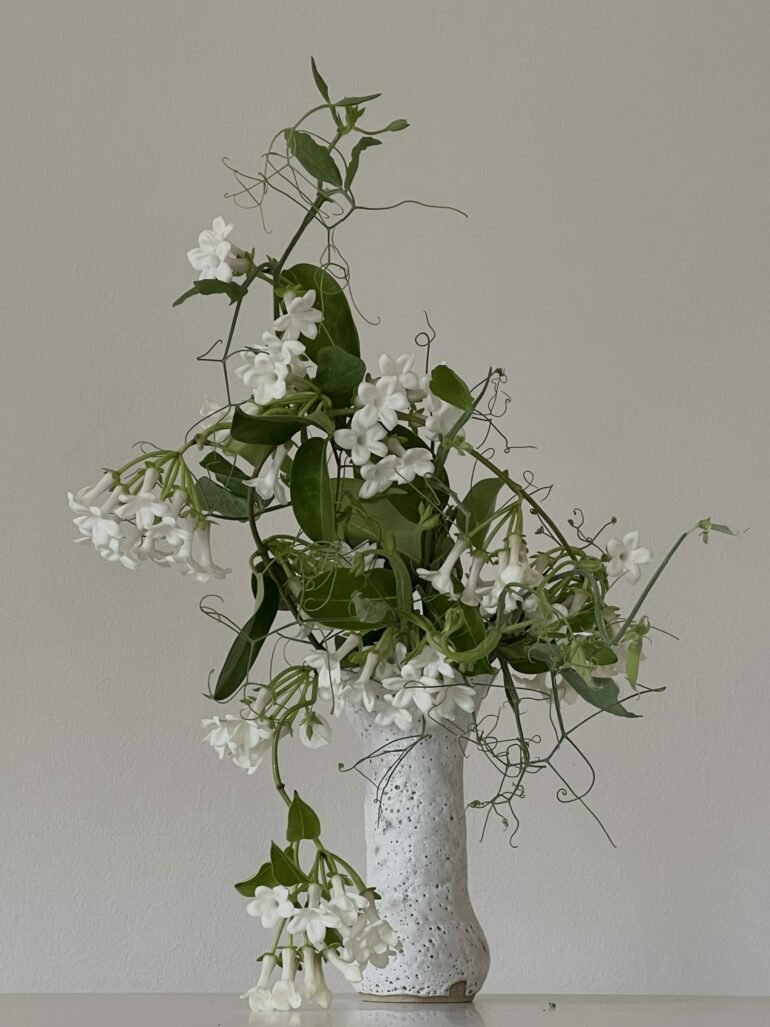
Rana Flora’s aesthetic is defined by an economy of means that borders on the minimalist. This “less is more” principle is not, here, a superficial minimalist stance, but a pursuit of formal clarity. Rana Kim treats her compositions as spatial installations. She favors isolated stems—"freestanding stems"—that rise with graphic confidence, transforming the plant into a moment of architecture. This vision strips away the superfluous to focus on the silhouette of a single flower, the tilt of a corolla, or the texture of a stem.
This rigor stems from the artist’s cultural duality. Her work is infused with her Korean roots and heritage—evident in its calm and respect for proportions—while also being shaped by the raw, urban energy of New York. This contrast gives rise to works that do not seek to decorate a space, but rather to inhabit it in a sculptural way.
The Object as an Extension of the Plant
The choice of containers is a central pillar of Rana Flora’s work. Kim does not settle for standard vases; she selects containers with unconventional shapes, with a marked preference for clear glass. These “clear-glass vessels” reveal the plant’s entire structure, incorporating even the submerged portion of the stem into the overall composition. The vase becomes an active partner to the flower, an extension of its own geometry.
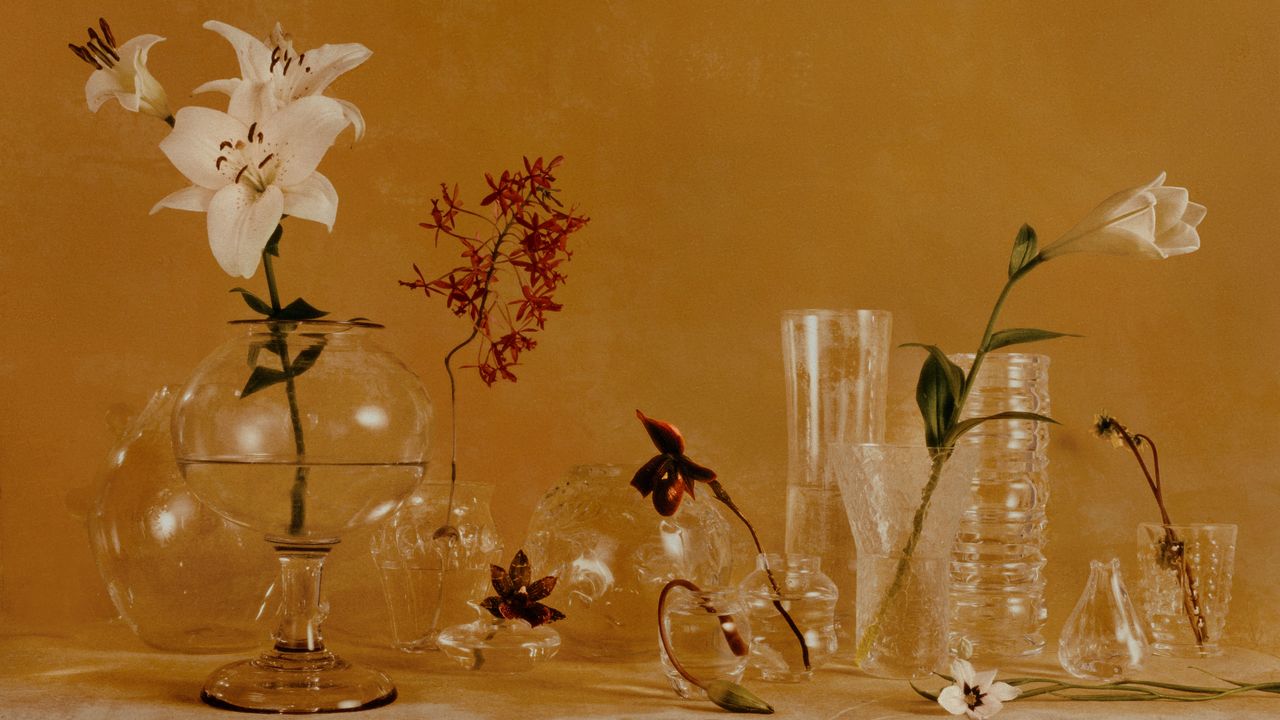
This combination of rare floral varieties and objects of unusual beauty quickly caught the attention of the art and fashion worlds. In December 2024, Rana Kim collaborated with London-based jewelry designer Anna Jewsbury (Completedworks) and Vanessa Krooss (Merit) at a dinner in New York. For this event, the brand’s glassware and ceramics were incorporated into the studio’s floral arrangements, creating a symbiosis between the art of the table and botanical poetry.

Installations for the Cultural and Private Spheres
Rana Flora’s journey has been marked by collaborations with institutions and influential figures. In 2024, the studio created the architectural floral installations for the wedding of actresses Abbi Jacobson and Jodi Balfour in Brooklyn, confirming its ability to transform a private event into a visual performance. More recently, in September 2026, the designer brought her vision to life for an intimate dinner bringing together Alison Roman and the Margaux shoe brand at Keens Steakhouse.
Rana Kim’s influence also extends to museums and prestigious venues. She created the floral design for an event at the Museum of Modern Art (MoMA) in New York, as well as the botanical concept for Veronika, the restaurant and bar located within the Fotografiska museum. This latest project was carried out in partnership with Katzie Guy-Hamilton and the designers at the Roman and Williams firm, further cementing the florist’s work in the realm of high-end interior design.
A Selective and Customized Presence
Rana Flora’s success is built on a strategy of exclusivity. The studio does not operate like a traditional boutique with a fixed catalog or a consumer-facing e-commerce platform. Each project—whether a wedding, an installation for a luxury brand, or a private dinner—is the subject of a personalized quote. This approach allows the studio to maintain the artistic integrity of each creation while tailoring it specifically to the venue and the intent of the commission.
This commitment is reflected in her list of institutional clients, such as Sotheby’s, for whom she orchestrated the inaugural dinner in SoHo in November 2025. Whether through her Instagram account (@ranaflora) or her installations at iconic Manhattan venues, Rana Kim champions a vision in which flowers are no longer mere accessories but the central focus of a reflection on space and form. Her journey—from the fashion industry to the pinnacle of New York’s floral scene—reflects a profound transformation within the discipline: that of a craft that now embraces its artistic and architectural dimensions.