Make Texture a preferred source on Google to support us
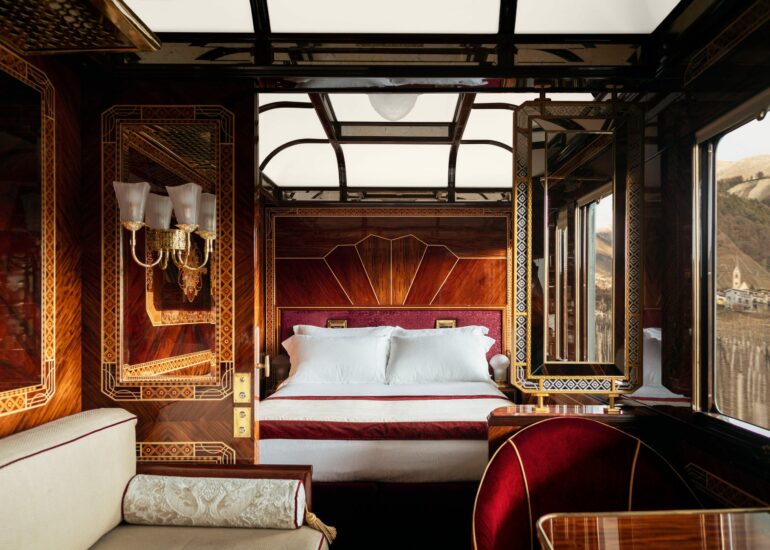
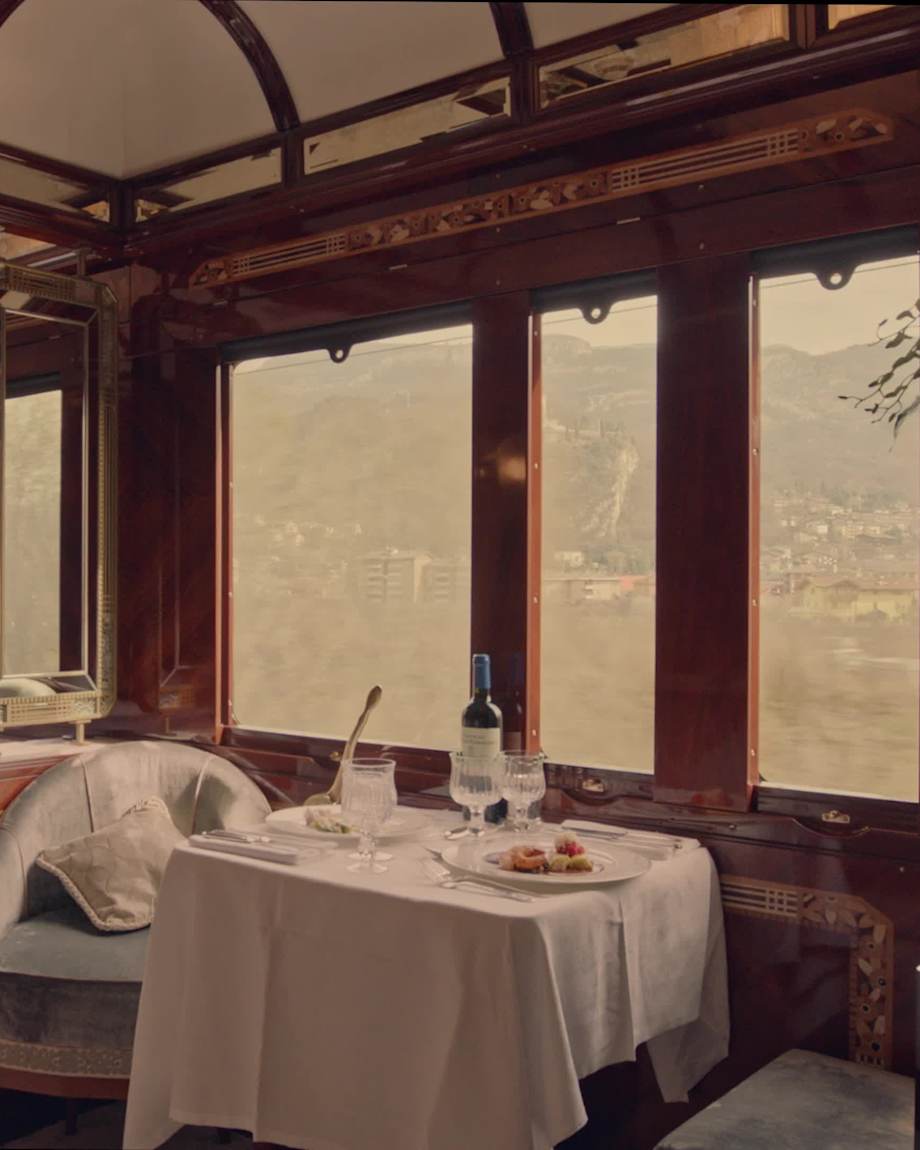
Add Texture to GoogleCommercial aviation has eliminated distance, but it has also erased geography. Locking oneself inside a pressurized cylinder to cross Europe in two hours is now nothing more than a logistical transaction. At the opposite extreme, a small group of wealthy travelers is taking a radical turn. They shell out thousands of euros, not to arrive quickly, but to impose their own rhythm on geography. The night train, long relegated to the status of a laborious mode of transportation or a memory for cash-strapped backpackers, is being reborn as a moving luxury hotel. Behind doors of burl walnut or mahogany, the metallic clatter of the axles on the tracks sets the rhythm for journeys where the final destination ultimately matters less than the choreography of onboard service.
The antidote to the compression of time
This shift in travel habits cannot be explained solely by nostalgia for a romanticized era—that of Agatha Christie or the interwar period. It responds to a contemporary affliction: saturation. For a clientele accustomed to the immediacy of private jets, voluntarily confining oneself to a train car becomes an absolute luxury. It’s impossible to speed up the journey; it’s impossible to shorten the trip. Passengers are forced to let go. The environmental justification naturally comes up in discussions, and some cite a desire to reduce their personal carbon footprint as a reason for this choice, but that argument remains secondary. People board to escape the rush of everyday life.
The paradox is fascinating. The luxury industry traditionally sells space. Yet a railroad car offers dimensions strictly limited by the track gauge and the size of the tunnels. Compartments rarely exceed a few square meters. It is therefore the density of the materials, the ingenuity of the storage solutions, and the extreme personalization of customer service that justify ticket prices often equivalent to those of a suite in a major Parisian hotel.
A Naval Battle on Steel Rails
Behind this romantic revival lies a fierce trade war between two global giants. The original myth is being torn apart. On one side, the LVMH Group acquired the British company Belmond in 2019 for more than three billion dollars. This portfolio includes the Venice Simplon-Orient-Express, which operates historic railcars from the 1920s and 1930s on the route connecting Paris to Venice, with extensions to Florence or Istanbul. On the other side, the hotel giant Accor holds the operating rights to the official Orient Express brand, which it gradually acquired from the SNCF.
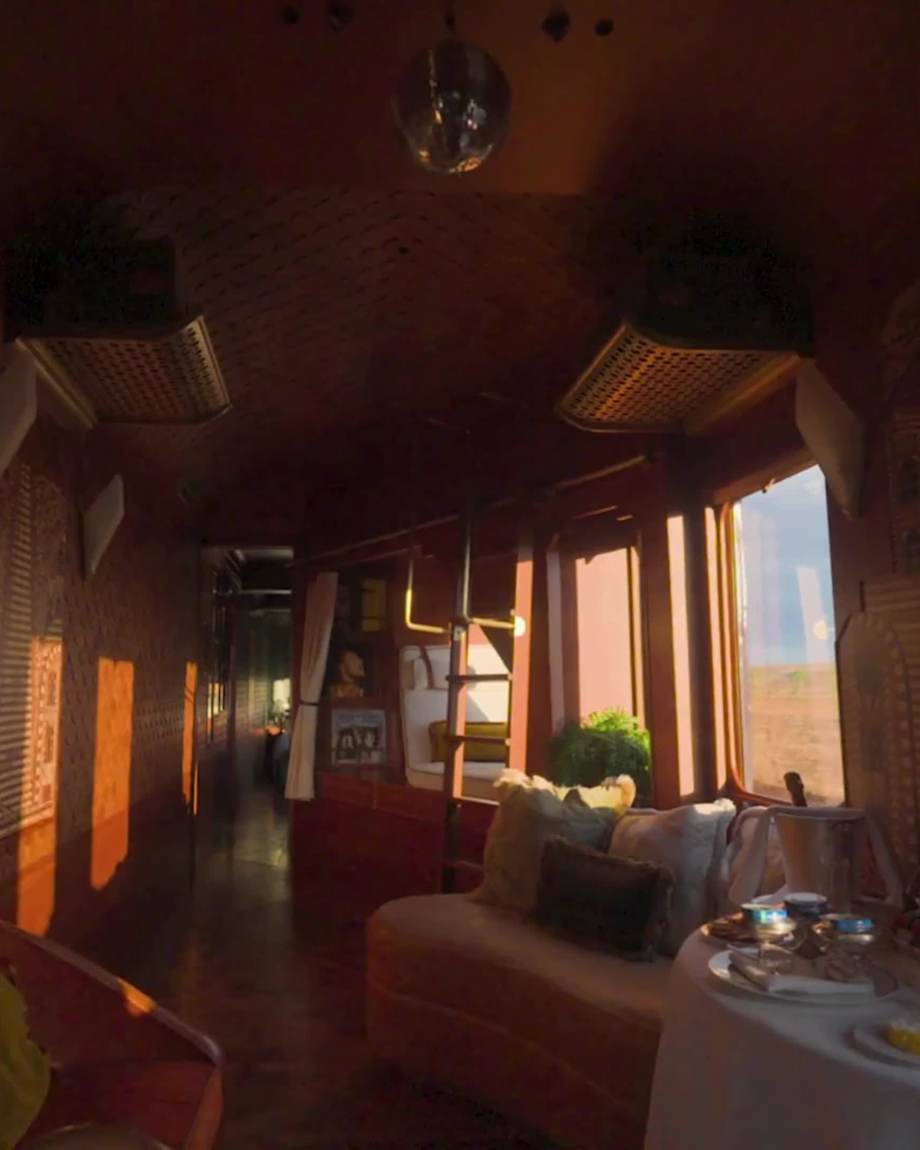
Accor has no intention of letting its rival dominate European railways alone. The group has launched a massive restoration program for seventeen original cars from the Nostalgie-Istanbul-Orient-Express, which were found abandoned on the Belarusian border in 2015. Entrusted to architect Maxime d’Angeac, the redesign of this fleet walks a fine line: reviving the spirit of the Roaring Twenties without descending into museum-style pastiche. At the same time, Accor is rolling out the La Dolce Vita project in Italy. Gone are the Art Deco inlays; these trains draw inspiration from 1960s Italian design, evoking the spirit of Gio Ponti or Carlo Scarpa, with tawny leathers, colorful lacquers, and thick carpets. Competition is driving the entire sector to drastically raise its standards, with each player seeking to capture the imagination of continental travel.
Ballistic constraints and haute cuisine
Fitting out a luxury train is akin to watchmaking. One must contend with vibrations, centrifugal force on curves, draconian rail safety standards, and cramped spaces. The integration of private bathrooms equipped with showers into individual cabins has been a recent technical revolution for trains designed in an era when personal hygiene was performed at a sink. The restoration workshops call upon the few artisans capable of working with Lalique glass, solid brass, or rare woods to adorn partitions that must remain flexible and resistant to movement.
The feat is even more spectacular in the kitchen. Producing gourmet-level meals for about a hundred guests in a space of just a few square meters, without gas and with limited electrical power, is nothing short of a tour de force. On the Venice Simplon-Orient-Express, Chef Jean Imbert recently reimagined the entire culinary offering, building on decades of classical tradition. Service is impeccable, with staff in evening attire; the maître d’s navigate narrow corridors while balancing trays laden with crystal and silverware in time with the train’s jolts.

From the Andes to Kyushu, ultra-luxury goes global
While Europe remains the main stage for this trend thanks to its dense rail network and rich railway history, the model is spreading to other parts of the world, adapting its aesthetic to the local geography. In Peru, the Belmond Andean Explorer winds its way through the Altiplano. Its observation cars, equipped with open-air decks at the rear of the train, allow passengers to watch the lunar landscapes of the Andes mountain range roll by at altitudes nearing 4,300 meters—sometimes requiring cabins to be equipped with oxygen supplies to counter altitude sickness.
Japan takes refinement to its peak with the Seven Stars in Kyushu. Launched in 2013, this burgundy-painted train accepts only a handful of passengers per trip. Seats are assigned by lottery, as demand far outstrips supply. Inside, the partitions feature the traditional kumiko craft technique—a complex assembly of wooden pieces without nails—while meals are served on Arita porcelain specially fired for the train. Here, the journey takes on the air of a quiet retreat—a slow contemplation of rural Japan, in stark contrast to the blinding speed of the Shinkansen.
In South Africa, Rovos Rail embraces an unapologetic Edwardian aesthetic, hauling its vintage cars through the Karoo or toward Victoria Falls, with windows open to the bush. The deliberate absence of Wi-Fi and television in the suites forces passengers to disconnect.
The next morning, shortly after dawn, the sharp click of a latch being turned signals the steward’s arrival. The folding table is unfolded with a precise motion, covered with a crisp, white tablecloth. A silver teapot simmers beside fine porcelain cups. Through the window, the mist slowly lifts from the slopes of the Swiss Alps. The train begins its descent toward the Lombardian plain. The arrival time matters little; the crossing of the border took place while we slept, to the steady rhythm of the steel.