Make Texture a preferred source on Google to support us
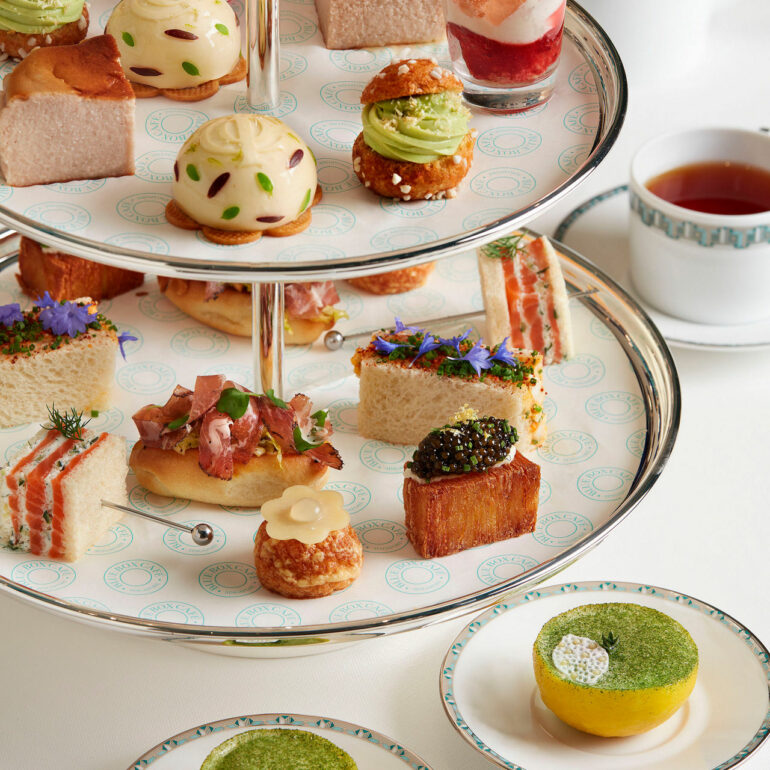
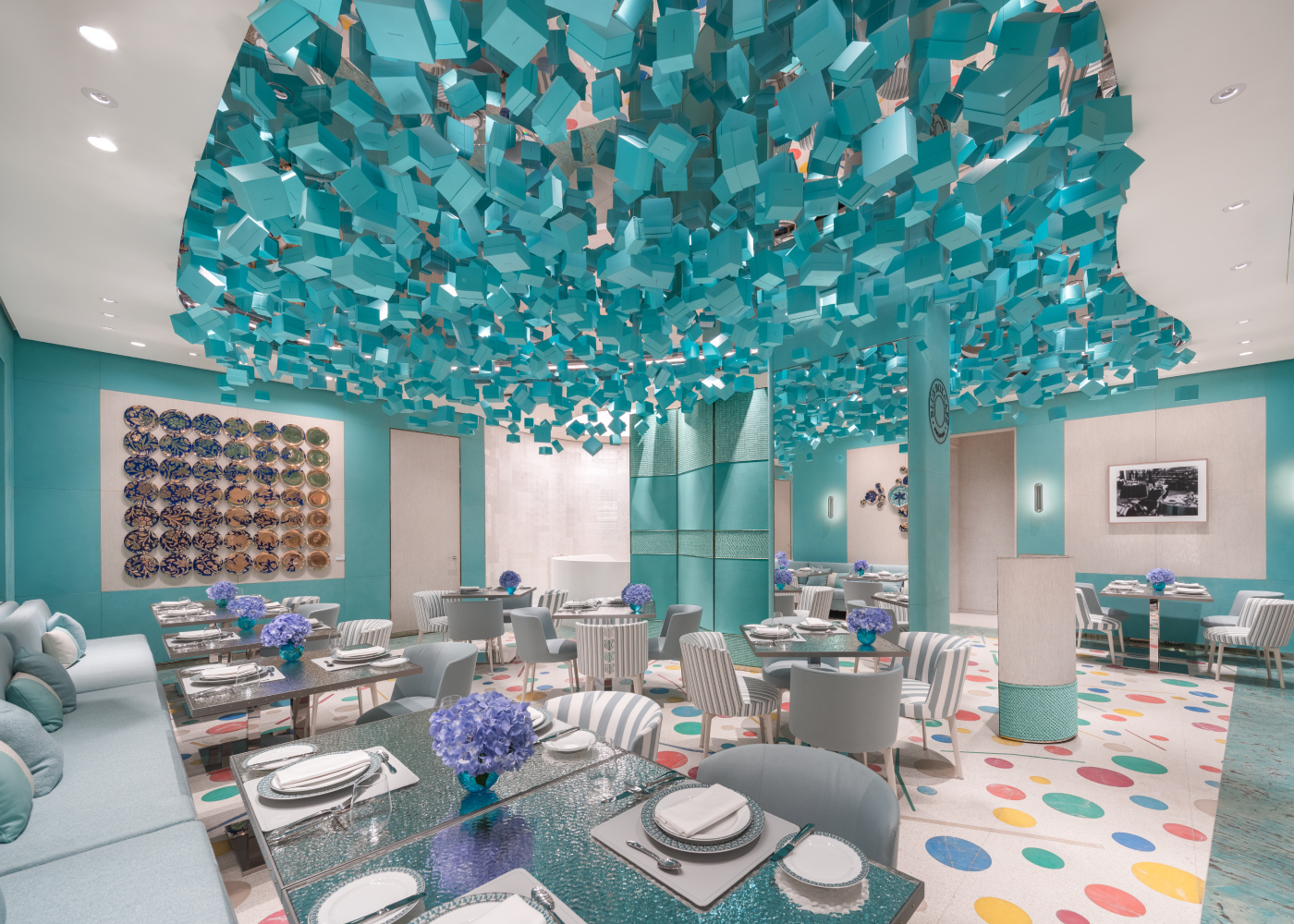
Add Texture to GoogleOn the third floor of a sprawling complex on Orchard Avenue, the hushed murmur of business transactions gives way to the clinking of silverware. In a dining room seating twenty-eight, entirely bathed in a distinctive cyan blue, a whimsical installation of geometric boxes seems to float above the tables. On the plates, a variety of Patagonian dentex prepared using French techniques and Asian flavor profiles is paired with a reimagining of the classic “Tiffany Burger,” or a breakfast menu that proudly bears the name “Breakfast at Tiffany’s.” By entrusting the creation of this menu to Chef Julien Royer—a leading figure in Singaporean gastronomy and holder of three Michelin stars for his restaurant Odette—the management is deliberately blurring the lines. Taking a seat at the Blue Box Café—which is making its very first foray into Southeast Asia here—requires a resource that traditional retail spaces often struggle to capture: time.
This approach to the retail space as a true living, immersive environment is evident even from the street, before you even step through the doors of the Singapore boutique. To design the space, which spans three distinct levels, architect Hugh Dutton rejected the concept of a static storefront. Its exterior façade takes the form of a kinetic light sculpture. The installation replicates the optical variations and sparkle characteristic of a cut diamond, offering passersby an architectural envelope in constant visual flux. The dialogue between spatial design and artistic creation continues the moment you step inside. New York-based ceramicist Peter Lane has adorned the main wall with a relief work where bluish waves meet shimmering geometric abstractions. The raw and shaped material of the ceramic offers a physical and tactile interpretation of the famous blue box, immediately creating an atmosphere more akin to an art gallery than a simple display counter.
A curatorial approach to heritage objects
The interior design then playfully juxtaposes different eras with rare confidence. Rather than relegating its history to distant archives or limiting it to temporary exhibitions, the space integrates historical pieces head-on. A monumental vase encircled by a bronze mount, designed by Louis C. Tiffany around 1898, stands opposite the contemporary collections. Beside it, the strange organic silhouette of the Jack-in-the-Pulpit vase—a masterpiece crafted around 1911—evokes the company’s avant-garde experiments at the dawn of the 20th century. The inclusion of these century-old artifacts radically alters the visitor’s experience of the exhibition. The experience is akin to visiting a private collection where the decorative arts engage in a dialogue with jewelry. In this way, the American brand reminds us that its aesthetic authority was first forged through mastery of proportions and complex materials, long before it focused on the pure brilliance of gemstones.

This foundation goes beyond simply importing a Western heritage. In the area specifically named “Love & Celebration,” the visual vocabulary creates a subtle fusion. Historic magnolia motifs—a recurring and familiar signature of Louis Comfort Tiffany—intertwine with floral designs drawn directly from traditional kebayas. This hybrid blend of textiles and styles allows New York’s identity to be woven into Singapore’s cultural fabric. Further on, the salon dedicated to fine jewelry embraces a boldly theatrical aesthetic. The atmosphere shifts to a space saturated with champagne tones and bluish reflections. Precisely applied metallic leaf and meticulously hand-painted panels line the walls, creating an enclosed, jewel-box-like setting designed to showcase one-of-a-kind pieces that demand exclusive attention.
A Legacy of Mechanics and Extravagance
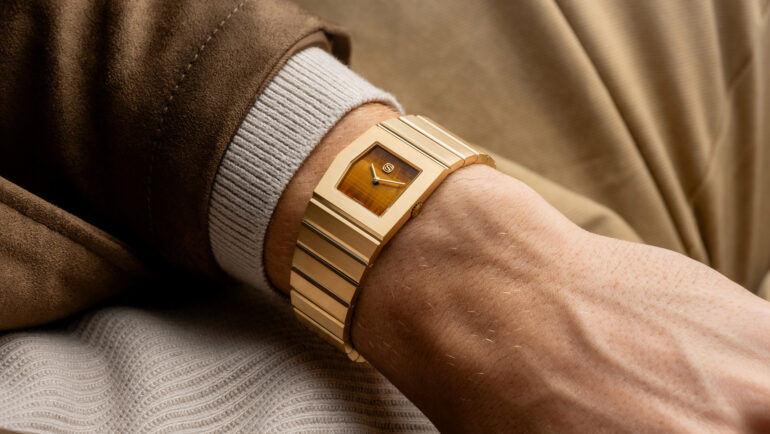
The restructuring of the space at ION Orchard also allows for the isolation and highlighting of specific disciplines within the house. For the first time in the city-state, an independent watch boutique has taken up residence within these walls. This technical space makes its mark with an exclusive inaugural creation: the Sixteen Stone watch, crafted from mother-of-pearl and rubies. The timepiece draws inspiration from Jean Schlumberger’s architectural codes, translating them into precision mechanics centered around a rotating ring featuring alternating diamonds and red gemstones.
The spirit and audacity of the famous French designer, in fact, permeate the entire upper floor. Conceived as a spatial replica of one of the spaces at the Landmark—the monumental flagship on Fifth Avenue in New York—the Schlumberger Gallery rejects any attempt at minimalism. The interior design emphasizes a clash of textures: gilded leather contrasts with panels of meticulously woven metallic fabric. This composite decor serves as a backdrop for the most imaginative pieces in the catalog. The display cases are filled with references to the jeweler’s naturalistic and colorful obsessions, showcasing variations on the famous “Bird on the Rock” motif and intricate bracelets crafted from speckled enamel. The exhibition design never seeks to tone down the message. Instead, it embraces and celebrates the sophisticated eccentricity of a free spirit, thus bringing to a close a sensory journey that begins in the luminous bustle of the street and ends in the suspended time of a mechanical movement or a Michelin-starred dish.