
Make Texture a preferred source on Google to support us
Add Texture to GoogleThe Untouchable Storefront Syndrome
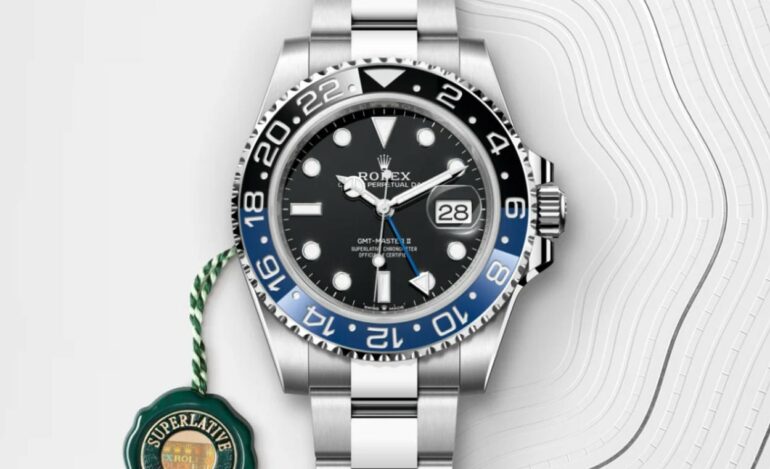
Strolling along Singapore’s shopping avenues in 2026 exposes the watch enthusiast to a fascinating paradox. Behind the immaculate display cases of authorized dealers, timepieces sit proudly on discreet stands labeled “Exhibition Only.” The Rolex GMT-Master II, the undisputed star of steel sports watches, is on public display but remains off-limits for purchase. Faced with waiting lists measured in years—and generally reserved for customers with a history of massive purchases—acquiring this model at an official store today requires patience bordering on self-sacrifice. The myth of direct purchase has crumbled, forcing collectors to completely rethink their acquisition strategy.
The secondary market, once viewed as a risky fallback option, has evolved into the preferred and pragmatic playground for Singaporean buyers. This shift is accompanied by a pricing anomaly that challenges conventional wisdom: according to industry data, certain steel models in the lineup are now trading at a discount of 5 to 15 percent below the list price on the secondary market. The assumption that the official channel guarantees the best financial deal is a thing of the past. While the public is willing to pay a premium to skip the line for highly sought-after models, the transparency of actual prices is driving demand definitively toward these new distribution channels, where immediate availability takes precedence over protocol.
The “tool of the skies” has become the hallmark of financial hubs
The global obsession with this line stems from its primary function, which is remarkably simple. Originally designed to allow civil aviation crews to take in two time zones at a glance, the GMT-Master II naturally made the transition from cockpits to boardrooms. In Singapore, an aviation hub and the nerve center of Asian finance, this purpose remains absolutely relevant. The watch is not merely an aesthetic trophy; it remains a timekeeping instrument for lives structured around long-haul flights and international stock market closings.
The navigation tool has, however, revamped its stylistic vocabulary. The fragile aluminum bezel inserts of past decades—noted for their tendency to fade in the sun—have been replaced by the durable Cerachrom ceramic. The introduction of the Jubilee bracelet to this line has also transformed perceptions of the model. This intricate mesh design has elevated the watch beyond its status as a purely sporty instrument, anchoring it in a distinctly more sophisticated realm—which explains its uninterrupted presence on the wrists of decision-makers.
Color and Character: The Language of Watch Bezels
Within the collection, choosing a particular variant amounts to a true statement of intent. The “Pepsi” version is the most coveted and attracts the most speculative attention. Its two-tone red and blue bezel—whose complex ceramic firing process requires absolute mastery of pigments—gives it a status all its own, steeped in history. In contrast, the “Batman,” clad in black and blue, takes a stealthy approach, firmly anchored to its three-link Oyster bracelet to embody a purely sporty aesthetic. Its twin, dubbed “Batgirl” by the community, features the Jubilee bracelet for a more fluid and sophisticated look.
Those seeking a visual departure turn to the “Sprite.” With its crown and date window shifted to the left side of the case, this model deliberately breaks the brand’s ergonomic conventions, appealing to aesthetes seeking disruptive geometry. Finally, the Everose Rolesor on the “Root Beer” model exudes warm, nuanced hues, offering a luxurious alternative to the coldness of surgical steel. This color palette reflects the market’s dynamic energy, with each model appealing to a very specific buyer profile.
The Phantom Threat and the Challenge of Authenticity
Getting your hands on the coveted piece marks only the beginning of a complex journey. By 2026, the craftsmanship of “Super Clones” had reached technological heights. These next-generation counterfeits no longer merely copy a dial vaguely: they mimic the weight, the shape of the lugs, the steel, and the overall aesthetic of the original with a precision that leaves enthusiasts speechless. Given that the brand’s official service center has stopped offering a standalone authentication service, verification has become a high-stakes process.
The pursuit of detail demands a rigorous examination. The expert’s eye searches for the microscopic, laser-engraved crown within the sapphire crystal, scrutinizes the encrypted security features on the warranty card, and, above all, demands a meticulous inspection of the Caliber 3285 beating at the heart of the case. Authentication is no longer merely a matter of psychological comfort; it is the sole safeguard for securing a financial transaction of this magnitude.
The Physics of Spatio-Temporal Preservation
In the highly demanding Singaporean market, the value of a GMT-Master II is intimately linked to its physical condition. The obsession with “mint” condition reigns supreme. The polished center links of the steel bracelet catch the light but are unforgiving when it comes to friction from a desk or impacts from a belt buckle. To preserve the metal in its factory-fresh condition, the application of very high-quality protective films has become widely accepted. Far from being viewed as heresy, this thin sacrificial layer absorbs micro-scratches and maintains the piece’s market value.
When the metal eventually shows signs of wear, the question of polishing sharply divides collectors. A microscopic touch-up can breathe new life into the material, but overly aggressive polishing destroys the watch’s architecture. Excessive polishing rounds off the lugs, alters the case’s symmetry, and—an unforgivable mistake—erases the sharp chamfers originally machined into the case. In this world, the precision of the factory-cut lines will always take precedence over the artificial sheen of heavily sanded metal.
The New Time Brokers
To navigate the pitfalls of authentication and price fluctuations, private sellers can no longer rely on the vagaries of a private sale. In Singapore, an ecosystem of independent and strictly regulated players has emerged. The Watch Capital space, located in the Somerset district, embodies this streamlined approach. The space resembles a watch wealth management firm more than a simple retail outlet. The transaction itself takes a back seat to long-term support, covering certification, valuation, and the safeguarding of funds.
This type of structure also changes the way people build their own collections. Consignment is treated here as a financial engineering tool. Rather than keeping a Rolex Submariner that’s sitting idle, entrusting its resale to these professionals frees up the capital needed to finance the upgrade to a GMT-Master II. The dealer handles the appraisal, the search for qualified buyers, and the optimization of the selling price. This is asset management in the strictest sense, proving that the acquisition of a timepiece of this caliber has definitively moved beyond the realm of mere passion and entered that of pure strategy.