
Make Texture a preferred source on Google to support us
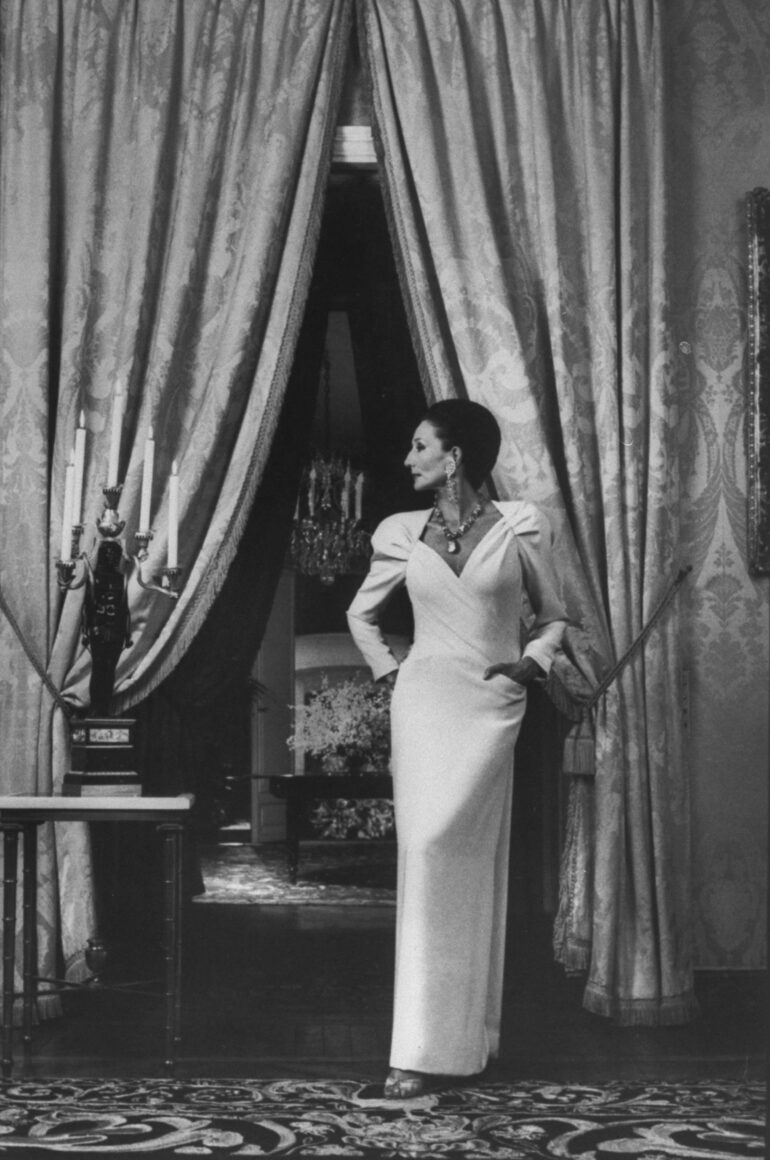
Add Texture to GoogleOn December 30, 2025, a chapter in the history of French cuisine came to a close in Tolochenaz, in the canton of Vaud. Jacqueline de Ribes passed away at the age of 96, leaving behind the image of a woman who was never content merely to inhabit the world, but who shaped it in her own image. Born Jacqueline Bonnin de La Bonninière de Beaumont on July 14, 1929, in Paris’s 7th arrondissement, she embodied a form of aesthetic perfection that earned her the title “the last queen of Paris” from fashion designer Valentino Garavani. This distinction, far from being a mere social compliment, highlighted a poise and presence that seemed to belong to a dying breed.
The daughter of Count Jean de Beaumont, a prominent figure in the worlds of business and international sports, and Paule de Rivaud de La Raffinière, she grew up in an environment where discipline was combined with opulence. Her marriage in February 1948 to Viscount Édouard de Ribes—who later became Count de Ribes, a banker and a figure in the Resistance—placed her at the pinnacle of Parisian high society. The couple had two children: Élisabeth in 1949 and Jean in 1952. Yet, behind the title and the obligations of social appearances, Jacqueline de Ribes developed a personal artistic vision at a very early age, refusing to be merely a passive figure in the salons of the aristocracy.
An Aesthetic of Metamorphosis
Her influence on fashion began long before she launched her own label. As early as the 1950s, Jacqueline de Ribes distinguished herself through a unique approach: she directly altered the haute couture pieces she commissioned. Dissatisfied with the ready-to-wear options available to someone of her rank, she cut, restructured, and assembled elements with the help of Parisian artisans to create one-of-a-kind outfits. This creative audacity reached its peak at the grand masked balls of the postwar era. For the Beistegui Ball in 1951 and the Proust Ball in 1971, she designed her own costumes, asserting a dramatic sense of self-presentation.
This uniqueness did not escape the keenest eyes of her time. Yves Saint Laurent, her close friend, nicknamed her the “ivory unicorn,” while Emilio Pucci affectionately called her “Giraffina,” in homage to her long neck and haughty bearing. Jean Paul Gaultier saw in her “the essence of Parisian elegance.” Her beauty, captured by the greatest photographers of the 20th century—Richard Avedon, Cecil Beaton, Irving Penn, and Slim Aarons—has stood the test of time without ever seeming dated. Truman Capote himself included her in his select circle of “swans”—those women whose allure and lifestyle defined the standards of international high society.
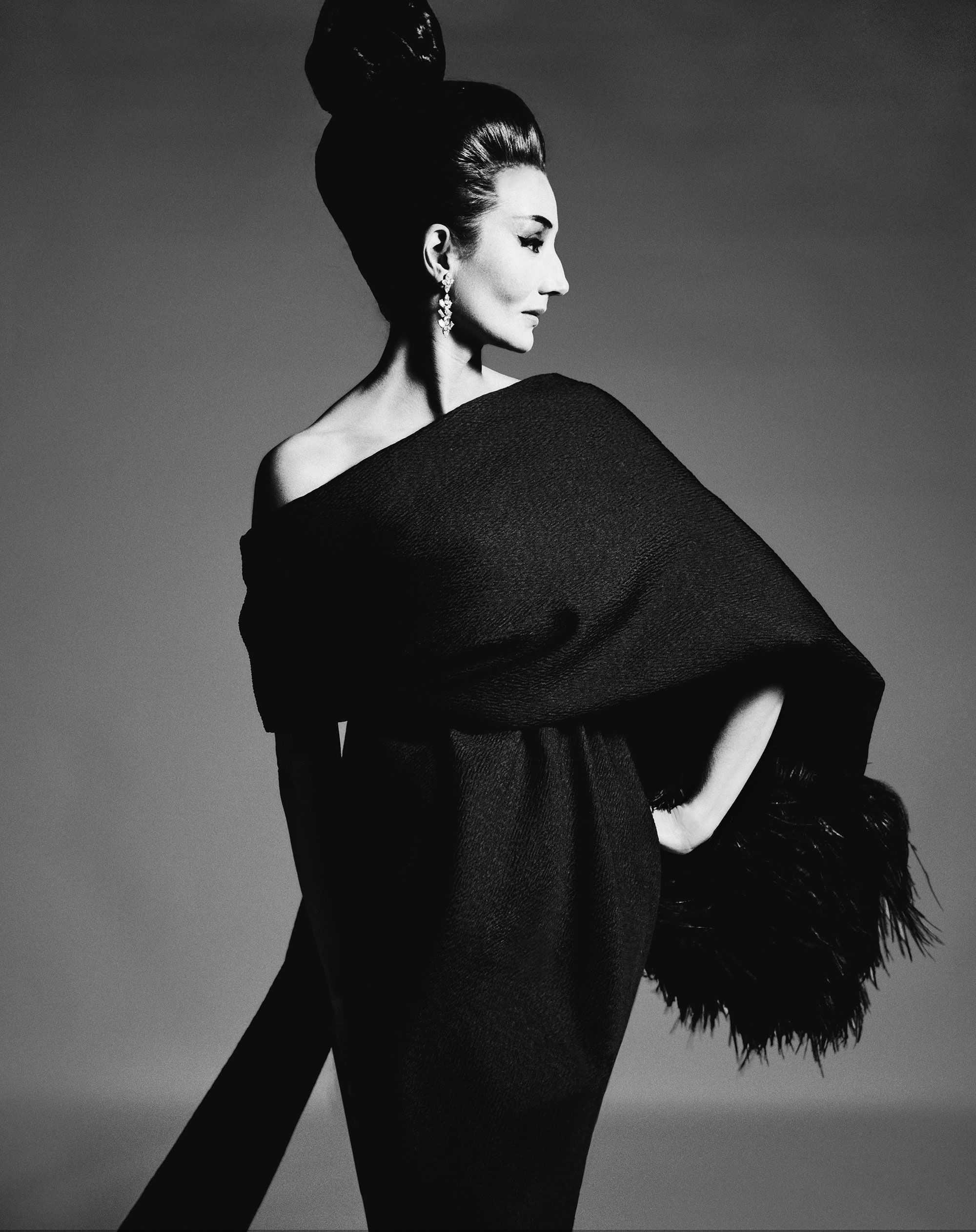
In 1956, she made her debut on the International Best-Dressed List, before being inducted into its Hall of Fame in 1962. This formal recognition validated a status that few have maintained with such consistency. In 2010, her contribution to France’s international prestige was officially recognized by President Nicolas Sarkozy, who awarded her the insignia of Chevalier of the National Order of the Legion of Honor.
From Muse to Designer
In 1982, Jacqueline de Ribes decided to transform her personal vision into a structured business. She founded her own high-end ready-to-wear fashion house—a rare move for a woman of her background at that time. With the public support of Yves Saint Laurent, she presented her first official collection in 1983, simultaneously in Paris and New York. Success was immediate, driven by a prestigious international clientele that included Nancy Reagan, Joan Collins, Cher, and Raquel Welch.
Her collections reflected her own style: clean lines, technical sophistication, and an intuitive understanding of what powerful and influential women wanted to wear. The brand thrived for over a decade. However, in 1995, Jacqueline de Ribes decided to retire from fashion design. This decision was driven by health issues, particularly persistent back pain that made it impossible for her to maintain the demanding work schedule required to run a fashion house.

Commitment to the Arts and Cultural Heritage
Alongside her career in fashion, the countess played a pivotal role in the world of culture and the performing arts. After the death of Marquis George de Cuevas in 1961, she took over the reins of the Grand Ballet du Marquis de Cuevas. Alongside Raymundo de Larraín, she oversaw the direction and financing of ambitious productions, such as Prokofiev’s ballet *Cinderella*, which starred Geraldine Chaplin. Although the company was eventually dissolved for budgetary reasons, her tenure at its helm marked a period of active patronage of the dance arts.
As a producer and administrator for theater and television, she also played a role in the inauguration of the Théâtre Juliette Récamier in 1958. Her influence extended to museum institutions: appointed honorary president of the Society of Friends of the Musée d’Orsay in 2013, she worked to preserve and promote the national collections. A significant portion of her own wardrobe, documenting the evolution of haute couture over half a century, has been donated or bequeathed to the Palais Galliera, the City of Paris’s fashion museum.
This heritage aspect was celebrated in the exhibition *Jacqueline de Ribes: The Art of Style*, held from November 2015 to February 2016 at the Anna Wintour Costume Center of The Metropolitan Museum of Art in New York. Curated by Harold Koda, the exhibition featured some sixty haute couture ensembles and personal creations, illustrating how one woman had succeeded in transforming clothing into an autonomous form of artistic expression. A few years earlier, in 1999, Jean Paul Gaultier had already paid her a heartfelt tribute by dedicating his spring-summer haute couture collection, titled “Divine Jacqueline,” to her iconic silhouette.
The Dispersion of a World
In December 2019, the auction titled “The Ribes Collection” at Sotheby’s in Paris offered a glimpse into the intimate world in which she lived. The sale of 18th-century furniture, paintings by old masters, precious manuscripts, and rare books from her Parisian mansion attracted the attention of major institutions. On this occasion, the Louvre Museum and the National Estate of Versailles exercised their right of first refusal on several major pieces, thereby ensuring their preservation in French public collections.
Jacqueline de Ribes will be laid to rest at the Passy Cemetery in Paris’s 16th arrondissement. Her passing marks the end of an era in which elegance was not merely a matter of clothing, but a way of life encompassing pure creativity, support for artists, and scrupulous respect for cultural heritage. She is remembered as a woman who knew how to navigate between the strictest traditions and a confident, creative modernity, without ever sacrificing her freedom of interpretation.