Make Texture a preferred source on Google to support us
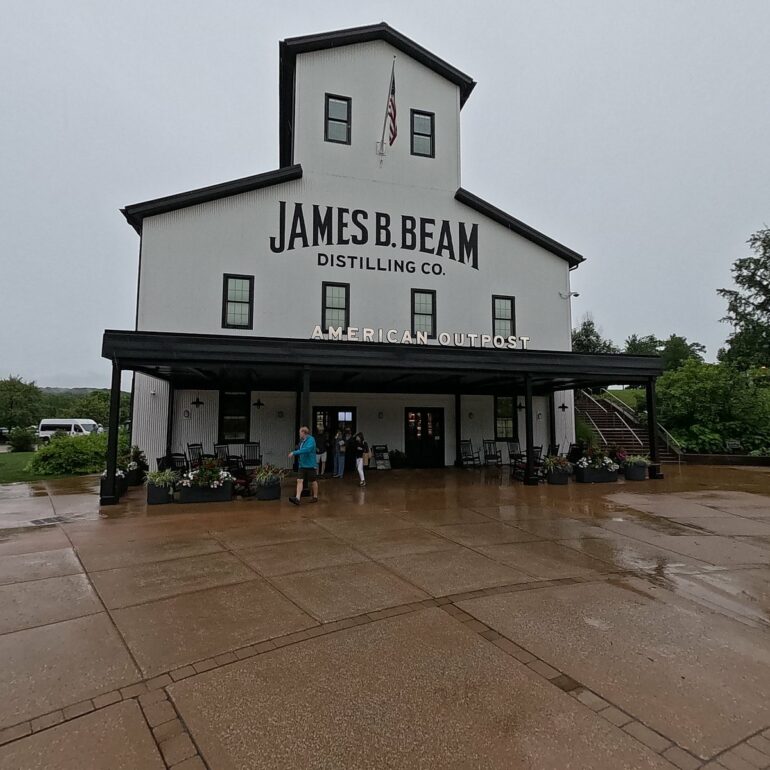
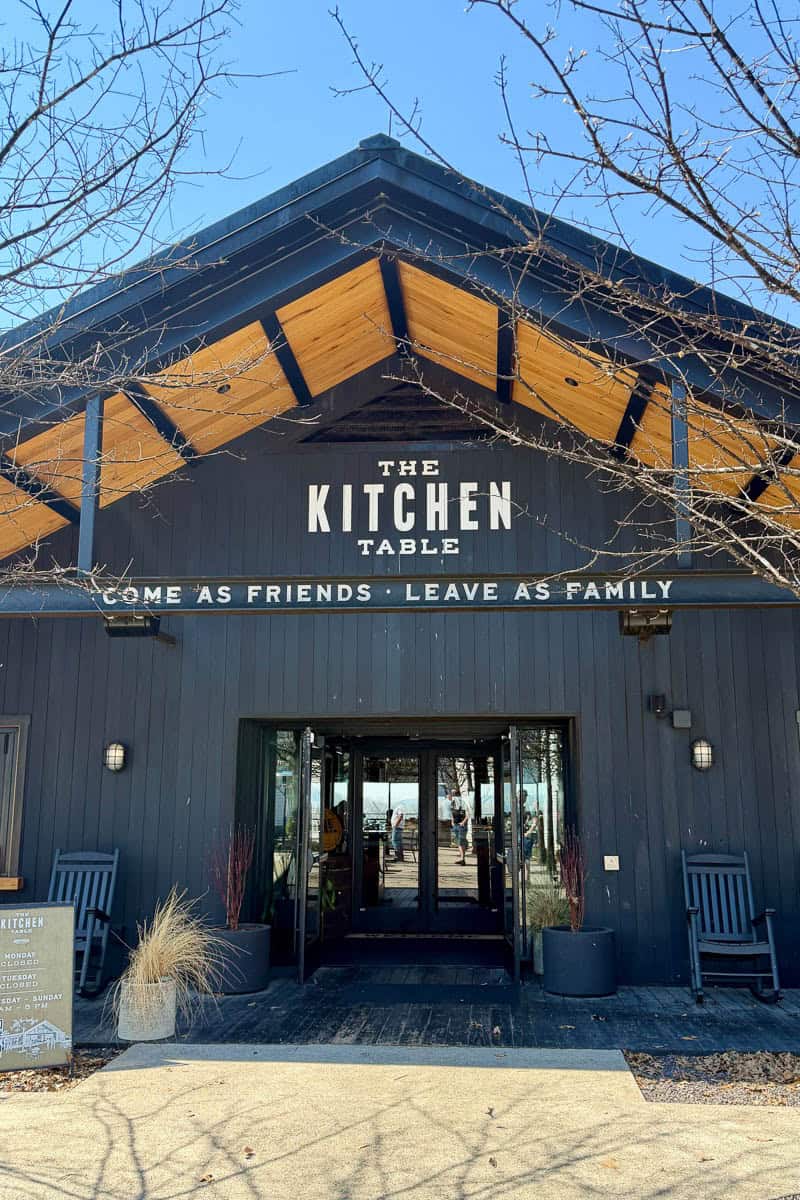
Add Texture to GoogleIn 2027, visitors to the Kentucky Bourbon Trail who stop in Clermont will find the gift shop open, The Kitchen Table restaurant serving food, and the cellars filled with barrels. The large stills, however, will remain idle. For the second consecutive year, primary distillation at Jim Beam’s historic campus has been suspended. The site, which has borne the family’s name since 1935—some ninety years—is temporarily becoming a place where bourbon is aged, bottled, and celebrated, rather than produced on an industrial scale.
A Pause That’s Growing Longer
The decision was made by Suntory Global Spirits, the spirits division of the Japanese group Suntory Holdings, which owns the brand. In December 2025, management announced a one-year suspension covering 2026, citing two reasons: to adjust production volumes to meet demand and to carry out renovations at the site. In mid-November 2026, the suspension was extended to cover the entire year of 2027.
What stands out most about the announcement is what it does not say. No date for resuming production has been set. Jim Beam and its parent company refuse to commit beyond the end of 2027 and explain that needs will be reassessed as market forecasts evolve. So, at this point, any talk of a restart in 2028 is pure speculation.
However, Suntory Global Spirits CEO Greg Hughes left the door slightly ajar in mid-November 2026: the facility could resume operations earlier, provided two conditions are met simultaneously. Global demand would need to rebound significantly, and infrastructure work would need to be completed. This is a theoretical scenario, contingent on a strong and rapid uptick in sales—a possibility that current figures do not suggest.
Clermont: Campus Open, Still Stills Cold
The shutdown does not mean the site is empty. On the James B. Beam Distilling Co. campus, storage continues, as does aging in the rackhouses—those multi-level cellars where the barrels mature—and bottling. The bourbon distilled in previous years continues its slow maturation in the wood, unaffected by the industrial calendar.
A form of distillation even continues on-site. The Fred B. Noe Craft Distillery, a micro-distillery located on the same campus, remains in operation. This is where the portfolio’s more exclusive labels are born: Booker’s, Knob Creek, Little Book. The contrast is striking. Mass production has come to a halt, while small batches intended for the most discerning connoisseurs continue to flow.
Finally, the tourism aspect remains fully intact: tours, tastings, a gift shop, and a restaurant. The program remains available on the James B. Beam Distilling Co. website. Clermont thus retains its role as a showcase—the birthplace of a brand that people visit, even when its industrial heart is dormant.
Boston, twenty kilometers away
That said, standard Jim Beam bourbon isn’t disappearing from store shelves. All production has been shifted to the Booker Noe distillery in Boston, Kentucky—about twenty kilometers from Clermont. The facility has a capacity of 45 million “original proof gallons” per year. It is the group’s largest facility in the world.
This capacity has recently been boosted. Suntory invested $400 million (approximately 380 million euros) in an expansion completed in recent years, which increased the site’s distillation capacity by 50 percent. The timeline is worth noting: the group has massively expanded its production capacity in Boston and is now shutting down its historic site. A single modern, oversized facility can handle the workload that was previously shared by two distilleries. The exact volume of distillation lost due to the closure of Clermont, however, has not been disclosed.
Renovations or Overcapacity?
Two interpretations of the decision coexist, and they do not come from the same source. The company emphasizes technical modernization and industrial optimization. At Clermont, the project aims in particular to replace outdated equipment and distillation machinery, with a focus on safety and operational compliance. Its cost has not been made public.
Analysts and industry observers, however, emphasize another factor: the need to reduce a production surplus that has become critical. Neither of these two explanations is sufficient on its own. Machine replacement work alone does not adequately justify two full years of shutdown. Conversely, inventory backlog alone does not explain why the oldest site was chosen over another. The truth likely lies in the interplay of both: a saturated market provides an opportunity to idle the oldest equipment, and the construction project gives this shutdown an industrial rationale.
Kentucky Under Its Barrels
The context, in any case, carries significant weight. In October 2025, the Kentucky Distillers’ Association reported 16.1 million barrels of bourbon aging in the state—a historic record. This inventory comes at a direct cost: the local tax on aging barrels reached approximately $75 million (about 71 million euros) in 2025, up 27% year-over-year. Each barrel sitting in a warehouse therefore represents a tax burden, in addition to tied-up capital.

Nationwide, the analytics firm IWSR estimates that U.S. whiskey barrel inventory is roughly three times the annual demand. This is a private estimate, published neither by the government nor by the company, but it illustrates the magnitude of the imbalance. The industry has already responded: U.S. whiskey production is projected to decline by about 28% in 2025 compared to 2024, a sign that distillers have collectively scaled back production.
Demand, for its part, is not coming to the rescue of supply. Global spirits volumes fell by 3% in 2025, according to IWSR estimates. The entry-level segment—the core category for standard Jim Beam—declined by 7% in volume over the same period. Industry estimates put the brand’s global sales at 16.7 million nine-liter cases in 2025: a substantial volume, but one tied to the price segment most vulnerable to the decline in consumption.
Exports offer no escape. Kentucky whiskey exports fell by 15% in 2025, according to data from the U.S. Census Bureau, driven by trade tensions and retaliatory tariff measures targeting American bourbon.
An industry slowing down across the board
Jim Beam is not an isolated case. In 2025 and 2026, production cuts or temporary shutdowns were reported at Heaven Hill, Green River, and Lux Row. Brown-Forman, another heavyweight in the American whiskey industry, reduced its workforce by 12% in late 2025. The slowdown at Clermont is part of a broader trend of contraction, as companies adjust their operations to a market that has stopped growing at the pace anticipated during the years of expansion.
On the labor front, Suntory Global Spirits has not announced any layoffs related to this temporary closure. The group employs approximately 1,000 people across all of its facilities in Kentucky. The continued operation of warehousing, bottling, craft distillation, and visitor services on campus likely explains in part why staffing levels are being maintained, although the breakdown of the workforce between Clermont and Boston has not been specified.
A Date No One Can Predict
Bourbon dictates its own timeline. What comes out of the Boston stills today won’t be sold until after several years in barrels, in a market whose state no one can predict. It is precisely this uncertainty that is making management cautious: reopening too soon would mean filling the cellars with whiskey that would only add to an already record-high inventory. Waiting means accepting that a ninety-year-old site will remain, at least until the end of 2027, a living museum of its own production.
For now, the only official timeline extends to December 31, 2027. Beyond that, Jim Beam and Suntory Global Spirits say they will reassess the situation based on market forecasts, with no commitments. Meanwhile, the barrels that have already been filled continue to age in the rackhouses in Clermont.