Make Texture a preferred source on Google to support us
Add Texture to GoogleThe groundbreaking ceremony will take place far from the traditional addresses in Sydney’s financial district. By choosing the Marrickville neighborhood, in the southwest of the city, to establish its brand-new expertise and sales complex, Theodore Bruce is making a geographical shift that speaks volumes about the evolution of the Australian art market. On November 17, 2026, at exactly 6:00 p.m. Australian Eastern Time, this new location will be inaugurated with an auction session dedicated exclusively to fine jewelry. With a combined low estimate of 4.5 million Australian dollars, the institution is setting the bar high. This figure, announced right from the start, serves as a warning: the auction house is targeting an international clientele capable of acquiring high-value lots.
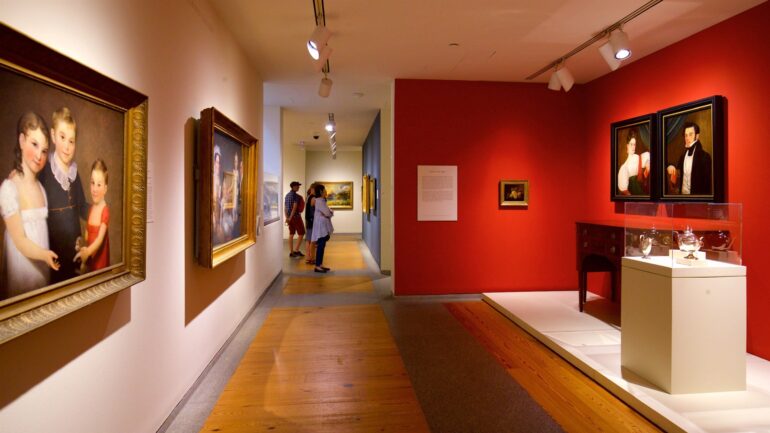
The institution, whose origins date back to 1878, is now seeking to modernize the auction experience itself. Long associated with transit halls where objects merely passed from hand to hand, auction houses are rethinking their interior design. The Marrickville location has been designed as a living, breathing exhibition space in its own right. At the heart of the layout is a showroom specifically designed for fine jewelry and gemstones.
Materials Put to the Test by Light
Theodore Bruce’s stated goal is to slow down the often-frantic pace of the auction to reintroduce the leisurely pace of inspection. Before engaging in a bidding war, collectors and their brokers will be able to explore the exhibition spaces, examine the settings under a magnifying glass, and seek the advice of specialists on site. This hands-on interaction with the objects aims to recreate the intimate atmosphere of the private salons of the great jewelers. The tactile approach allows one to appreciate the weight of a metal or the fluidity of a mesh—details that an image alone struggles to convey. However, the auction house strongly emphasizes that this sensory experience does not exempt any buyer from carefully reviewing the lots’ technical specifications, which are the sole guarantee of the gemological characteristics and the legal terms of the sale.
For this first auction, simply titled “High Jewels,” the selection consists of 172 lots. The catalog was designed to cover a very broad spectrum of current demand, alternating between the historical roots of the great European dynasties and the power of raw materials. The display cases will thus feature hallmarks from Cartier, Bulgari, Van Cleef & Arpels, and Tiffany & Co. Exceptional local craftsmanship is also represented by Paspaley, whose name remains inextricably linked to pearl cultivation, while the often more eccentric creations of New York jeweler Seaman Schepps will add variety to the selection.
The Reign of Untreated Gems
Beyond the designer names, it is the intrinsic quality of the gemstone that is expected to drive price increases. The current high-end jewelry market is absolutely uncompromising when it comes to the provenance and treatment of gemstones. The November 17 catalog prominently features natural diamonds, several of which easily surpass the psychological and financial threshold of ten carats. The color spectrum is also enriched by a carefully curated selection of yellow diamonds, emeralds, rubies, and, above all, sapphires guaranteed to be free of heat treatment—a designation that has become decisive for investors seeking to avoid stones artificially enhanced by heating.
A few pieces are already capturing the attention of experts even before the public exhibition begins. An imposing ring set with a Ceylon sapphire surrounded by diamonds perfectly illustrates this quest for pure color. A necklace centered around a pairing of emeralds and brilliant-cut diamonds also features prominently in the house’s promotional materials. On a more creative note, the highlight of the auction could well be a spectacular enamel brooch from the 1970s. Shaped like a bird of paradise, it reflects a decade when high jewelry embraced unprecedented sculptural forms, bold combinations of textures, and a radical color palette, breaking with the classicism of previous decades. A pair of earrings set with yellow diamonds rounds out this list of standout pieces.
A Long-Term Strategy
The overall estimate of 4.5 million Australian dollars gives a sense of the event’s scale, but the outcome of an auction remains, by definition, uncertain. Bidding wars depend on a complex interplay of factors: the rarity of a piece at a given moment, the condition meticulously described in the condition reports, the clarity of provenance, and, inevitably, the egos of bidders who find themselves in direct competition—whether on the phone or on digital platforms.
The man tasked with orchestrating this dynamic is Hamish Sharma. Currently the national head of jewelry at Theodore Bruce, he brings with him a network and methods honed through his work in the world’s art market capitals. Having worked at Sotheby’s Australia and Leonard Joel, Sharma has also honed his eye at international auctions held in Geneva, London, and New York. His network of contacts and familiarity with international standards of excellence are the pillars on which the Australian firm intends to build its credibility in this high-end segment.
The opening of the Marrickville location is not intended to be a one-off event. Theodore Bruce’s management has already laid out a clear roadmap: the High Jewels format is set to become a permanent fixture, scheduled to take place three times a year. The editorial direction for these future sessions has been established. The goal will be to maintain a constant sense of excitement by juxtaposing pieces from the giants of Place Vendôme or Fifth Avenue with the much more niche work of master artisans and independent designers. Collectors interested in this first edition can already browse the online catalog to prepare their bidding strategies for the evening of November 17.