Make Texture a preferred source on Google to support us
Add Texture to GoogleThe memorial axis connecting the Lincoln Memorial to Arlington National Cemetery has just undergone a tectonic shift—not an architectural one, but a legal one. Barely an hour after administrative approvals seemed to have cleared the way for the construction of a monumental triumphal arch on Columbia Island, a court ruling abruptly halted the project. On the night of November 5–6, 2026, Judge Tanya S. Chutkan, presiding in the U.S. District Court for the District of Columbia, issued a 14-day temporary restraining order, suspending any commencement of work on what promises to be the most controversial project in contemporary Washington urban planning.
This setback comes amid a climate of extreme tension. The project, spearheaded by the executive branch to celebrate the 250th anniversary of U.S. independence—the “Semiquincentennial”—now faces a 33-page legal roadblock. The judge thus ruled in favor of the consolidated appeals filed by the District of Columbia, the Commonwealth of Virginia, and a group of Vietnam War veterans led by Michael Lemmon. Behind this procedural battle lies a clash over the very character of the nation’s capital.
A Granite Monstrosity Overlooking the Potomac
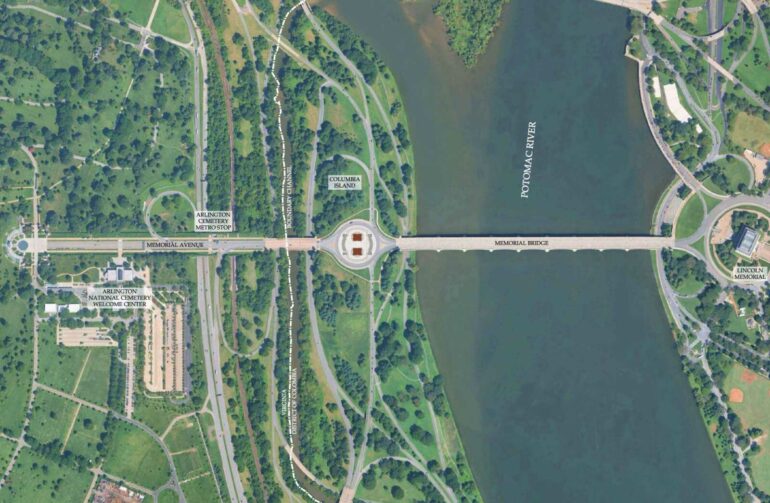
The proposed monument bears no resemblance to the usual restraint of modern memorials. Planned to rise on Memorial Circle, at the western end of the Arlington Memorial Bridge, the structure is set to reach a height of 250 feet, or approximately 76.2 meters. By way of comparison, its width of 50.6 meters and its arch span of nearly 17 meters would impose a massive presence in an area hitherto preserved by a certain horizontal quality of the landscape. A reinforced concrete structure clad in stone and granite, the arch is designed to be crowned with gilded statues: a winged figure brandishing a torch, flanked by two imperial eagles perched atop the pillars.
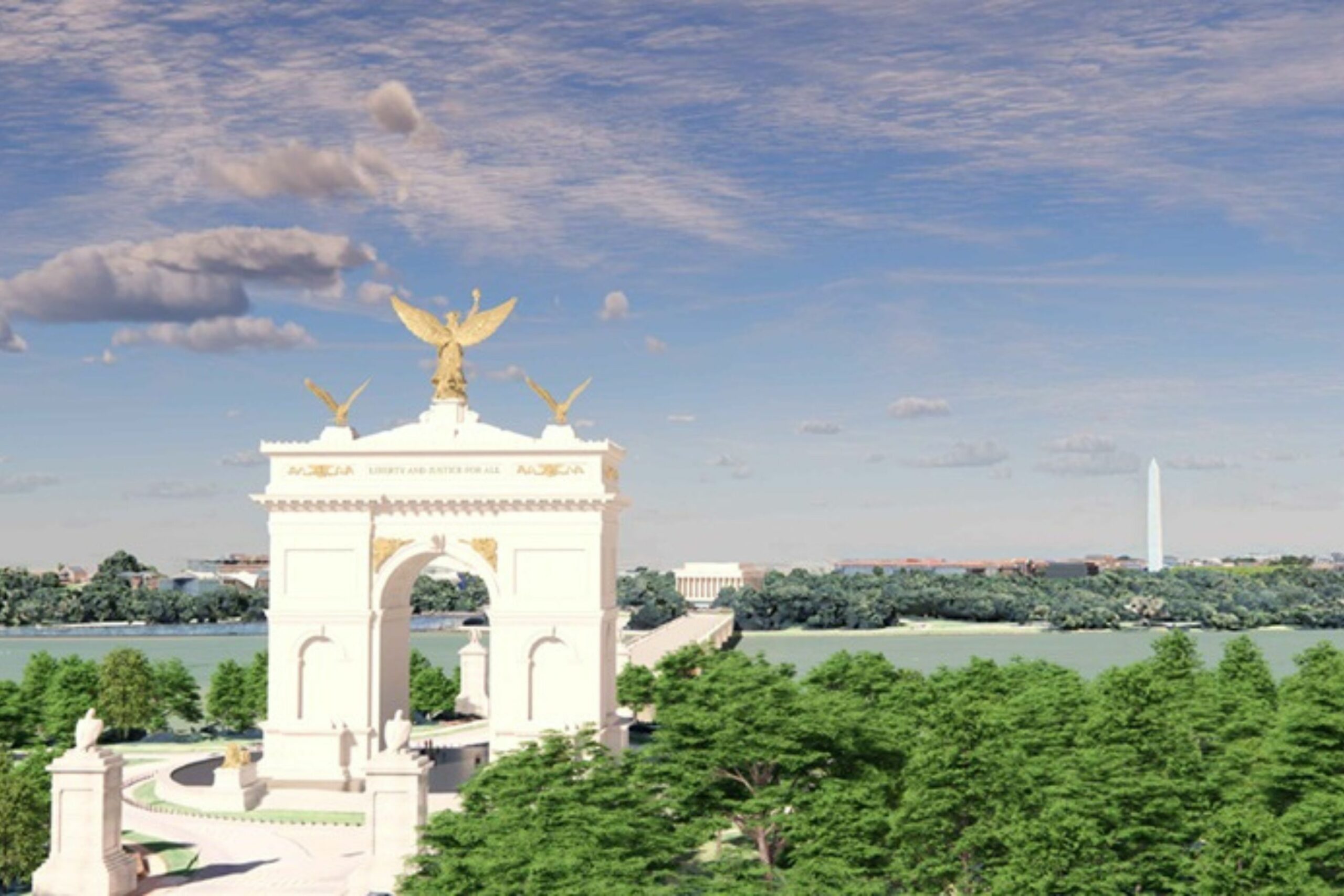
The ambition is not only aesthetic but also functional. The project calls for the installation of five elevators and six stairwells, intended to take visitors to a panoramic observation deck offering an unprecedented view of the Potomac and the historic heart of Washington. While the administration presents this project as a tribute to the armed forces and a necessary enhancement to the capital by 2026, its critics see it as a jarring disruption to the area’s harmony.
The Setback from the Planning Commission
The timing of the court-ordered suspension is all the more striking because it overturns the conclusions of the National Capital Planning Commission (NCPC). On Thursday, November 5, 2026, the commission had nevertheless approved the final site plans (Case No. 8778) by a vote of 8 to 4. This majority, composed primarily of members appointed by the Trump administration, overruled the outcome of a marathon public hearing lasting nearly nine hours.
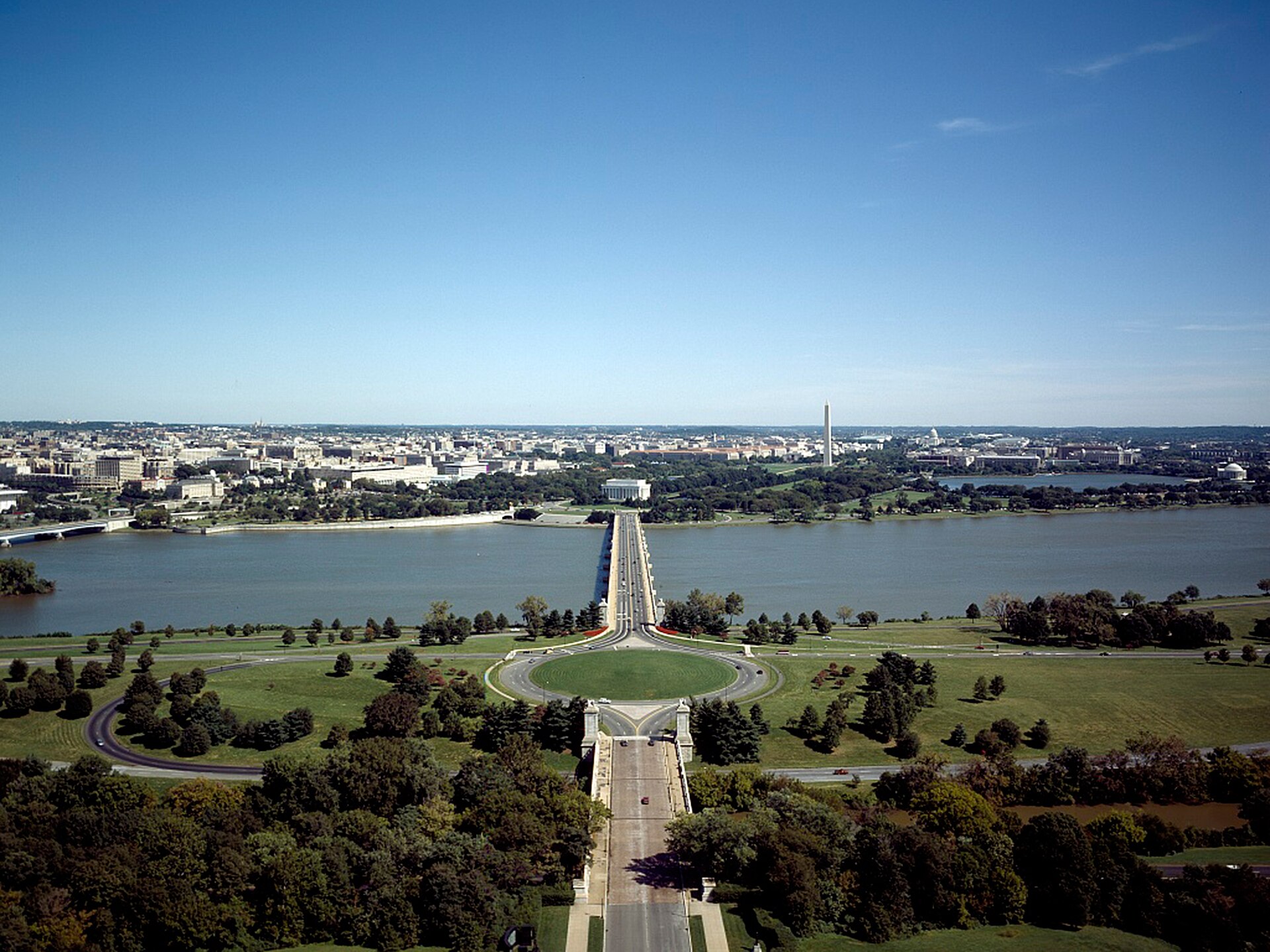
More than 120 testimonies were heard during this session, from local residents, architects, lawmakers, and veterans, the overwhelming majority of whom opposed the building. The concerns are not merely aesthetic. The chosen location, on Columbia Island, is a key traffic hub for vehicle traffic between Virginia and the District of Columbia. Judge Chutkan cited, among her reasons for the suspension, the certain harm caused by the major and prolonged disruption of traffic on this vital artery leading to Arlington National Cemetery.
The Legal Flaws of a Project Under Pressure
Beyond traffic disruptions, the federal court’s order highlights structural procedural deficiencies. The judge emphasizes the absence of explicit authorization from the U.S. Congress, deemed essential for a construction project of this scale on federal land. The project also appears to have bypassed essential regulatory steps: in-depth environmental reviews and the assessment of the impact on historic heritage, governed by the National Historic Preservation Act (Section 106), were reportedly not conducted according to the required standards.

One particular point in the administration’s defense was dismissed by the court. The administration’s attorneys had belatedly invoked a national security argument related to anti-drone protection to justify the urgency and structure of the monument. The judge rejected this argument, calling it an opportunistic ploy given its complete absence from the official planning documents previously submitted to the zoning commission.
The Funding Puzzle
The actual cost of this granite arch remains one of the most persistent mysteries. While the White House and the Department of the Interior refuse to disclose a total budget, industry experts estimate the cost of the project at approximately $100 million (or 95 million euros). For now, the identified public funds remain modest compared to this estimate: the National Endowment for the Humanities (NEH) spending plan, approved in April 2026, allocates $2 million in special funds and $13 million in federal matching funds.
The remainder—which constitutes the bulk of the funding—is theoretically expected to come from private sources, though the origin and securing of these funds have not yet been detailed. This financial uncertainty is compounded by growing political uncertainty. While spokesperson Davis Ingle expresses complete confidence that the project will move forward, the Democratic opposition has already announced its intention to permanently block the project through Congress, bolstered by the results of the November 2026 midterm elections.
With this 14-day suspension, the initial timeline—which called for an immediate start to construction—is now obsolete. The future of this colossal structure—meant to embody American power on its 250th anniversary—will now be decided behind closed doors in courtrooms before the first stone can even be laid on Columbia Island.