Make Texture a preferred source on Google to support us
Add Texture to GoogleThe vibrant Miami Design District is poised to reach a pivotal moment in its cultural history. Ten years after its founding, the Institute of Contemporary Art, Miami (ICA Miami) is embarking on a transformation that will reshape not only its physical space but also its place in the international art scene. By acquiring an adjacent 2,787-square-meter building, the institution is doubling its operational space to become a true multi-site urban campus. This large-scale project, the design of which has just been entrusted to the international firm Gensler, marks the end of a long wait for the museum’s collection, which will finally find a permanent home at 23 Northeast 41st Street.
A Strategic Expansion in the Heart of the Design District
The acquisition of this new building in 2024, for $25 million (approximately 23.7 million euros), is part of a direct geographical continuation. The site had previously held a special place in the memories of art collectors: it was home to the De la Cruz Collection, a private museum founded by Carlos and Rosa de la Cruz, which closed following Rosa’s death in early 2024. By taking over this space, located on the same city block as its main building, ICA Miami is preserving the site’s artistic mission while radically changing how it is accessed.
Since its acquisition, the building has served as a temporary home for the museum’s educational programs. This transition phase will soon come to an end, giving way to a major renovation project. The goal is clear: to harmonize the two structures to create a seamless experience capable of supporting the growth of an institution that, since 2014, has maintained free admission for all its visitors.
Gensler’s Architectural Vision
The selection of the firm Gensler, announced in early November 2026, underscores the technical and aesthetic ambition of ICA Miami. The conceptual renderings reveal a design that emphasizes transparency and openness to the city. The renovation plans to completely rethink the entrance area to make it more open to the street, breaking down the barrier between the institution and public space.
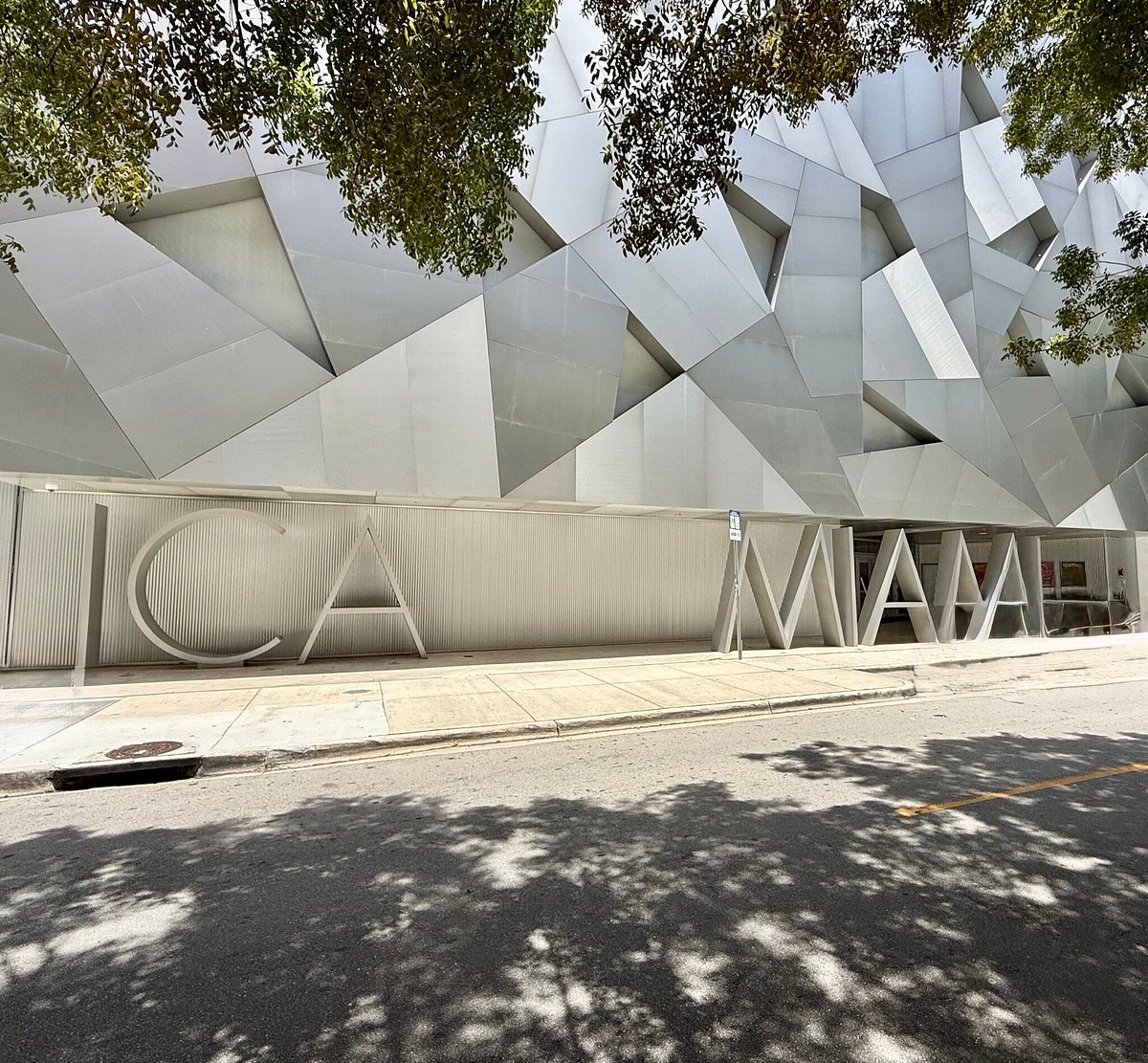
The most distinctive feature of this new façade will be the installation of a semi-transparent mesh in a vibrant red. This visual screen, while protecting the building from Florida’s intense sunlight, will serve as a strong architectural statement in the neighborhood. To complement this exterior envelope, sculptural landscaping and shaded courtyards will provide visitors with moments of respite, extending the artistic experience beyond the galleries. This interplay between concrete, metal, and greenery defines Gensler’s vision for this campus of the future.
A Sanctuary for the Permanent Collection
The additional space resolves a major challenge for Alex Gartenfeld, the institution’s executive director and chief curator. Until now, the ICA Miami’s collection—comprising more than 2,000 works—has remained largely out of sight, stored in storage areas or traveling as part of international loans. The new building will dedicate its first two floors to this collection, a historic first for the museum.
Eight new galleries will be created, divided equally between the first and second floors. These spaces will allow for a regular rotation of works—planned approximately every six months—ensuring a constant fresh perspective for local and international audiences. By alternating these displays with temporary exhibitions, the museum will finally be able to tell its own story and that of contemporary art in a sustainable way.

A Hub for New Media and Public Life
Technological innovation and social interaction will play a central role in future programming. The third floor will be fully modular to accommodate a wide variety of formats: high-level conferences, film screenings, academic symposia, and artistic performances. This versatility addresses the institution’s growing need to serve as a venue for debate and intellectual production beyond mere contemplation.
The project also includes a premier specialized space: the Knight Foundation Gallery for New Media. Supported by a $5 million grant from the Knight Foundation, this space will be exclusively dedicated to artists exploring new technologies and digital media. This gallery positions ICA Miami at the forefront of emerging practices, offering technical resources tailored to the most demanding works of the 21st century.
A massive private investment for a public institution
Funding for this expansion is based on a $40 million (approximately 38 million euros) fundraising campaign, set to conclude by the end of 2026. This sum, derived entirely from private funds, reflects the commitment of major players in philanthropy and real estate in Miami. Among the leading contributors are members of the museum’s board of directors, as well as donors such as Steve Witkoff, Tony Tamer of H.I.G. Capital, Craig Robins, and Jackie Soffer.
This 100% private funding model allows the museum to maintain its independence and free admission—a cornerstone of its identity since its founding. The investment covers not only the purchase price of the 41st Street building but also the renovation and landscaping costs necessary to transform the former private residence into a state-of-the-art public facility.
Originally planned for late 2025, the opening is now officially scheduled for late 2027. This schedule adjustment allows the new building’s inauguration to coincide with a symbolic date: the tenth anniversary of the museum’s move to its current headquarters in the Design District, which opened in 2017. Although the exact date for the actual start of construction and the temporary closure of certain spaces has not yet been announced, this new campus promises to firmly establish ICA Miami as the epicenter of contemporary creativity in Florida.