Make Texture a preferred source on Google to support us
Add Texture to GoogleIn the world of tequila, the number 55 acts as a barrier. Above 55% ABV, the spirit loses the right to bear its name. To celebrate its tenth anniversary, Cazcanes stops at 54. That’s one point below the limit—two proofs in the U.S. system—for an Extra Añejo that the Jalisco-based distillery touts as the highest-proof in its category currently available in the United States. The claim is a marketing pitch and needs to be qualified. It does, however, have the merit of raising the question that interests connoisseurs: what remains of a long-aged tequila when one almost entirely forgoes diluting it with water?
A Bottle for Every Day
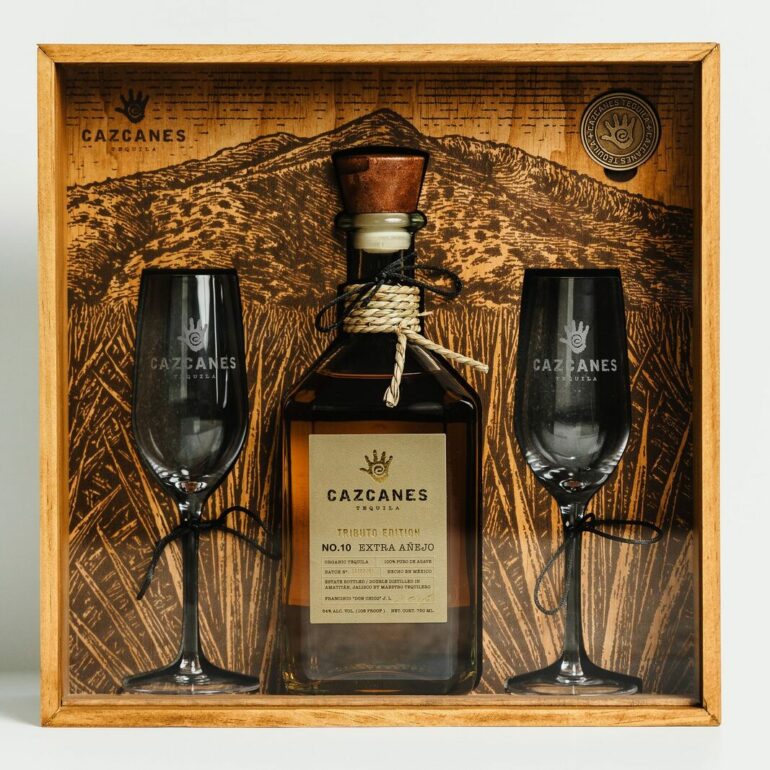
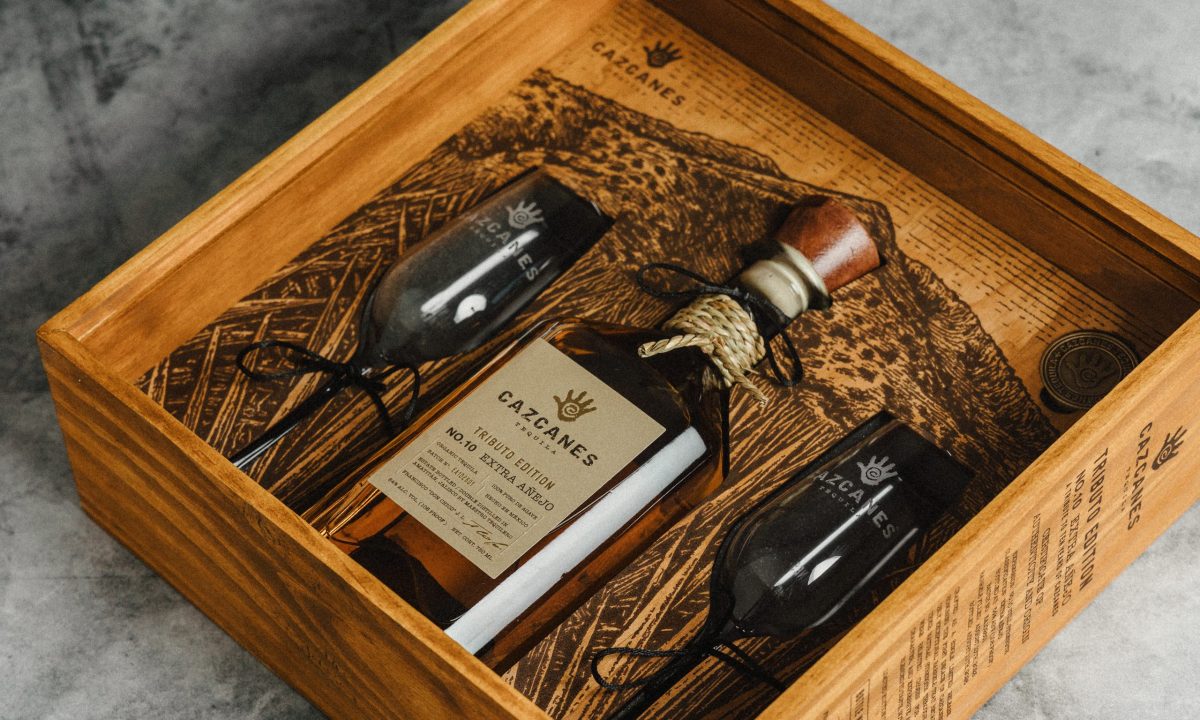
The vintage bears a lengthy name: Cazcanes Extra Añejo No. 10 Tributo Edition. It was announced on November 10, 2026, and celebrates the tenth anniversary of the brand’s first distillation, founded notably by José Santillán and Colin Edwards. The production run was calculated based on the calendar: 3,650 bottles—one per day over ten years. It’s a way of telling the story of a decade through arithmetic rather than slogans.
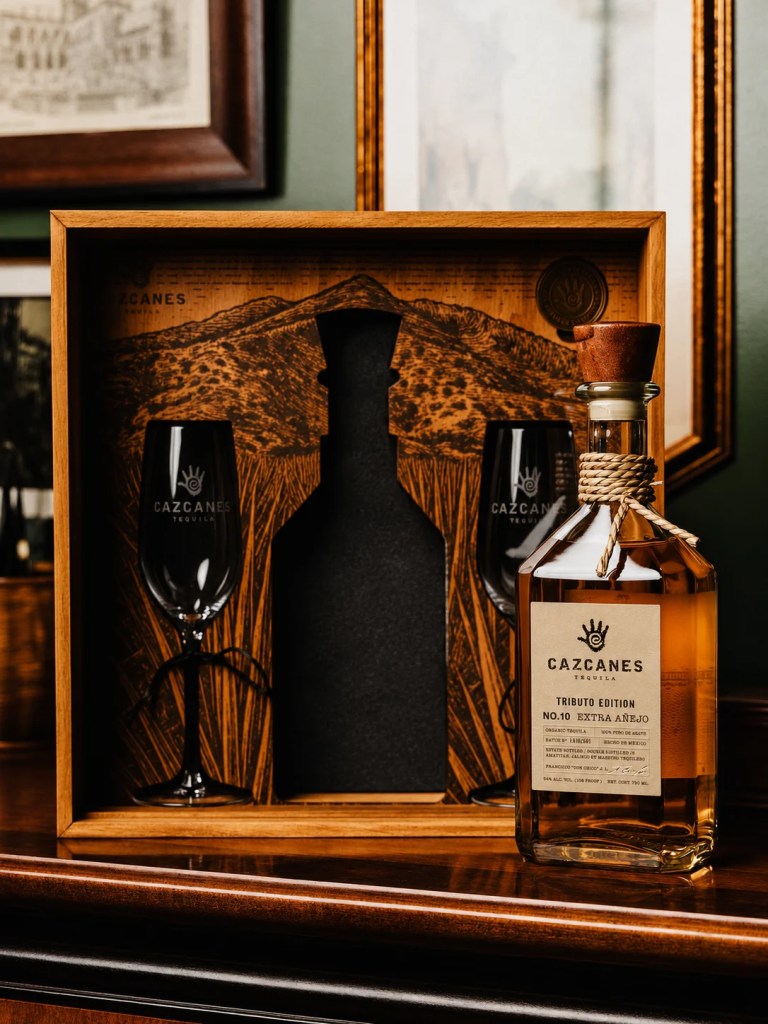
Each bottle comes in a gift box with a commemorative coin for collectors and a pair of tasting flutes. The suggested retail price is $499.99, or approximately 465 to 475 euros at the November 2026 exchange rate. Distribution is limited to the U.S. market, through specialty wine shops and selective direct sales. No plans for European distribution have been announced.
Straight from the cask—or nearly so
The heart of the project lies in two English words: “still strength.” The term refers to a spirit bottled directly after aging, without dilution or with virtually no added water. Most aged spirits are diluted to a more palatable alcohol content before bottling. Here, the spirit reaches the glass virtually as it came out of the barrel. It has an alcohol content of 54% ABV, or 108 proof (the American proof system is double the alcohol percentage).
For Cazcanes, this is a first. The brand had never before offered an aged product at this proof. The choice of the Corsican category reflects this commitment. An Extra Añejo must spend at least three years in wood, and this extended aging transforms the distillate profoundly. Blanco tequilas—unaged varieties with an alcohol content between 50 and 55%—are not uncommon among small producers. Maintaining a balanced aromatic profile above 50% after more than three years in the barrel is much less common. Alcohol carries the aromas but can also overwhelm them, and at this concentration level, the wood offers little leeway for imbalances. It is in this area that the cuvée truly shines, far more so than the alcohol percentage itself.
What the label says—and what it leaves unsaid
It’s worth revisiting the legal framework. The official Mexican standard—compliance with which is monitored by the Tequila Regulatory Council (CRT)—requires an alcohol content between 35 and 55% ABV. At 54%, the Tributo Edition sits just one percentage point below the absolute limit. It’s nearly impossible to go any higher without falling outside the appellation.
However, it would be inaccurate to call it the strongest tequila available in the United States, across all categories. Some blancos already reach the strict 55% limit—the Tapatio Blanco 110, for example. Cazcanes’ claim pertains to the Extra Añejos currently on the U.S. market. Within this category, the brand claims to have the highest alcohol content. This is a claim made by the producer, not a ranking established by an independent body, and it applies to a specific moment in the market. The day a competitor releases an Extra Añejo at 55%, the record will change hands.
This clarification does not detract from the bottle’s appeal. Rather, it shifts the focus. The challenge is not to be the strongest, but to offer an aged tequila that has been left virtually untouched before serving.
The Wood, the Water, and What’s Missing
The tequila was aged in oak barrels that previously held American whiskey. Before receiving the tequila, these barrels were stripped and then re-charred. The process involves removing the old charred layer to create a new one. It reactivates the wood and moderates the influence left by the previous occupant. The distillery has not specified the exact aging period beyond the minimum of three years required by the category.

The described tasting notes paint a rich, indulgent profile. On the nose, one detects ripe agave, honey, and milk chocolate. On the palate, brown butter, cinnamon, and caramel take center stage. Here, one recognizes the expected signature of a well-aged whiskey barrel. It remains to be seen how these aromas hold up against the 54% alcohol content—a question that only a tasting can answer.
The tequila is made from 100% blue agave and is certified additive-free. This distinction has gained significance in a category where the discreet addition of sweeteners, glycerin, or colorants has long been used to round out the flavor. At 54% ABV, with no water to soften it or additives to smooth it out, the distillate is presented in its purest form.
Water, in fact. Cazcanes has made its water a key part of its identity. The brand uses natural spring water from Navichi Springs, sourced by the community of Hostotipaquillo in Jalisco, the hometown of José Santillán. The paradox is intriguing: a brand that highlights its water source is releasing, for its anniversary, a vintage in which water was deliberately not added at the time of bottling. In this case, water is used earlier in the production process, not as a tool for final adjustment.
One point remains unclear. The launch press release does not specify the distillery, which is identified in the tequila world by its NOM number. Connoisseurs have historically associated the brand with NOM 1599 and later 1614, and some recent batches come from the latter. However, there is no evidence to confirm that this edition was produced there. For a release that emphasizes transparency—highlighting the absence of additives and the water’s origin—this omission stands out.
A collectible you can drink
At nearly $500, the Tributo Edition falls into the high-end range of aged tequilas. The gift set, the commemorative coin, and the symbolically numbered edition clearly position it for collectors. The two flutes included, however, serve as a reminder that the bottle was designed to be opened. At this level, a drop of water in the glass will allow everyone to find their own balance, since the producer has chosen not to dictate it.
Of the 3,650 bottles planned, none have been announced for sale outside the United States at this time. European enthusiasts who would like to experience for themselves what ten years of history and 54 degrees have to offer will therefore have to cross the Atlantic, or wait for a specialized American wine merchant to agree to ship one of these bottles.