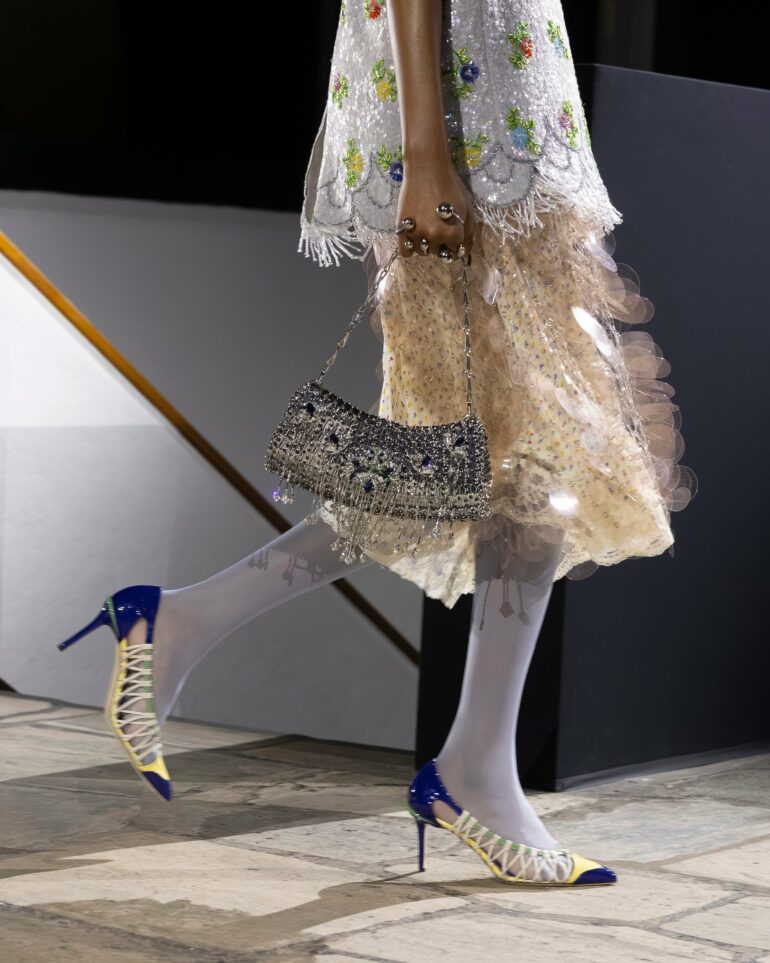
Make Texture a preferred source on Google to support us
Add Texture to GoogleMore than 1,800 retailers, a presence in over 85 countries: before we even talk about shoes, these two figures speak to a certain understanding of luxury—an understanding of markets, boutiques, and the connection between a collection and its audience. It is on this experience that the Milan-based company Massimo Bonini has built its reputation; it is now responsible for developing and producing Rabanne’s women’s shoes. The value of this agreement lies precisely in the chosen partner’s track record: a retail specialist that has gradually expanded into manufacturing.
The Product as Seen from the Boutique
In fashion, collaborations are often viewed through the lens of creativity. Here, the detour through retail sheds a different light on the decision. Founded in Milan in 1989 by Massimo and Sabrina Bonini, the company initially built its business around the distribution of luxury goods. Over three decades have allowed it to build an international network whose scope is now one of its main strengths.
This network, on its own, is not the focus of the agreement with Rabanne. It does, however, provide the backdrop. Understanding retail channels provides a unique perspective on the product: a shoe is a creative offering, but also an item intended to find its place within a boutique’s selection. By now combining this market experience with manufacturing expertise, Massimo Bonini aims to support brands across a broader range of their operations.
It’s important to distinguish between different scales. The more than 85 countries and some 1,800 retailers describe the company’s global network; they do not constitute an announcement of a rollout for Rabanne shoes. Their significance lies elsewhere: they serve as a measure of how far the Milan-based company has come, and highlight the international scope of this new partnership.
Rabanne Selects a Development Partner
Rabanne, controlled by the Spanish group Puig, has signed a licensing agreement with Massimo Bonini for its women’s footwear collections. The scope of the agreement covers the development and production of these collections. This involves contributing to the product’s design and manufacturing, rather than simply granting access to a sales network.
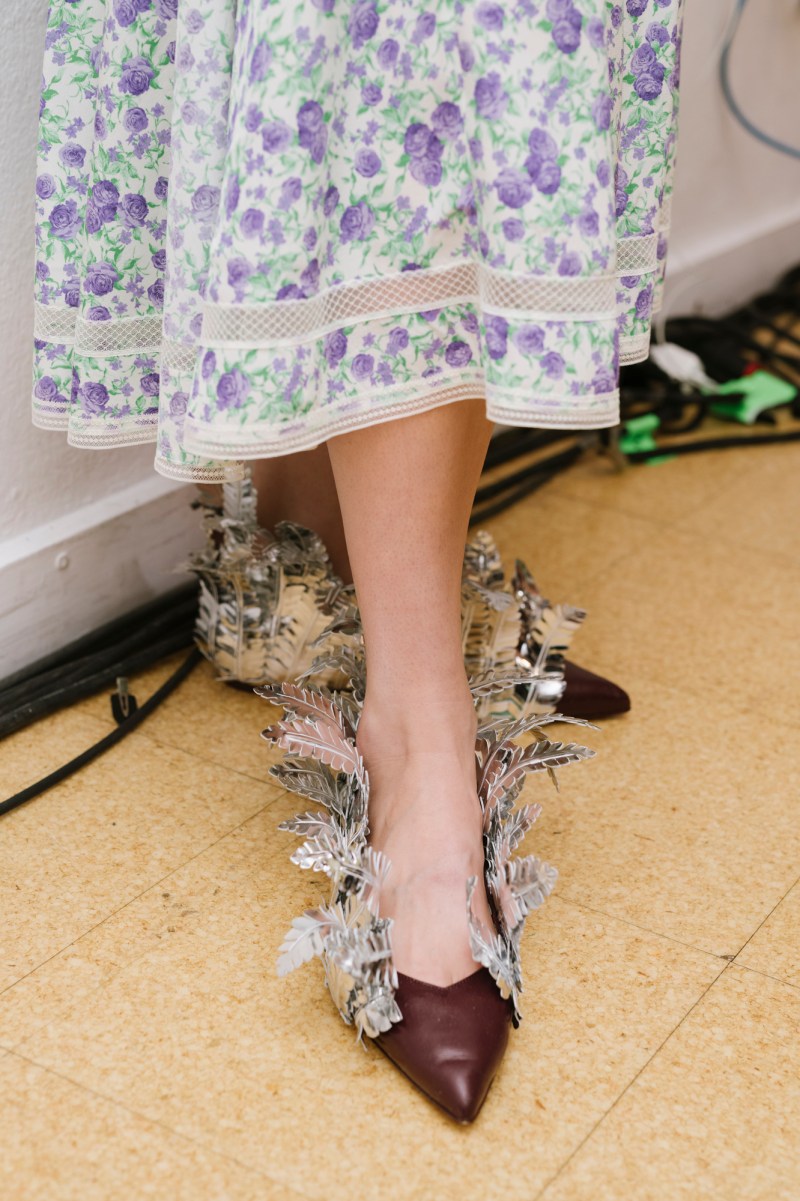
The nuances matter. Developing a collection involves giving concrete form to a creative vision. Production then involves mobilizing the necessary resources for manufacturing. In this context, the Milan-based company will contribute its expertise in luxury footwear, combining creative research with its technical and manufacturing skills. It is this synergy—rather than commercial clout alone—that forms the basis of the contract.
For Rabanne, the choice thus falls on a company whose areas of expertise have expanded over time. For Massimo Bonini, it confirms the evolution of his offerings to international brands. The two companies’ paths converge around a specific category: women’s footwear. At this stage, there is no basis for extending the scope of the announcement to other products or for inferring the stylistic direction of future collections.
Manufacturing: A Decisive Step in Bonini’s Journey
The most significant change took place prior to this agreement. Starting out in distribution, the company has gradually added product development and production to its activities. It has also strengthened its industrial infrastructure with specialized facilities in the Marche region and in Emilia-Romagna. These locations provide a tangible foundation for a shift that, otherwise, might remain merely a statement of intent.
Milan, the Marche, and Emilia-Romagna: this geographic layout reflects the company’s various dimensions. Its Milanese origins and international network are complemented by a production structure based in these two Italian regions. The announcement does not specify the division of tasks among the units. It does, however, establish that Rabanne’s partner possesses industrial capabilities that complement its commercial activities.
This shift in the center of gravity warrants attention. The distributor manages product distribution; the developer and manufacturer are involved in its production. By bringing these functions together, Massimo Bonini aims to offer more comprehensive support. The agreement with Rabanne puts this ambition into practice, without undermining the core business on which the company has built its expansion.

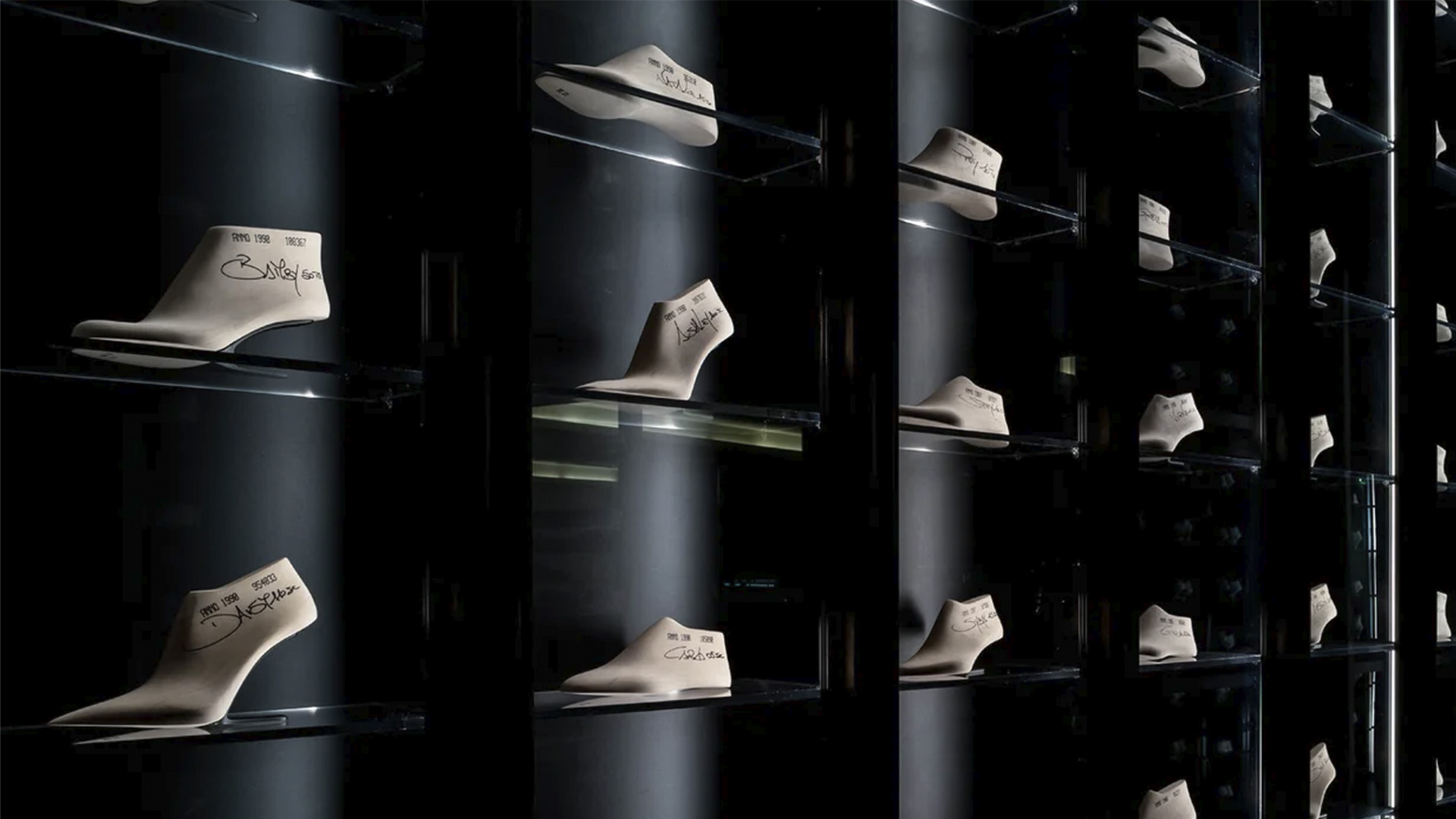
A licensing deal to be viewed without assuming it involves a collection
It would be tempting to already look for a specific style or aesthetic direction behind this agreement. However, no shoes are described in the information provided. Neither the models nor the materials are detailed. The launch and marketing schedule is not mentioned either. For now, the information pertains to the organization of the work, not its visible outcome.
That’s also what makes the announcement interesting. It reveals a decision made before the collections are even conceived: the choice of the company that will help develop and produce them. In an industry often portrayed through its final products, this type of partnership shifts the focus back to the skills required to bring the product to life. Creative research intersects here with technical constraints and expertise, even if the precise details are not outlined here.
We can therefore view this licensing agreement as a step in the development of Rabanne’s product line, but not yet as an indication of his future stylistic vocabulary. This distinction helps avoid confusing an industrial direction with an aesthetic promise. To judge the latter, we’ll have to see the shoes.
The next generation enters the equation
At Massimo Bonini, the partnership is also part of a family history destined to continue. Giorgia and Filippo Bonini, the founders’ children, are set to take the reins and contribute to the company’s development as well as its international growth. This perspective lends the agreement an added layer of depth: it accompanies a generational transition as much as it marks a new commercial and industrial phase.
The company that the next generation must lead forward differs from the one founded in 1989. Its network has expanded, and its scope of operations has broadened to include manufacturing. Family continuity will therefore encompass a broader range of business areas, requiring the integration of market knowledge and product expertise. The Rabanne partnership fits into this framework.
No specific division of responsibilities between Giorgia and Filippo has been outlined. Their announced contribution involves continuing development and international expansion. The company’s next chapter will thus unfold on two concrete fronts: the women’s collections to be developed and produced for Rabanne, and the handover from the founders to their children.