Make Texture a preferred source on Google to support us
Add Texture to GoogleOur fingertips have lost their memory. Accustomed as we are to smooth surfaces, glass screens, and flawless polymers, we’re easily fooled by the illusion of perfection. In the brightly lit aisles of concept stores or in front of the window display of a promising brand, a bag, a belt, or a jacket catches the light. The look is just right, the sheen calculated, the texture seemingly uniform. Yet beneath this seductive exterior, a clever material deception is sometimes at play. Petrochemical laboratories have honed their craft, now producing polyurethanes and PVC derivatives capable of mimicking the appearance of calfskin, lambskin, or alligator skin with clinical precision. The imitation leather industry, once crude, has grown more sophisticated. But luxury is not merely a matter of appearance; it belongs to the realm of the living. Unmasking the deception requires us to reawaken our senses, to forget for a moment the price or the label, and to engage in a physical dialogue with the material.
The temperature and tension of the material
Fine leather cannot simply be scrutinized; it demands direct contact. Place the palm of your hand, flat against the surface of the object. Animal hide possesses a unique thermal inertia: initially cool, it quickly absorbs body heat to adapt to it. A synthetic material will remain stubbornly cold and inert, betraying its plastic nature, even after several minutes of contact. This initial thermal impression is often the most instinctive indicator of the material’s origin.
Next comes handling. Squeeze the material between your thumb and index finger. Genuine full-grain leather offers elastic resistance and a supple, fleshy feel. It bends without breaking, following the natural movement of the hand. In contrast, imitation leather often feels stiff and cardboard-like, or, conversely, excessively soft, lacking structural integrity. If you gently bend the surface, tiny wrinkles should appear—just as they do on your own skin when a muscle contracts—before fading once the tension is released. Plastic will bend at a sharp angle, threatening to leave a permanent crease, unable to return to its original tension.
The Anatomy of an Irregular Surface
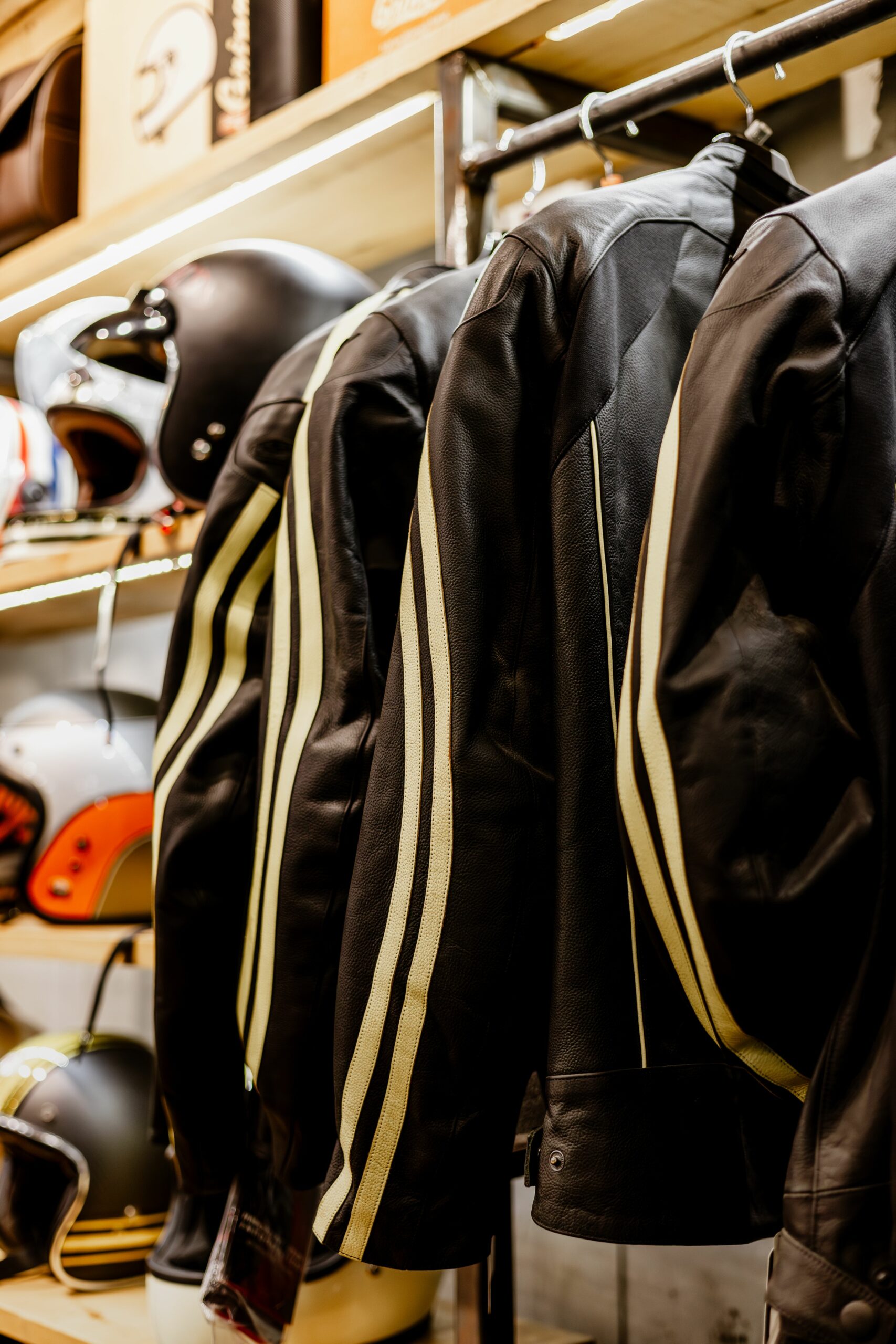
The eye must then take over from the hand—not to judge the piece’s silhouette, but to track down the infinitesimal detail. Get closer. Paradoxically, the nobility of a hide lies in its asymmetry. Observe the network of pores and the distribution of the grain: on natural leather, this pattern is profoundly chaotic. Hair follicles form irregular patterns, dense in some places, more widely spaced in others. It is the raw testament to the animal and its environment, sometimes incorporating old, healed scratches or slight variations in pigmentation. High-end tanneries do not seek to erase this geography; they strive to enhance it.
The faux leather industry operates according to a diametrically opposed logic: that of mechanical embossing. It applies a heated metal die to a plastic coating to imprint a raised pattern. With a keen eye, as you scan a large portion of the bag or garment, you will always eventually notice the repetition of this pattern. An industrial design grid emerges as a watermark, where every pore is cloned identically every ten or fifteen centimeters. This absolute uniformity, often mistakenly perceived by the uninitiated as a mark of quality, is in reality the unmistakable signature of the machine.
An olfactory identity impossible to replicate
There remains one criterion that modern technology has still not managed to replicate convincingly. The scent. Stepping through the door of a leather workshop means being immediately enveloped by a complex fragrance—at once animalic, earthy, and woody. This scent stems directly from the successive stages of tanning. Whether plant-based—using oak, mimosa, or chestnut bark—or mineral-based, the scent of authentic leather is rich, organic, and lingering, yet never overpowering. It clings to the object for years.

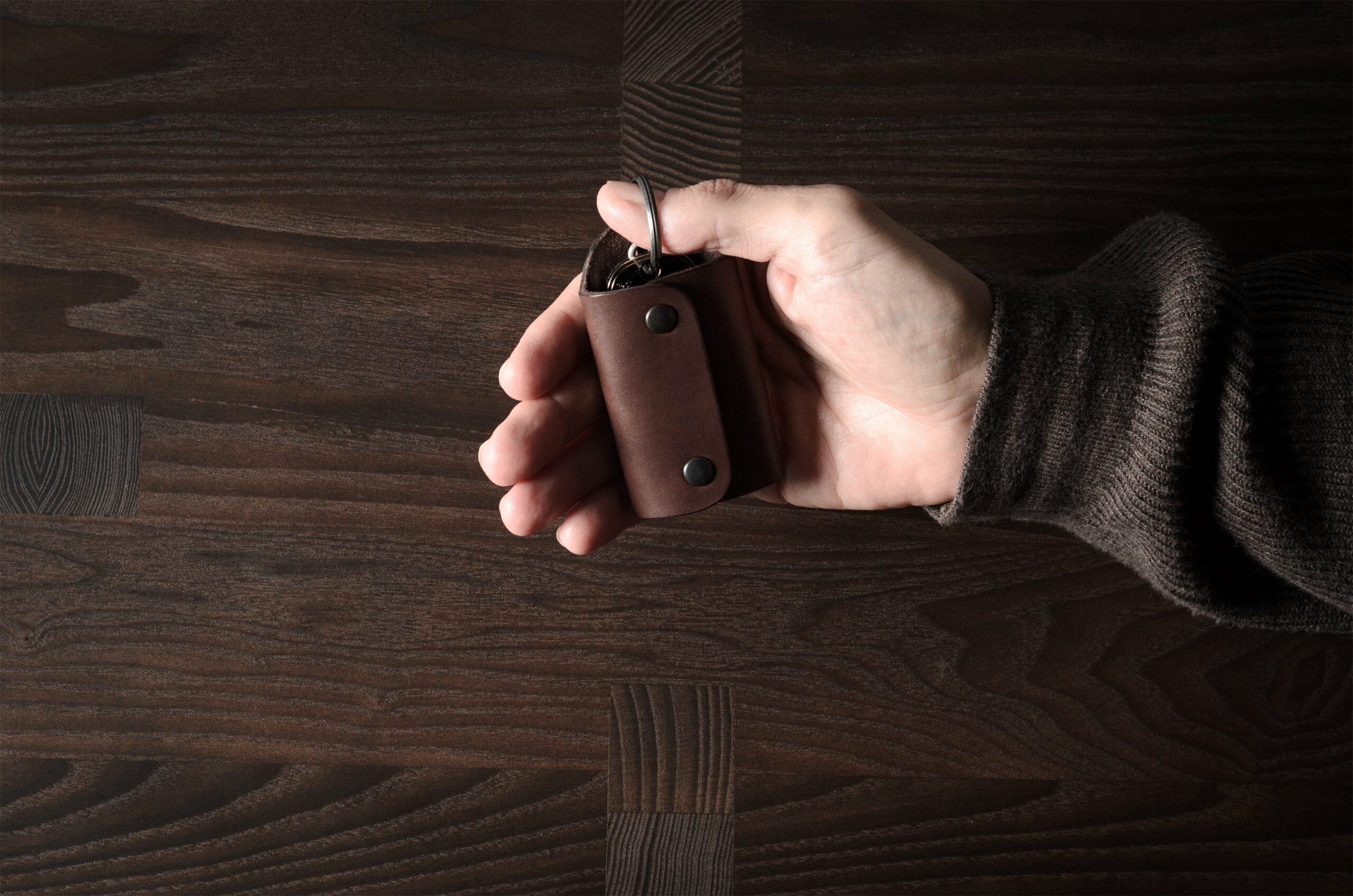
Bring your face as close as possible to the material. If the scent reminds you—even vaguely—of hydrocarbons, solvents, industrial glue, or heated plastic, there’s no room for doubt. Aware of this shortcoming, some manufacturers of imitation leather go so far as to spray artificial fragrances on the material to deceive buyers during the first few weeks on the store shelf. But these synthetic fragrances—volatile and often acidic—evaporate after a few days, revealing the chemical reality of petroleum.
The Truth of the Edges and the Water Test
The close examination continues at the edges of the object, where the material has been cut. It is here that artisanal craftsmanship sharply distinguishes itself from mass-produced assembly. On a piece of fine leather goods, the edges of the cut leather are never left raw, nor crudely concealed by trim. They undergo a lengthy polishing process. This meticulous technique involves sanding, staining, and heating the edge with wax—sometimes up to six successive passes—to achieve a smooth, slightly rounded profile that is fully integrated with the leather. On a counterfeit item, the edge most often reveals a thick layer of rubbery paint applied hastily, which will inevitably end up flaking off, revealing the synthetic textile mesh that serves as a backing for the polyurethane.
To dispel any remaining doubts, the water droplet test serves as the ultimate arbiter. Natural leather, particularly when finished with an aniline or semi-aniline treatment that does not provide excessive coverage, retains its inherent porosity. Place a single drop of water on an inconspicuous area. It will be absorbed within a few seconds, temporarily darkening the area until it dries. A synthetic material, which is inherently sealed and completely waterproof, will repel water. The drop will remain beaded on the surface or slide off as if on waxed canvas.
The Question of Time and Wear
A living material ages. A polymer, on the other hand, degrades. Daily friction, exposure to sunlight, and the natural acidity of the hands gradually cause genuine leather to darken, smoothing its edges, softening its grain, and deepening its hues. This is the birth of patina—that noble quality of wear that makes each piece unique and attests to its longevity. Faux leather, lacking this capacity for organic evolution, will eventually crack at points of tension, then peel off in small, dry patches, exposing its fabric skeleton with no hope of repair. Authenticating the material before purchase is therefore not merely a matter of avoiding financial fraud. It is choosing an object destined to bear the marks of the passing years, rather than settling for a static product, doomed from the moment it leaves the factory to inevitable obsolescence.