Make Texture a preferred source on Google to support us
Add Texture to GoogleEight days. Over the course of nearly eleven months of conflict, that is the number of days the Louvre actually operated at reduced capacity or closed its doors: four complete closures, four partial openings with a restricted tour route. The rest of the time, the galleries were open as usual. The balance of power hinged primarily on the possibility of renewable strikes, which hung over the museum for months. The memorandum of understanding signed on Thursday, October 29, 2026, between management and the inter-union coalition formally puts an end to this threat.
From Notice to Signing
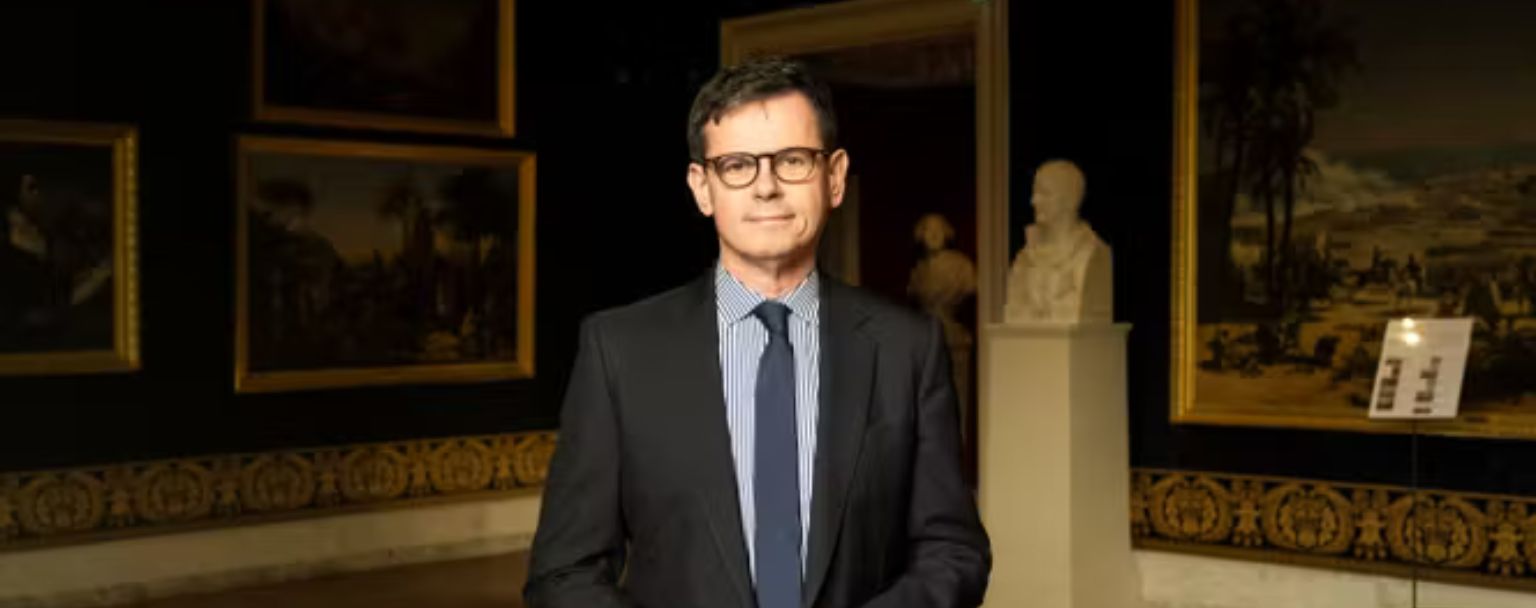
The document bears the signature of Christophe Leribault, President and Director of the Louvre Museum Public Institution, and those of the three organizations comprising the inter-union coalition: CFDT-Culture, SNMD CGT-Culture, and SUD Culture Solidaires. The Director General of Heritage and Architecture was present at the signing. Three days earlier, on Monday, October 26, the staff had approved the text during a general assembly.
The initial strike notice had been filed on December 8, 2025. The first walkouts and closures followed on December 15. Between those two dates and the October signing, the museum underwent a change in leadership, and negotiations focused much more on the institution’s day-to-day operations than on wages alone.
A Disastrous Fall of 2025
The movement can be explained by a series of incidents that occurred over the course of a few weeks. On October 19, 2025, a burglary in the Apollo Gallery allowed the perpetrators to make off with eight Crown jewels. The haul was valued at 88 million euros, or approximately 102 million dollars. These are preliminary estimates based on police and insurance appraisals, not a final financial inventory published by the government. The theft occurred in one of the museum’s most heavily monitored rooms, and it has made security a top priority.
On November 26, a water leak affected the Egyptian Antiquities Library and damaged between 300 and 400 documents and scientific journals. That same month, structural weaknesses detected in the beams led to the temporary closure of the Campana Gallery, dedicated to Greek antiquities, as well as some offices. For staff members, these incidents stemmed from the same underlying problem: a building that was inadequately maintained and a staff that was too small to monitor it properly.
Two more politically charged issues arose. In December 2025, the museum announced that it would implement a tiered pricing system starting in January 2026: the full-price ticket for visitors residing outside the European Economic Area was to increase from 22 to 32 euros, a 45% rise. The unions deemed this measure discriminatory. They also contested the budgetary priorities of the major “Louvre – New Renaissance” project, which they considered too costly and funded at the expense of routine maintenance.
New Leadership Amid Conflict
In February 2026, Christophe Leribault was appointed president of the museum. He succeeded Laurence des Cars, whose leadership had been heavily criticized following the burglary. The conflict, which began under one presidency, thus concluded under another. It was Christophe Leribault who signed a document containing several commitments that directly addressed the grievances that arose in the fall of 2025.
Recruitment Plans with Uncertain Details
The first aspect concerns staffing levels. The agreement calls for strengthening the reception and security teams through the gradual hiring of staff through 2027 or 2028, with guarantees of additional hires in 2028 and 2029. However, the exact numbers remain unclear. The joint union statement mentions “up to 100 staff members by 2027.” Other figures are circulating: “at least” 100 staff members by 2028, or 50 new security officers by 2027. The union’s statement itself sets a ceiling, not a floor. These 100 new hires should therefore be viewed as a target, not as net hires that have already been secured.
The text also provides for support measures to help contract staff secure long-term employment at the institution. The specific details of this support have not been disclosed.
Bonuses and Salary Adjustments
Regarding compensation, the agreement quantifies what can be determined immediately. The annual bonus for reception and security staff, known as the IFSE, will increase by 350 euros gross in 2026, followed by an increase of 200 euros gross in 2027. These are the only amounts explicitly stated in the agreement.
For other museum positions, management has committed to initiating a process to address the wage gap. No specific amounts or timeline accompany this commitment. The issue of wages therefore remains unresolved for a large portion of the staff.

Crowd management becomes a topic of labor negotiations
The most unusual provision concerns visitor management. In the event of overcrowding or construction work, the daily visitor cap will be lowered. Reservations will become mandatory during periods of high attendance. School field trips will be guaranteed priority access.
These provisions enshrine in a labor agreement an issue that has long been treated as a commercial matter. For security staff, the number of visitors in the galleries directly affects their working conditions and their ability to protect the artworks. The priority given to school groups addresses another concern: access to the museum.
However, the publicly announced commitments make no mention of tiered pricing, which had fueled the protests in December 2025. The agreement’s provisions on this point have not been disclosed.
Building maintenance is a top priority
The agreement also reallocates the budget. Priority will be given to emergency repairs, renovations, and safety and security equipment for the buildings. On paper, the leak in the Egyptian library, the beams in the Campana Gallery, and the vulnerabilities exposed by the theft in the Apollo Gallery take precedence over major projects. The unions, which had criticized “Louvre – Nouvelle Renaissance” for diverting the funds needed for maintenance, have thus secured a clear order of priority. The text does not, however, specify what will become of the timeline for the major project.
The cost of the dispute remains difficult to determine. The CGT estimates a loss of approximately 400,000 euros per day of total closure, calculated based on typical daily attendance of 30,000 visitors. Management has not confirmed this figure. Applied to the four full closures, it provides a rough estimate, but it is only an estimate.
Monitoring the Commitments
Several promises in the agreement—notably hiring, wage catch-up, and budgetary reorientation—will not be verifiable for several years. To ensure this, the signatories have created a monitoring committee tasked with regularly overseeing their implementation. This committee will meet until the guaranteed admissions for 2029 are met, the final deadline set forth in the protocol.