
Make Texture a preferred source on Google to support us
Add Texture to GoogleThe island of Réunion doesn’t fit well into standardized norms. On this basalt outcrop tossed into the middle of the Indian Ocean, where the jagged peaks of Piton des Neiges soar close to three thousand meters and where the regular eruptions of Piton de la Fournaise reshape the cliffs, the very concept of a sterile beach resort seems like a contradiction. Historically, the destination has long observed, with a mixture of insecurity and detachment, the massive hotel development of its Mauritian neighbor. But Réunion’s identity—rugged, vertical, and deeply multicultural—calls for a different kind of hospitality. Lovers of luxury have understood this: here, exclusivity isn’t measured by the number of square meters of marble in the lobby or the presence of yet another infinity pool, but by how well the architecture blends into a topography that is often hostile yet always spectacular. You have to seek out the hidden gems—reimagined guesthouses and lodges tucked away beneath the canopy—to grasp the essence of the Creole way of life.
The rejection of the classic seaside resort model is not merely an aesthetic stance; it is a geographical necessity. With only about thirty kilometers of lagoon, this intense island protects its most discerning travelers by keeping them away from the immediate coastline, which is often overcrowded. Elevation thus becomes the primary criterion of luxury. By gaining altitude, one escapes the coastal humidity, gains privacy, and rediscovers the breath of the trade winds. It is in this intermediate space—between the ocean and the inaccessible cirques—that a sophisticated collection of boutique hotels has flourished, where colonial aesthetics blend with contemporary design.
The Haughty Elegance of the West Coast
Overlooking Saint-Leu Bay, the Blue Margouillat embodies this transition toward a distinctive approach to hospitality. A member of Relais & Châteaux, the property does not seek to entice guests with an overwhelming array of activities, but instead sets a slow pace, mirroring the sun’s path across the maritime horizon. The main building’s structure draws on the hallmarks of traditional Creole architecture: deep verandas, intricately carved lambrequins, and corrugated metal roofs that echo with the sound of brief tropical downpours.

Here, luxury lies in the way the spaces are designed. The rooms are not merely luxurious bedrooms but true apartments that open onto the outdoors, where the boundary between the room and the garden blurs. The solid wood furniture, dark and weathered, contrasts with the dazzling white walls, providing a neutral backdrop for the paintings by local artists that adorn the common areas. The experience extends to the dining table, as the hotel’s restaurant offers signature cuisine that breathes new life into local classics, bringing them into a decidedly contemporary context. Dinners are served on the veranda, overlooking the distant horizon, in a silence broken only by the rustling of palm fronds.
A Mineral and Botanical Immersion in the East
Crossing to the other side of the island is like entering a different world. The windward coast, on the island’s eastern side, receives the rainfall that nourishes a primary forest of suffocating density. It is on these foothills, at an altitude of over six hundred meters, that the Diana Dea Lodge is tucked away. Reaching the estate is almost like an expedition: you must leave the coastal road, cross the sugarcane fields of Sainte-Anne, and then take a winding road that climbs steeply toward the clouds. At the summit, the reward is both architectural and sensory.
The lodge breaks radically from classic tropical imagery to draw inspiration from African game reserves, while using strictly local materials. Exposed basalt stones, raw wood, and huge floor-to-ceiling windows create a constant dialogue between the heated interior (nighttime temperatures can be cool) and the surrounding nature. The 150-hectare estate is home to a herd of Javan deer that roam in semi-freedom, sometimes coming to graze just a few meters from the terraces. In the bathroom, the bathtub often takes center stage, facing a window that offers a sweeping view of the ocean stretching out below. It is a retreat, a place designed to disconnect from the digital world, to read by the fire in the library lounge, and to indulge in the spa treatments, whose protocols incorporate essences native to the surrounding forest.
Urban Vibrancy and Heritage in the South
While the Diana Dea offers seclusion, the southern part of the island presents a different take on boutique hospitality, one more deeply rooted in local life. Saint-Pierre, the southern capital, pulses with an energy distinct from that of Saint-Denis. Its waterfront, harbor, and market make it a bustling hub. Nestled within this dense urban fabric is the Villa Delisle, facing the lagoon but with its gaze turned toward the interior.

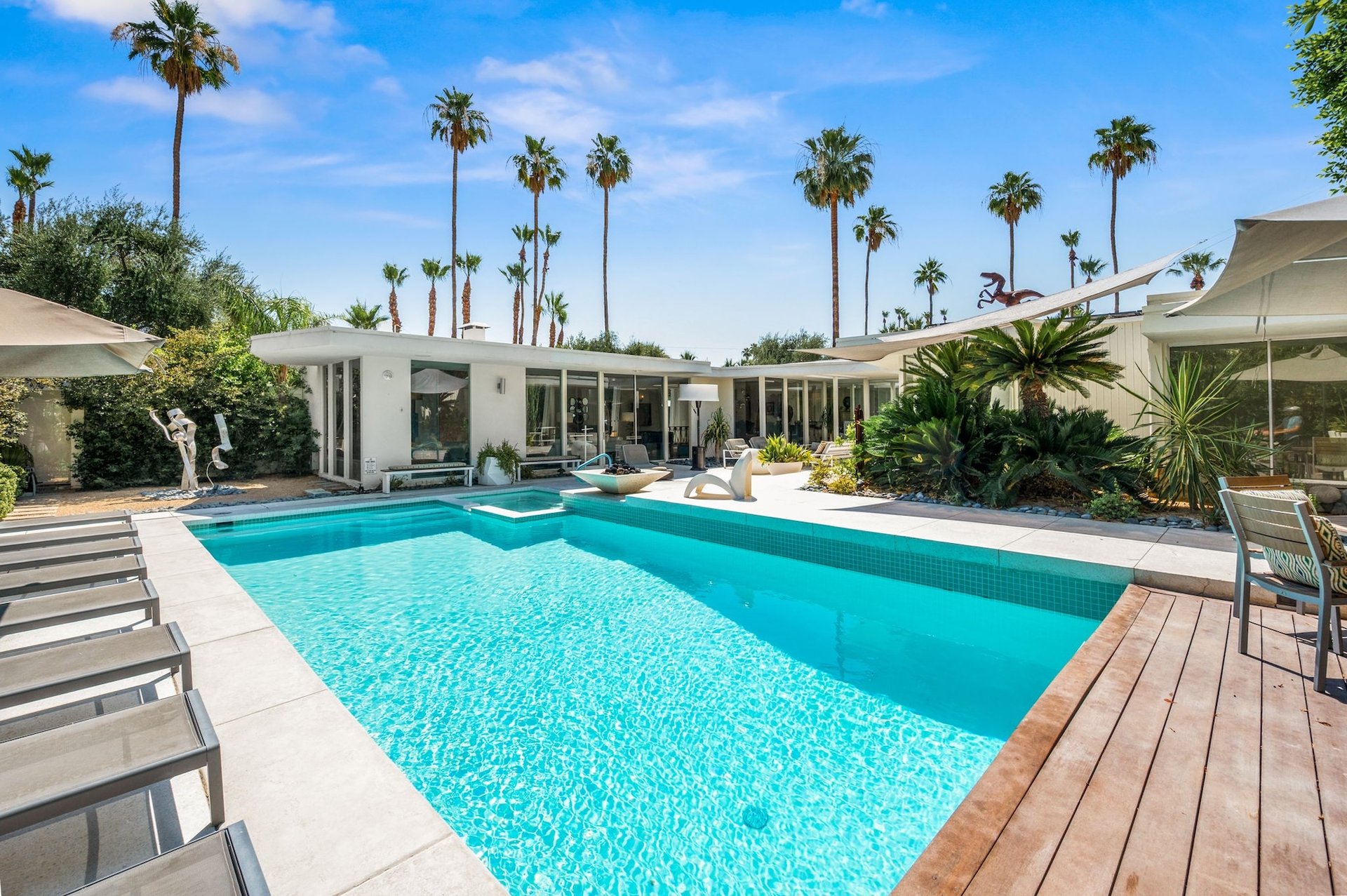
The hotel plays on this duality. Facing the street, its imposing facade—inspired by grand colonial trading posts—makes a bold statement. But once you step through the porch, you enter an inner courtyard sheltered from the city’s clamor. The layout, centered around a central courtyard and a pool lined with wooden walkways, is reminiscent of Moroccan riads or Andalusian mansions, adapted to southern latitudes. Villa Delisle stands out as a sophisticated base camp for those wishing to explore the “Sud Sauvage,” its lava flows, and the Piton de la Fournaise, while still enjoying, come evening, an urban atmosphere, a cutting-edge cocktail bar, and the immediate proximity to the hustle and bustle of Saint-Pierre.
Vertigo and Perched Cabins
In the northwest, near La Possession, engineering is put to work to facilitate escape. The rugged terrain of the ravines—those deep gorges that cut across the volcano’s flanks—theoretically precludes any large-scale construction. The Roche Tamarin Lodge has overcome this obstacle by embracing a lightweight design. The entire resort consists of wooden cabins suspended on stilts, connected by a network of walkways that wind through the trees.
The experience is almost like a luxury cabin getaway. You move about at canopy level, lulled by the song of endemic birds and the murmur of water in the ravine below. The decor features natural textiles, sheer mosquito nets, and teak. The highlight of the resort is its spa, hidden among the vegetation, where the open-air hot tubs create the illusion of a wild hot spring lost in the middle of nowhere. It is an architecture of subtraction, one that refuses to clear land or level the terrain to impose its presence, preferring instead to weave itself into the crevices of the rock and the forest.
Through these destinations, a Réunionese definition of luxury takes shape. It rejects ostentatious opulence in favor of harmony with the land. A stay at these hotels isn’t merely consumed; it’s experienced through the change of scenery as you climb a mountain road, the scent of vetiver after the rain on a wooden terrace, or the silent observation of an untamed ocean from the heights. These places are not merely accommodations; they are privileged vantage points from which to understand the raw power of an island that refuses to be tamed.