Make Texture a preferred source on Google to support us
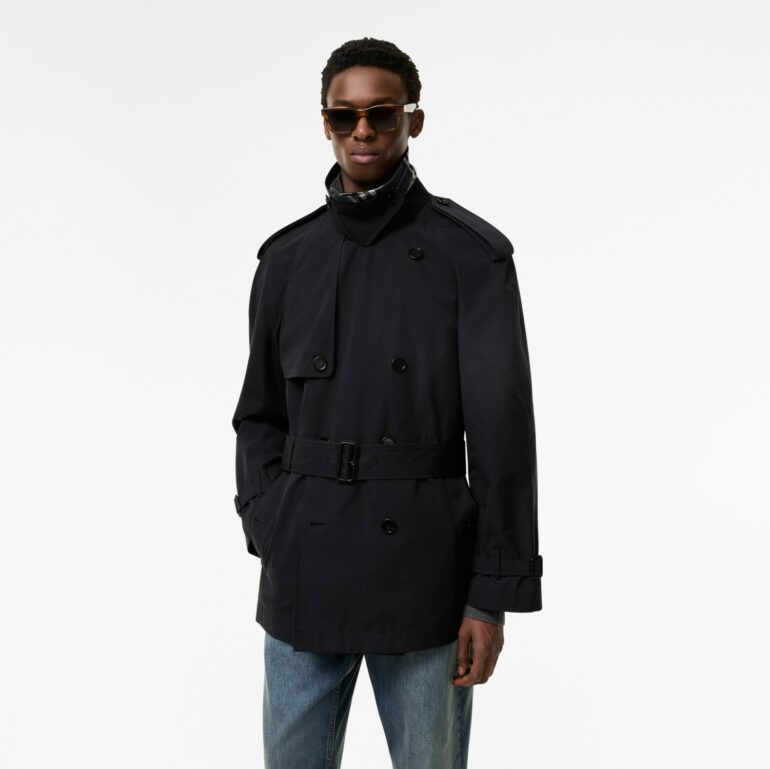
Add Texture to GoogleA figure cuts through the pouring rain on a sidewalk blackened by the downpour. The raised collar brushes the nape of the neck; the waist is sharply defined by a belt tied without ceremony; and water beads on the matte fabric without ever penetrating it. Behind this elusive appearance—universally associated with urban elegance and mystery—lies, however, meticulously engineered textiles, designed for mud, freezing cold, and tactical survival. To examine a trench coat up close is to decipher a military manual imprinted in the cotton fibers. Every seam, every brass ring, and every asymmetrical panel tells the story of a vital function, dictated by the urgency of early 20th-century conflicts—long before fashion and cinema turned it into the uniform of chic melancholy.
The Twill Cotton Armor
In the mid-19th century, braving the elements on a battlefield or in the streets of London required painful compromises. Raincoats, often made from the rubberized fabrics developed by chemist Charles Macintosh, weighed heavily on the shoulders. While they effectively kept out water, they were completely airtight: body heat remained trapped inside. Worse still, the rubber gave off a pungent odor, melted in the summer heat, and cracked in the cold. The true technological breakthrough came in 1879. Thomas Burberry, a visionary cloth merchant based in Hampshire, observed the attire of local shepherds. Their linen smocks naturally repelled drizzle thanks to the lanolin that impregnated the wool of their sheep.
Inspired by this principle, he invented gabardine. The secret no longer lay in a surface coating, but at the very core of the fiber. Each cotton thread is chemically waterproofed before the weaving process. This extremely tightly woven twill, with a density exceeding 100 threads per square centimeter, creates a formidable mechanical barrier. Water runs off this fabric, crisscrossed with fine diagonal lines, while the microscopic porosity preserved between the threads allows body moisture to escape. This radical innovation, patented by Burberry, quickly caught the attention of the British War Office. The army was desperately seeking to equip its officers with lightweight protection capable of replacing the heavy, regulation woolen capes that became saturated with water and mud in the trenches.
A Breakdown of an Assault Kit
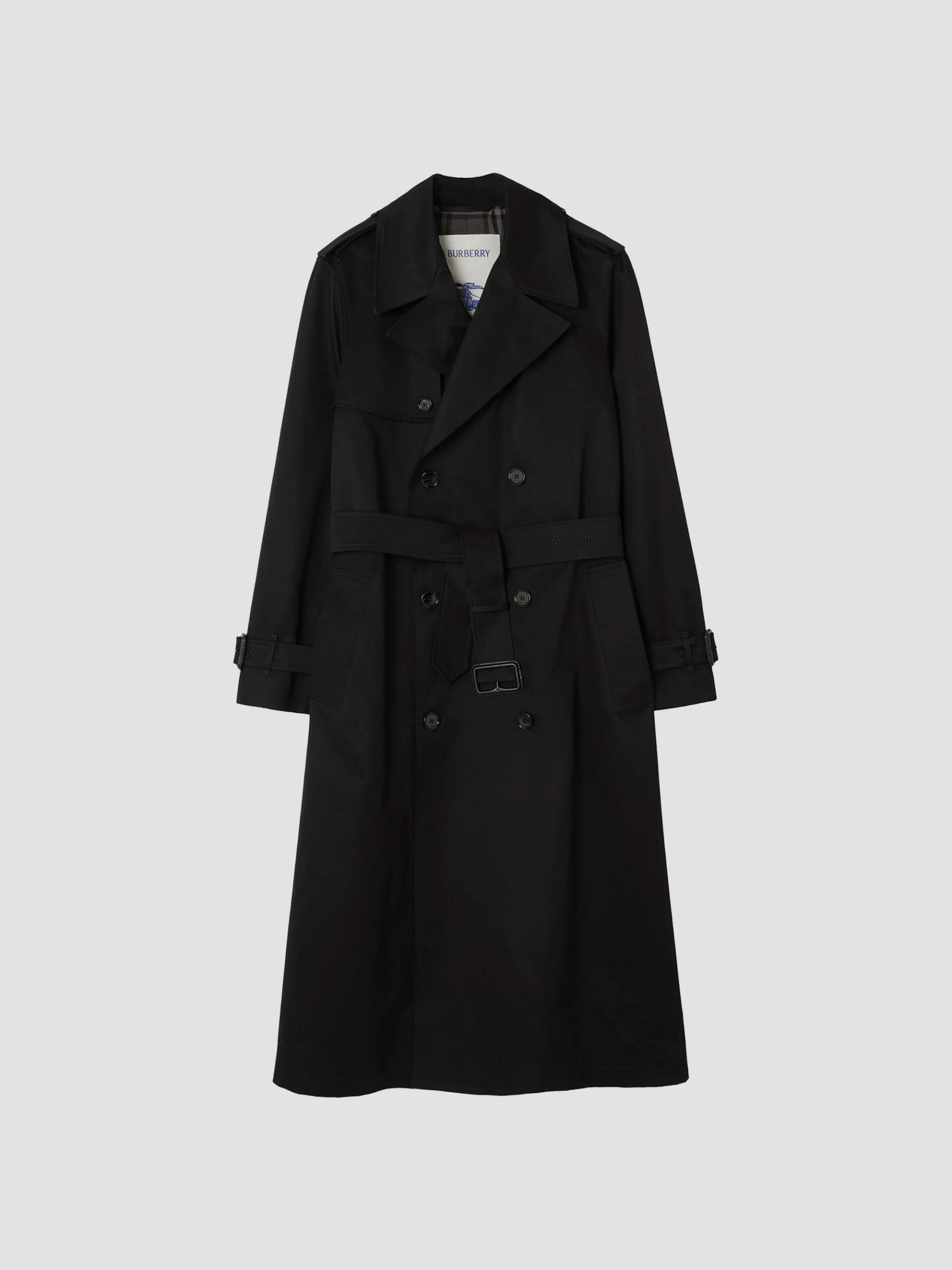
The 1914 specifications would define the garment’s exact structure. In this piece, design does not exist as such: form strictly follows function. The trench coat reads from top to bottom like an inventory of combat gear. The buttoned shoulder tabs, often mistakenly perceived as a design element to accentuate the shoulders, served to secure the straps of heavy binocular cases or gas masks, while also providing a base for sewing on the braids indicating the officer’s rank. Just below, resting against the right collarbone, an asymmetrical flap covers the chest. This flap, or pistol flap, absorbs the wear caused by the continuous friction of the rifle butt when the soldier shoulders his weapon, and prevents rainwater from seeping in through the coat’s cross-opening.
Since mobility under enemy fire takes precedence over fit, the classic armhole—with its rigid seam at the top of the shoulder—is abandoned. The coat features raglan sleeves—a design inherited from Lord Raglan during the Crimean War—where the fabric runs in a single piece up to the base of the neck. This absence of a seam at the tip of the shoulder eliminates a potential entry point for rain and provides complete freedom of movement for throwing explosives or wielding a bayonet. Above all, this loose fit allows the garment to be slipped on over the thick wool twill uniform tunic.
At the back, a wide, flowing panel of fabric acts as an architectural gutter. This storm flap directs torrents of water downward, expelling them away from the body without allowing them to touch the central back seam. At the hem, a deep ease slit concealed by a box pleat allows the panels to open wide—a remnant of cavalry charges ensuring that the coat spreads perfectly over the horse’s saddle without riding up onto the rider’s thighs.
Brass studs and thermal shield
While its name, “trench coat,” literally “trench coat,” betrays the violence of its origins, its construction reflects an obsession with insulation. The fastening system transforms the wearer into a fortress. The double-breasted, crossed front overlays two thick layers of gabardine over the lungs—an essential shield against the freezing winds of the Flanders plains. The buttons, large and sturdy, are sewn to withstand sudden tugs.
The belt, the anchor point of the silhouette, is brimming with tactical tools. Mounted along the strap, oxidized brass D-rings now punctuate the walk with a metallic clatter on the sidewalks of fashion capitals. In 1915, they were used to attach vital small equipment: canteens, staff maps in cases, or hand grenades. The collar, too, conceals a mechanism of surgical precision. A heavy metal clasp allows it to be locked under the chin in a single motion. An additional tightening strap, often concealed at the back of the collar, fastens at the front to seal the throat and prevent mustard gas from seeping in along the neck. The wrists are treated the same way, with buckled straps that are hastily tightened to prevent rain from running down the forearms when the hands are holding binoculars pointed toward the sky.

Social Symbol and Scars of War
During World War I, the trench coat was not part of the standard issue issued to troops. Its high manufacturing cost forced British officers to purchase it with their own money from London tailors or major fashion houses such as Burberry or Aquascutum. It thus became a clear social marker amid the chaos of the mud. Demobilized after 1918, these men returned to civilian life with their coats. Wearing this khaki or putty-beige garment on the streets of London or Paris became a silent mark of bravery, the distinctive sign of a veteran who had survived hell.
To soften the garment’s martial austerity, manufacturers began lining the interior with luxurious fabrics, introducing checkered patterns or colorful tartans. This intimate detail—visible only to the wearer or when the coat flutters open in a gust of wind—marked the beginning of its transition into the high-end civilian wardrobe.
The Silver Screen, the Street, and Anonymity
By the 1940s, popular culture had finally stripped the cotton armor of its military past. Hollywood studios capitalized on the impenetrable nature of its lines. On Humphrey Bogart’s shoulders amid the fog at the Casablanca airfield, the crumpled gabardine takes on a new spirit. The trench coat no longer protects against shrapnel; it shields one’s feelings. The cynical private detective and the spy found in this loose-fitting garment a formidable tool for anonymity. The dramatic shadow cast by the brim of a felt hat plunged into the immensely high collar, creating a geometric block in the midst of the nocturnal city.
French cinema embraced it with surgical precision, transforming the beige fabric into a mineral-like second skin on Alain Delon in Jean-Pierre Melville’s *Le Samouraï*. Almost simultaneously, the garment crossed the gender barrier. Yves Saint Laurent incorporated it into the women’s wardrobe to infuse it with the rigor of masculine power. On Audrey Hepburn in *Breakfast at Tiffany’s*, the coat cinched to the extreme reveals a paradoxical fragility—armor that’s too big for a silhouette fleeing the New York downpour.
Deconstructed time and again by contemporary designers—cut from lacquered leather, lengthened to the ankles, or stripped of its sleeves—the original garment retains an architectural tenacity. Its brass rings have lost their grenades, and its flaps no longer cross the muzzles of war rifles. But by mechanically pulling up the collar to face the cold wind, by tightening the belt with a rough knot without bothering to use the leather buckle, the body instinctively rediscovers the gestures of urgency. The street has replaced the mud, but the twill cotton still offers the same surface tension in the face of adversity.