Make Texture a preferred source on Google to support us
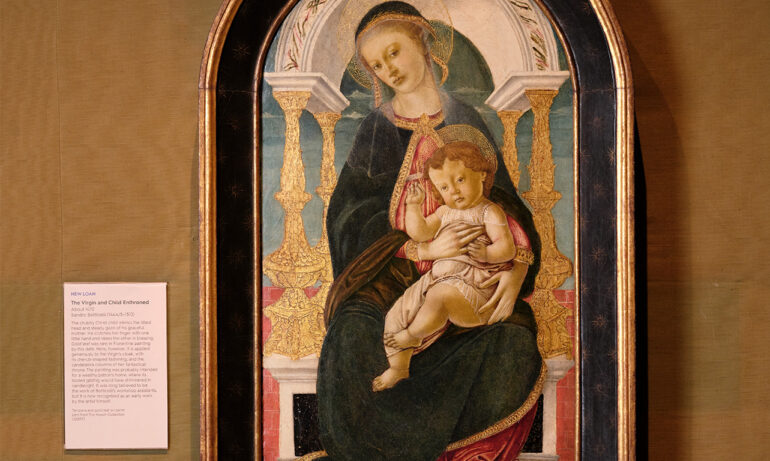
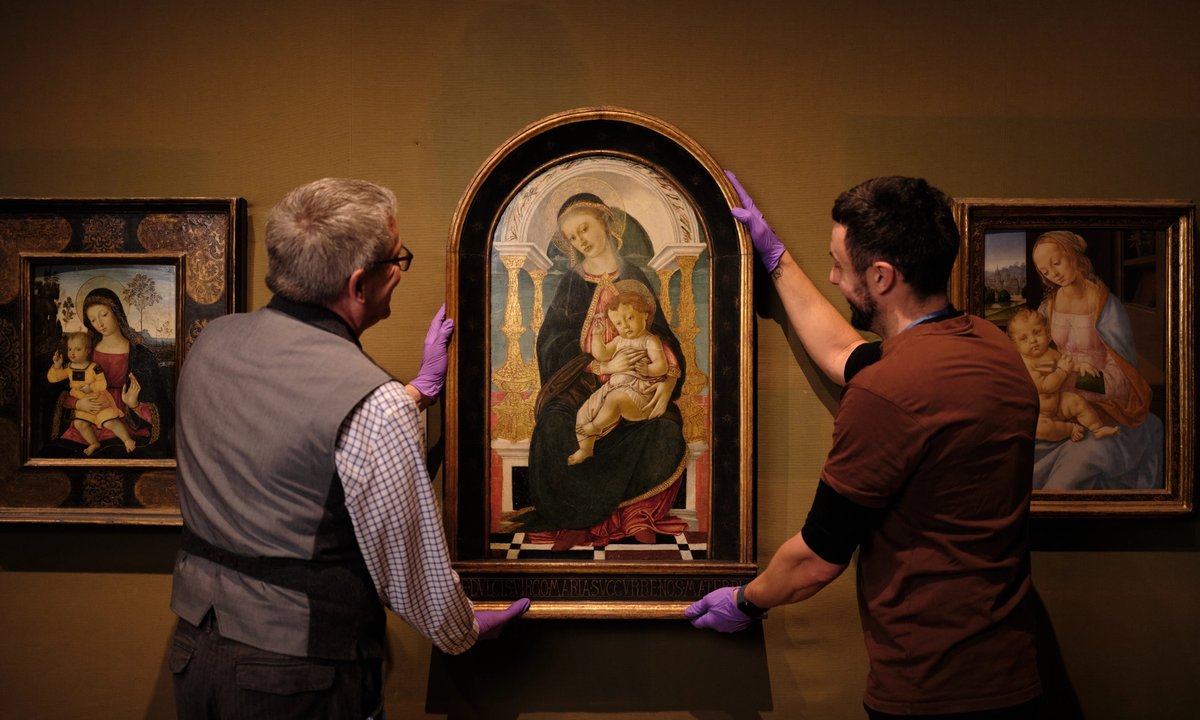
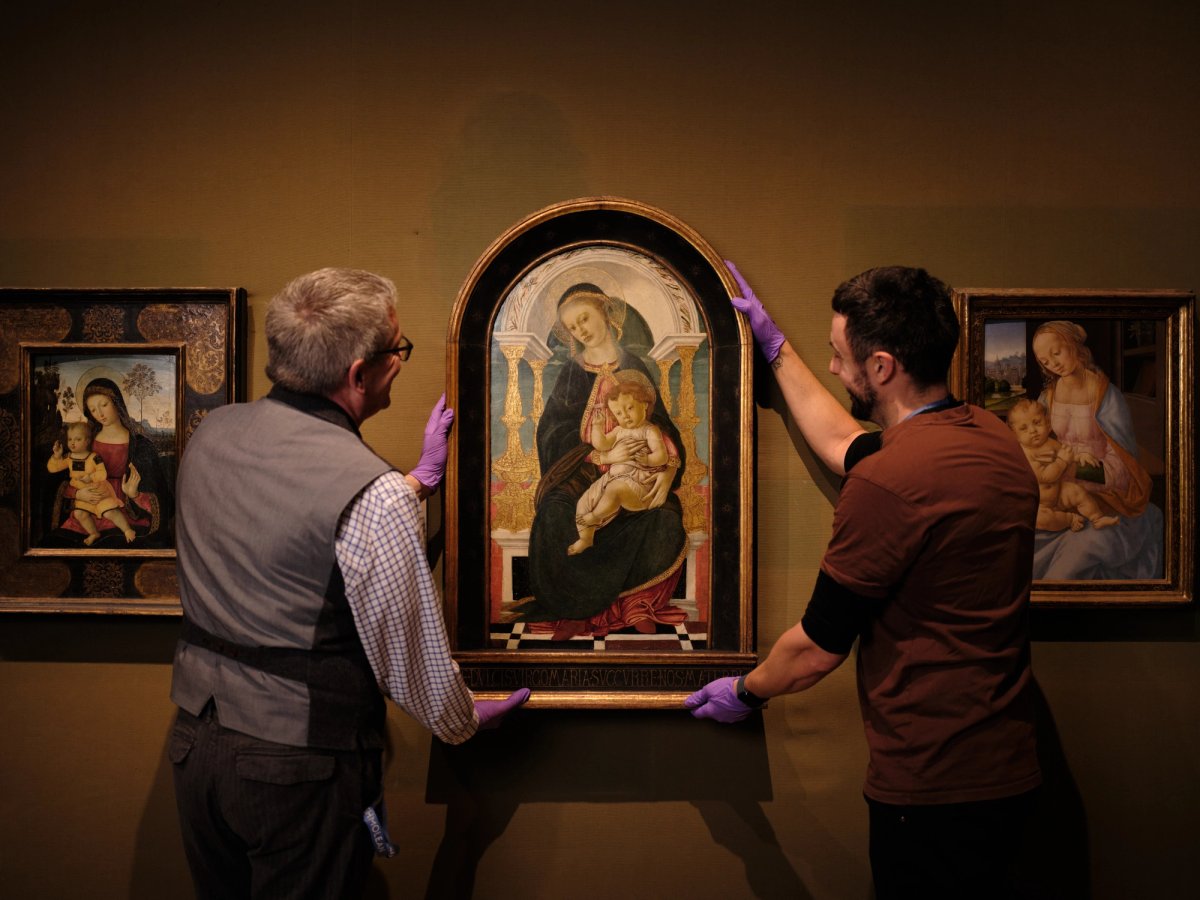
Add Texture to GoogleThe Ashmolean Museum in Oxford has just orchestrated the return of a familiar face to its Italian Renaissance galleries. Nearly a century after it was first hung on these very walls, Sandro Botticelli’s painting *The Virgin and Child on the Throne* is once again on view to the British public. This panel painting, which narrowly avoided being permanently removed from the United Kingdom following a tumultuous auction, is now on a three-year loan to the university museum. This return marks the culmination of a heritage saga that brings together cultural diplomacy, scientific expertise, and private philanthropy.
From the shadows of the studio to the master’s hand
The work, dated approximately 1470, illustrates Sandro Botticelli’s dazzling early career in Florence. At that time, the young artist distinguished himself through a mastery of line and a clarity of composition that foreshadowed his future masterpieces. Yet the recent history of this panel has long been marked by a certain academic caution. During its previous stay at the Ashmolean Museum in 1934 and 1935, curators still attributed it to “Botticelli’s workshop,” a semantic distinction that, in the art market, separates the works of collaborators from those of the genius himself.
It was not until advances in scientific imaging and a meticulous restoration carried out during the summer of 2026 that these doubts were dispelled. The removal of yellowed varnishes and old overpaintings revealed a palette of cool tones of great finesse, characteristic of the master’s own hand. Stylistic analyses, which link this work to the Sant’Ambrogio altarpiece, now confirm that Botticelli’s hand is indeed behind every stroke of this composition. To highlight this rediscovery, the work has been fitted with a new arched frame, hand-carved according to 15th-century Florentine standards.
A Ten-Million-Pound Heritage Rescue
The fate of *The Virgin and Child on the Throne* took a dramatic turn in late 2024, during an auction at Sotheby’s in London. Sold for 9.7 million pounds (approximately 11.5 million euros), the painting was then in danger of leaving British soil to join a foreign collection. Faced with this risk of an irreparable loss to the national heritage, the British government invoked a major legal measure: the temporary export bar.
Recommended in May 2025 by the Department for Digital, Culture, Media and Sport (DCMS) advisory committee, this measure froze the transfer of the artwork. The goal was to allow time for a national institution or buyer to match the value set by the experts, namely 10.2 million pounds (including VAT recoverable by public bodies). Ultimately, The Klesch Collection, a private foundation based in London and led by A. Gary Klesch and Dr. Anita Klesch, purchased the work in 2026. By purchasing the panel, the collection ensured its preservation in the United Kingdom before formalizing the free loan to the University of Oxford.
The Discreet Legacy of the Wantages
The journey of this painting offers a glimpse into the history of European taste. Before becoming one of the jewels of a London collection, the work resided for many years in the private settings of aristocratic estates in Berkshire. It was kept for eighty years, from 1944 to 2024, at Betterton House, within the family of Lady Wantage’s heirs.
Harriet Sarah Loyd-Lindsay, known as Lady Wantage, had acquired this Virgin in May 1904 for 5,000 pounds. She had purchased it from Elia Volpi, an influential Florentine art dealer. Before arriving on British soil, the panel had belonged to the Graziani family and had been housed in a convalescent home run by the Calasanzian Order in Comezzano, after being moved from the oratory of the San Giuliano convent in Florence in the early 19th century. While its original purpose is believed to have been that of a private devotional painting—perhaps intended for the altar of a domestic chapel—the exact identity of its first Florentine patron remains one of the work’s last mysteries.
A Place Among the Masters of the Renaissance
Since November 11, 2026, *The Virgin and Child on the Throne* has occupied a prominent place at the heart of the Ashmolean’s Italian Renaissance gallery. The exhibition layout was designed to create a direct dialogue between this early work by Botticelli and other cornerstones of the collection, such as Paolo Uccello, Giovanni Bellini, and Titian. This juxtaposition allows visitors to grasp the stylistic transition taking place in Florence in the 1470s, a pivotal moment when the geometric rigor of the early Renaissance began to give way to Botticelli’s distinctive lyrical grace.
This three-year loan offers exceptional public visibility to a work that, for most of the 20th century, remained confined behind the doors of private collections. Contrary to certain erroneous reports suggesting a direct purchase by the museum, the Ashmolean is acting here as the custodian and guardian of a treasure whose continued presence on British soil is now guaranteed by collaboration between the public sector and private philanthropy.