Make Texture a preferred source on Google to support us
Add Texture to GoogleThe Castle, the Camera, and the Velvet Ghost
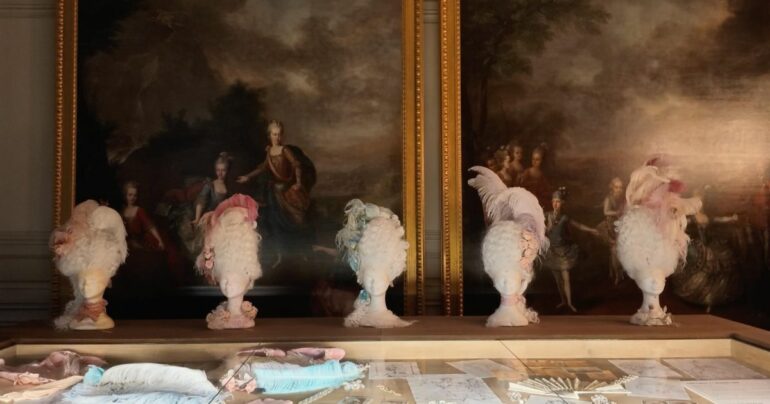
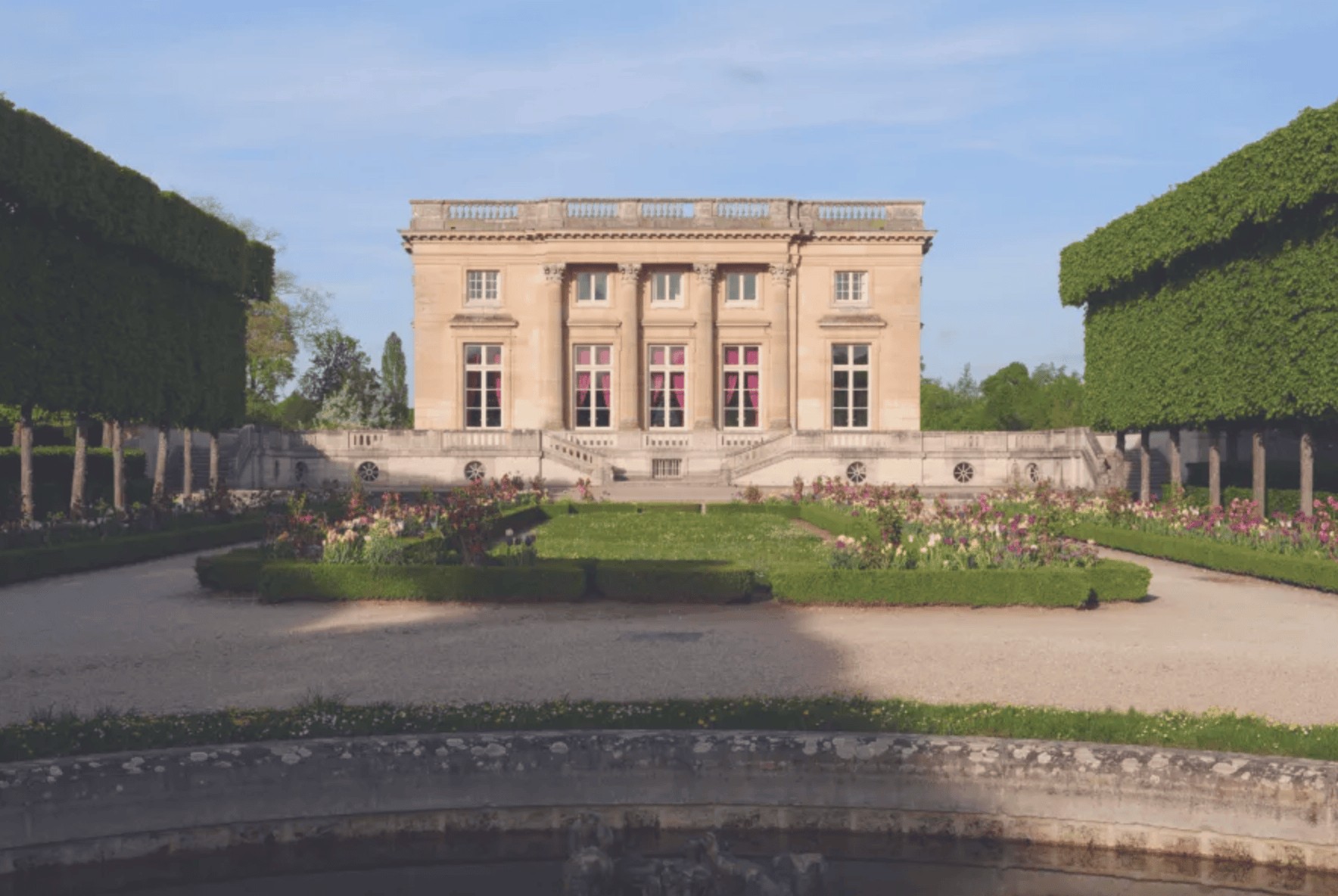
On September 22, 2026, the doors of the Petit Trianon will open to reveal a unique mise en abyme. Twenty years after depicting a teenage queen wandering against a post-punk backdrop, Sofia Coppola once again steps into the gilded halls of Versailles. The institution is dedicating an exhibition to her, where the original setting hosts the remnants of her own cinematic reinvention. The director is actively involved in this curation, which refuses to be merely a parade of filming relics.
While annotated scripts, props, and set photographs document the making of the feature film, it is the interplay with the venue that captures the attention. The silks and voluminous garments designed by costume designer Milena Canonero will return to the exact rooms where the camera once rested. Projections will haunt these spaces, directly challenging the way in which the architecture of Versailles dictated the rhythm and aesthetics of a work that, in turn, redefined the image of Marie Antoinette. The exhibition dissects this cycle of influence: how the film upended the conventional monarchical narrative to establish a new cultural truth, as enduring as the official history.
An in-depth examination of social ties, from the guinguette to the grunge years
While Versailles examines its own myths, London will offer, in the fall of 2026, two radically opposing interpretations of modern sociability. At the National Gallery, color will take a back seat to the analysis of emotions. Beginning October 3, the British institution will bring together forty-five paintings created by Auguste Renoir between the mid-1860s and the 1880s. This project, organized in collaboration with the Museum of Fine Arts in Boston and the Musée d’Orsay, moves away from the usual celebrations of the Impressionist brushstroke to scrutinize the choreography of human relationships.
The exhibition layout explores group dynamics, family intimacy, romantic exchanges, and the mechanics of Parisian flirtation. At the heart of this presentation, *La Danse au Moulin de la Galette* will leave the walls of the Musée d’Orsay for its very first showing in the United Kingdom. There, the painting will be interpreted as a vast network of social interactions—a snapshot of the friendships and romantic entanglements of the era.
A few days later, on October 8, Tate Britain will shift eras and tones with an exhibition curated by editor-in-chief and stylist Edward Enninful, according to reports from The Peak. Gone are the days of picnics on the grass; make way for the raw aesthetic of a decade of upheaval. Blending film, design, music, contemporary art, and fashion, the exhibition charts the emergence of new voices that shattered the conventions of the late twentieth century.
The lenses of photographers David Sims, Corinne Day, and Juergen Teller will capture the dazzling creativity of John Galliano, Alexander McQueen, and Vivienne Westwood. Alongside these figures, the curators will feature works by major visual artists such as Sarah Lucas, Damien Hirst, Yinka Shonibare, and Steve McQueen, to reconstruct the complex portrait of a generation that redefined the boundary between fashion and the street.
The Human Body and the Imprint of the Elements
The question of the physical body and its place in space will dominate two other major events of the season. At the Tate Modern, the museum hinted at a major retrospective dedicated to Ana Mendieta through its own gift shop. Scheduled for July 15, 2026, through January 17, 2027, the poster—already on display—features *Imágen de Yágul*, a photograph taken in Mexico in 1973.
This single image encapsulates the artist’s “earth-body” approach, in which she merged her own body with natural landscapes. While rumors suggest the exhibition will feature remastered film prints, early paintings, and later sculptures, the museum has not yet officially confirmed the exact scope of the works that will document this quest for a visceral fusion with the earth.
Further south, at the Guggenheim Bilbao, Steve McQueen will showcase a completely different form of physical presence beginning October 9, 2026. The Basque museum space will be transformed into a resonating chamber for his moving images. The installation promises a masterful manipulation of light, acoustics, and very large formats. McQueen constructs a deliberately stripped-down environment there, designed not to be viewed, but to be walked through. The installation aims to translate abstract ideas related to the individual and their ecosystem into pure sensations, directly influencing the visitor’s spatial perception.
Mutant Archives and Parallel Futures
In Asia, institutions are moving away from organic matter to explore our relationship with the cosmos and data. Starting October 31, 2026, the Mori Art Museum in Tokyo will showcase three decades of Mariko Mori’s work. Forty pieces will punctuate this exhibition, ranging from interactive installations to drawings, moving through moving images and sculpture.
The Japanese visual artist will present her reflections on the role of light, human consciousness, and the natural order. The museum promises an aesthetic shock where pop culture iconography collides with a technology-saturated futurism, bridging cosmic spirituality and our hyper-connected digital environment.
In Kuala Lumpur, the ILHAM Gallery offers a radically different approach to technology. Starting November 22, 2026, Taiwanese artist Chia-Wei Hsu will take over the space with a fragmented installation. His exhibition draws on Northern Thailand, Malaya, Taiwan, and Indonesia’s colonial past—not to weave a grand, unified historical narrative, but to scrutinize the very mechanics of memory.
The result takes the form of a dizzying collage. Archaeological remains and fragments of everyday life collide head-on with 3D printing, soundscapes, virtual reality, and generative artificial intelligence. Aerial shots captured by drones fly over unearthed archival material. Here, technology is not used to invent the future, but to explore the complexity of an Asian region whose memory refuses to be frozen into a simple narrative.