
Make Texture a preferred source on Google to support us
Add Texture to GoogleThe Last Museum website brings together 5.8 million works from around the world, offering a digital exploration of artistic heritage that is as innovative as it is breathtaking, striking a subtle balance between cultural openness and legal issues.
A monumental index, blending scholarship with digital exploration
The Last Museum website now claims to have indexed 5.8 million works held in museums around the world, ranging from classical masters to more obscure graphic designs. At first glance, this online catalog seems rather modest: you log in for a few minutes, then easily find yourself drawn in, with almost surprising regularity. This search engine isn’t always surgically precise, but it often opens up unexpected paths—sometimes far more interesting than the initial query itself.
A tool for exploring styles
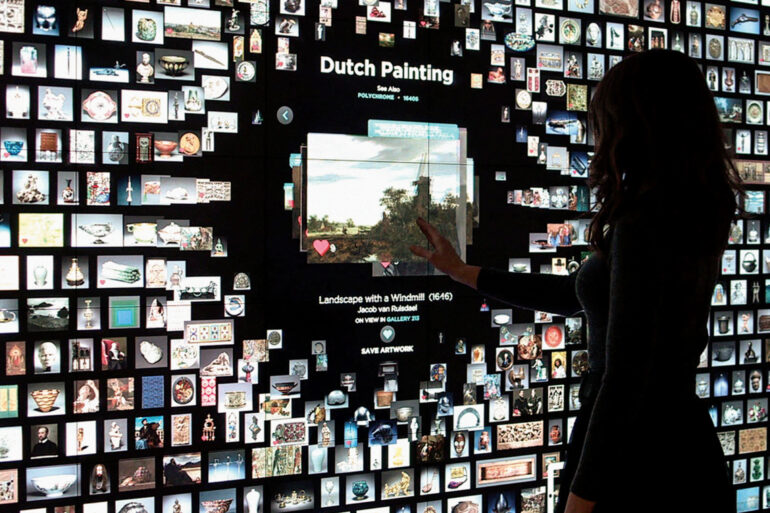
The interface is based on filtering by period, as well as searches by artist, institution, or culture. At first glance, this elegant approach gives the site the feel of a dynamic archive. The Indie Atlas describes the tool as a free semantic search engine, independent of museums and galleries, designed to find a work based on a theme, style, or subject. In practice, the experience is as much about targeted research as it is about a relaxed aesthetic stroll.
This navigation method is reminiscent of major public collections that have adopted open access. The Metropolitan Museum of Art, for example, offers more than 375,000 images that are freely accessible, downloadable, and reusable without any restrictions. The Smithsonian American Art Museum highlights public-domain works such as “The Last of the Tribes,” as part of an initiative that serves both educational and research purposes. The contrast between these open institutions and those that still restrict access to their reproductions remains particularly striking.
The Sensitive Issue of Shared Heritage
The Last Museum highlights a key issue: some of the indexed works are in the public domain, but others are displayed only under fair use, at low resolution, and strictly for educational and non-commercial purposes. Each image links back to its original source, which clearly positions the project more as a curatorial reference tool than as a substitute for the artwork itself.

Behind this legal caution lies a persistent dispute. Many museums still claim rights over reproductions of works that have fallen into the public domain—whether they are scans, photographs, or digital models. Others, such as the Met or the Smithsonian, have opted for a much more open approach. This is not merely a technical detail: it is a genuine battle over the circulation of cultural heritage and the very definition of access to the art world.
The Whims of an Infinite Archive
This project is compelling for its ability to bring together scattered collections and make them easily navigable. Museum Drift, another app designed around the Metropolitan Museum, demonstrates the growing appetite for these immersive experiences. The Last Museum is part of this same trend, but on a much larger and more ambitious scale.
Nevertheless, caution is still warranted. Such a massive index isn’t always synonymous with clarity. Searches can sometimes yield unexpected—or even completely off-the-wall—results, which makes the platform as fascinating as it is frustrating. Ultimately, the site in no way replaces the museum experience: it extends it, sometimes circumvents it, while underscoring that the digital archive, however rich it may be, remains a capricious and infinite resource.