Make Texture a preferred source on Google to support us
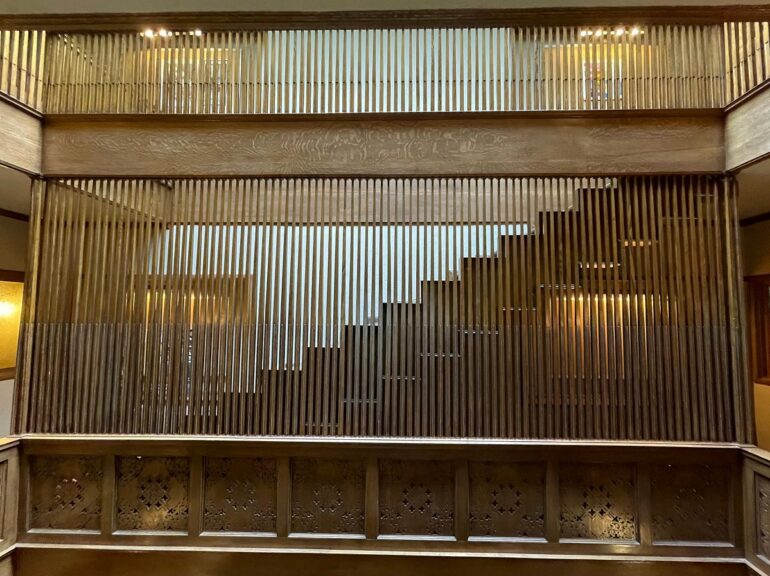
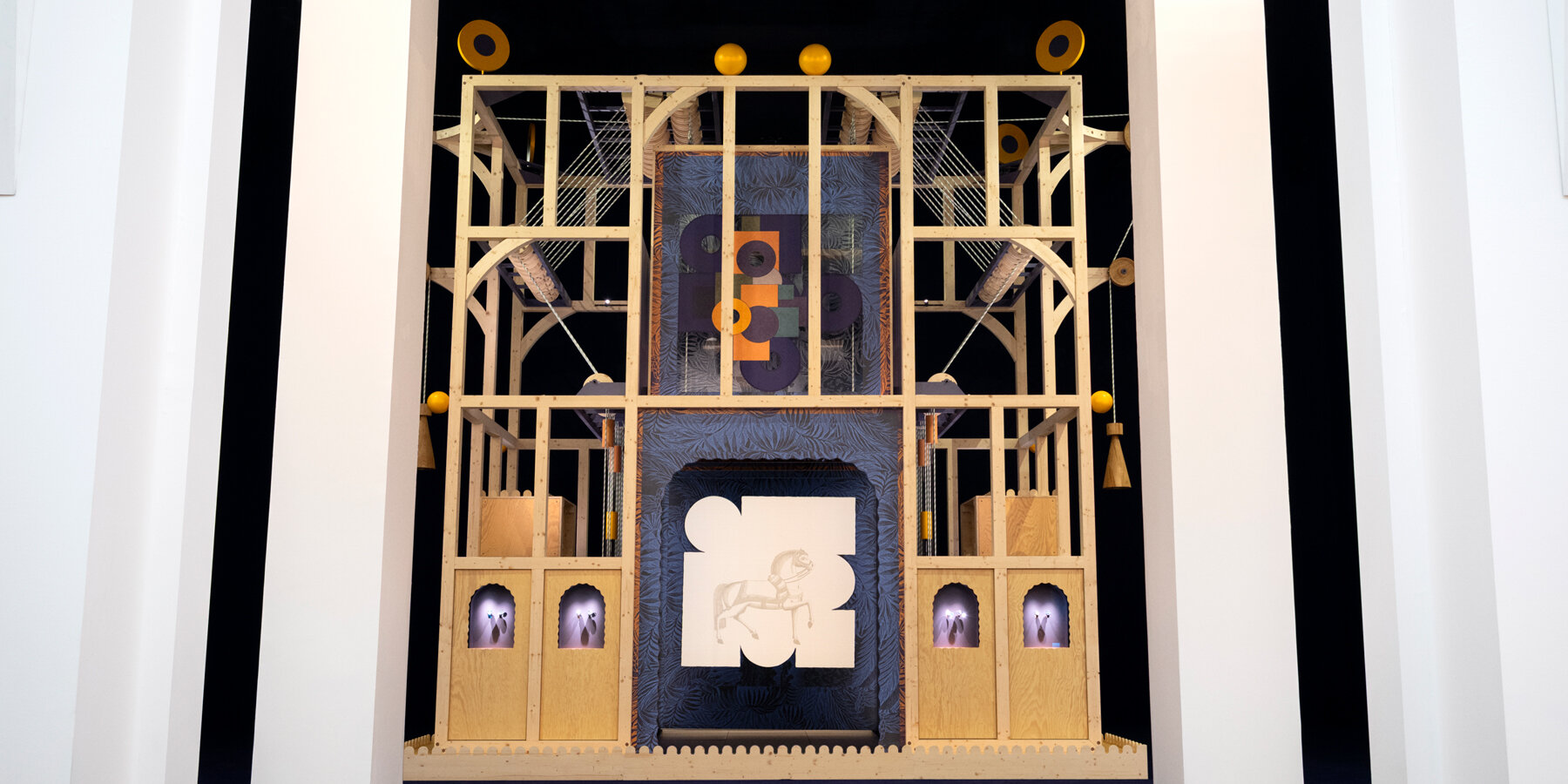
Add Texture to GoogleTaut ropes, a meticulously arranged system of pulleys, and movable frames that unfold throughout the space. With his kinetic sculpture titled Mysterious Mechanics, artist Jean-Simon Roch offers a literal, almost spectacular interpretation of the mechanical imagination as conceived at Hermès. The work exposes movement, dramatizes it, and presents it to the viewer with absolute spatial generosity. Yet when this same house decides to scale down mechanics to the precise dimensions of a wrist, the narrative shifts radically. Far from the visual profusion of the sculpture, the H08 watch demonstrates a rigorous mastery of its own volumes. It is in this striking contrast that the saddler’s entire contemporary watchmaking strategy is revealed: fantasy is tolerated only if it is firmly anchored to an uncompromising architecture.
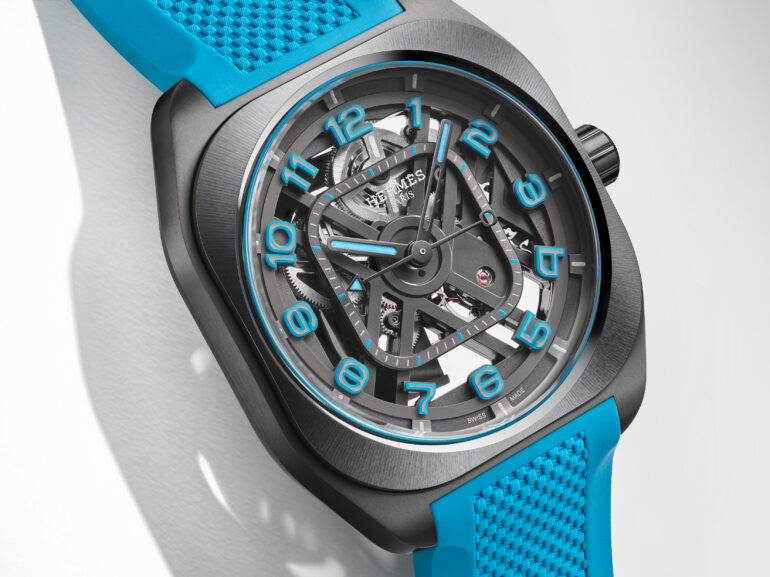
Sports watchmaking often adheres to overloaded codes, where a display of power takes precedence over design. Since its introduction in 2021, the H08 has swum against the tide of this escalation. The initial design choice was based on a unique geometric premise: a cushion-shaped case. Neither quite round nor strictly square, this silhouette creates a constant interplay between the sharpness of the angles and the softness of the curves. Observers at the specialized publication Hodinkee have, in fact, detected a very specific quest for balance—a desire to establish a genuine presence on the wrist without ever veering into visual aggressiveness. This formal language also relies on an element that may seem minor but structures the entire dial: the typography. The exclusive design of the Arabic numerals anchors the watch’s identity. Once the case—its defining form—was definitively established and embraced, the evolution of the line could begin—not by dismantling its structure, but by transforming its surface.
The chemistry of textures as the sole playground
Evolving an object without altering its underlying structure requires a particular discipline. As Laurent Dordet, head of La Montre Hermès, points out in an interview with GQ India, the scope for exploration in this line lies almost exclusively in the work with materials. The form remains untouchable; only the material is allowed to express itself. This philosophy has enabled the collection to incorporate an impressive variety of technical treatments in a relatively short period of time.
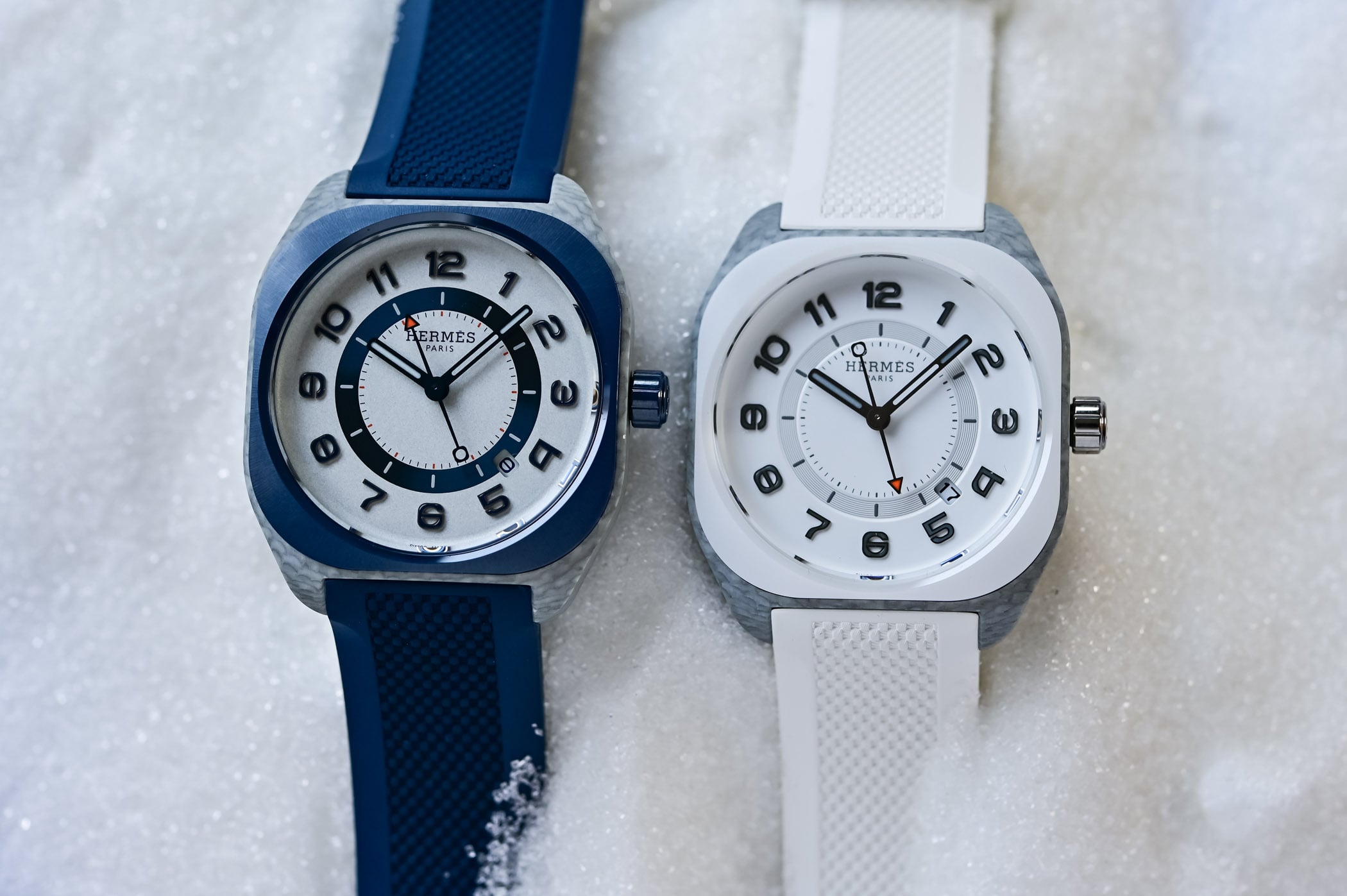
The variations unfold with the precision of an industrial master craftsman. Classic titanium stands alongside the cold hardness of ceramic. Surface treatments—whether PVD or DLC coating—darken and harden the profiles. Even more complex, the manufacturer has incorporated advanced composites, blending carbon fiber with graphene powder—a combination that gives the cases a raw, matte, and subtly marbled texture. These technical choices go beyond mere performance: they alter the way light is absorbed. The shift from a polished finish to a satin-brushed one, or the addition of a finely grained dial, is enough to shift the aesthetic balance from one model to another. The identity remains intact, but the character changes.
Recently, the introduction of color has reinforced this method of iteration through subtle touches. The rigor of blacks and grays has been disrupted by the arrival of variations exploring white and blue. Deliberately lightened dials now serve as a backdrop for highly distinctive chromatic accents: a flange or a seconds hand accented with orange, or numerals rendered in a vibrant Saint-Cyr blue. These models are often framed by a black ceramic bezel to channel the color and are secured to the wrist with woven or rubber straps. The playful spirit championed by the brand’s leadership finds its tangible expression here, without ever overshadowing the piece’s inherent understated elegance.
The Seamless Integration of Complications
The true test for any watch with a bold design comes when mechanical complications are integrated. The addition of secondary functions often results in a cluttered dial or a bulky case. The H08 sidestepped this pitfall in 2023 with the launch of its chronograph. Recognized by the Fondation de la Haute Horlogerie, this model perfectly embodies the philosophy of restraint. Housed within the famous case combining carbon composite and graphene, the movement features a single-push-piece architecture. The chronograph is started, stopped, and reset via a single button, cleverly positioned on the crown’s axis.

This technical decision is, above all, an aesthetic one. The absence of side pushers preserves the fluid lines of the cushion-shaped case. On the dial, the display of elapsed time is concentrated on a single 30-minute totalizer. The connection to traditional three-hand models is carefully preserved through the use of contrasting materials and colorful accents. Even when the collection ventures into the realm of skeletonization, revealing the inner workings through open dials with intricate finishes, the priority remains readability. The mechanical complication enhances the design; it refuses to overshadow it.
Time, the ultimate arbiter of icons
In the house’s workshops and boutiques, a guardian shadow inevitably looms over every creation: that of the Birkin bag. This absolute standard of luxury embodies the ultimate ambition of any object bearing the H logo: to become so deeply ingrained in the collective unconscious that it transcends the cycles of fashion. The H08 watch obviously does not yet possess this status. An icon is not declared at a press conference; it is forged over time.
This is precisely the analysis outlined by GQ India, which does not hesitate to draw a bold parallel between the French creation and a Swiss legend: the Rolex Submariner. What connects these two timepieces is neither their function nor their aesthetics, but the relationship they share with the long term. The Geneva-made diving watch has built its legend on apparent immutability, refusing to alter its original design for decades and preferring technical micro-adjustments to drastic overhauls.
By refraining from redesigning its sports watch with each passing season and limiting itself to exploring pigments and industrial composites, the Parisian house adopts a similar stance. It is placing its bet on consistency. The catalog is expanding, and variations are multiplying, but the watch’s silhouette remains the collection’s indisputable guiding principle. Time will tell whether this slow accumulation of iterations—which eschews flashiness in favor of the evolution of materials—will be enough to transform an excellent industrial design into a definitive classic of 21st-century watchmaking.