Make Texture a preferred source on Google to support us
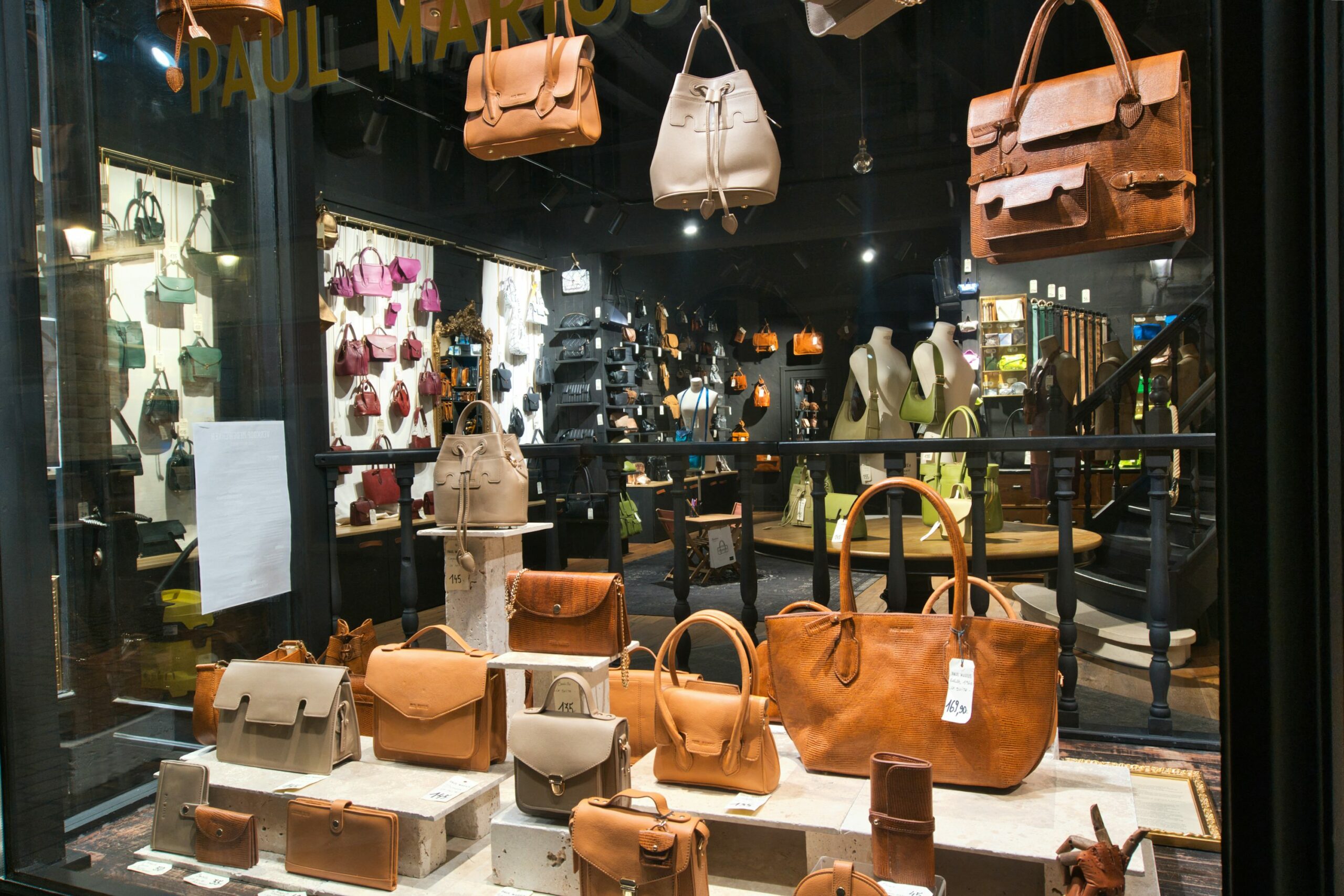
Add Texture to GoogleA prestigious avenue, no matter which capital city. Behind immense storefront windows, bathed in clinical lighting, rows of bags, shoes, and jackets—reproduced in the thousands—are displayed. Inside, customers wait patiently to purchase items that will end up in cardboard boxes, recognizable from a hundred meters away. We’ve come to accept this as “luxury.” Yet the proliferation of these standardized items tells a very different story: that of a formidably organized industry that has pulled off the feat of packaging mass production within the vocabulary of exclusivity. Behind the gloss of global advertising campaigns and the staged displays of boutiques, an invisible dividing line now splits the market. On one side: mass production, immediacy, and the cloning of appearances. On the other, a radical, quiet, and demanding practice that restores time to its rightful value: bespoke craftsmanship.
The Illusion of Exclusivity
To grasp what fundamentally distinguishes a one-of-a-kind object from mass production, we must dissect the mechanics of contemporary fashion. The original promise of high-end fashion rested on rarity, the nobility of materials, and the excellence of craftsmanship. Today, financial logic imposes strict production volumes that are entirely incompatible with pure craftsmanship. The jacket purchased in a store—even at a prohibitive price—was conceived on a wooden mannequin with theoretical proportions. It was designed to fit just about everyone, and consequently, no one in particular.
Luxury ready-to-wear demands that the human body conform to industrial patterns. The buyer must compromise with their own anatomy. They instinctively adjust their posture to do justice to the garment, conceal creases by crossing their arms, and tolerate an armhole that’s slightly too tight or a collar that lifts away from the nape of the neck by a fraction of a millimeter. The collection standardizes silhouettes and transforms the customer into a billboard, tasked with validating their social status by displaying a brand. True luxury does the opposite. It has nothing to prove to outside observers; it focuses exclusively on the wearer’s physical and intimate experience.
Mapping Imperfections
Bespoke tailoring overturns the established order. Here, the individual no longer bends to the dictates of a factory-graded paper pattern. It is the fabric that conforms to the body’s structure, natural asymmetries, and movement patterns. Walking through the door of a workshop to place a special order is almost like baring one’s soul. The cutter doesn’t simply wrap a measuring tape around a torso. He conducts a clinical observation.
He notes one shoulder that droops more than the other, a pronounced arch in the back, the way the customer shifts his weight to one leg or instinctively slips his hand into a pocket. This collection of information forms the true architecture of the garment to come. Where mass production smooths out human imperfections to impose a uniform standard, bespoke creation embraces these so-called flaws. It uses them as a foundation. It rebalances the proportions to craft a silhouette. A suit or a pair of shoes crafted according to the rules of the art never feels stiff the first time you wear them. The garment gives off that uncanny impression of having always existed, acting like a second skin waiting to be worn, calibrated to the millimeter for the skeletal structure it covers.
The Currency of Time and Anticipation
Acquiring an exceptional piece through traditional channels offers fleeting satisfaction. The act boils down to an instant transaction: the object transitions from a fantasy to a possession in a matter of seconds. A custom order, on the other hand, imposes a rhythm that runs counter to the pace of our times. It demands patience. Entire months pass between the first handshake and the final delivery. This delay is not a logistical constraint; it is the very essence of the piece’s value.
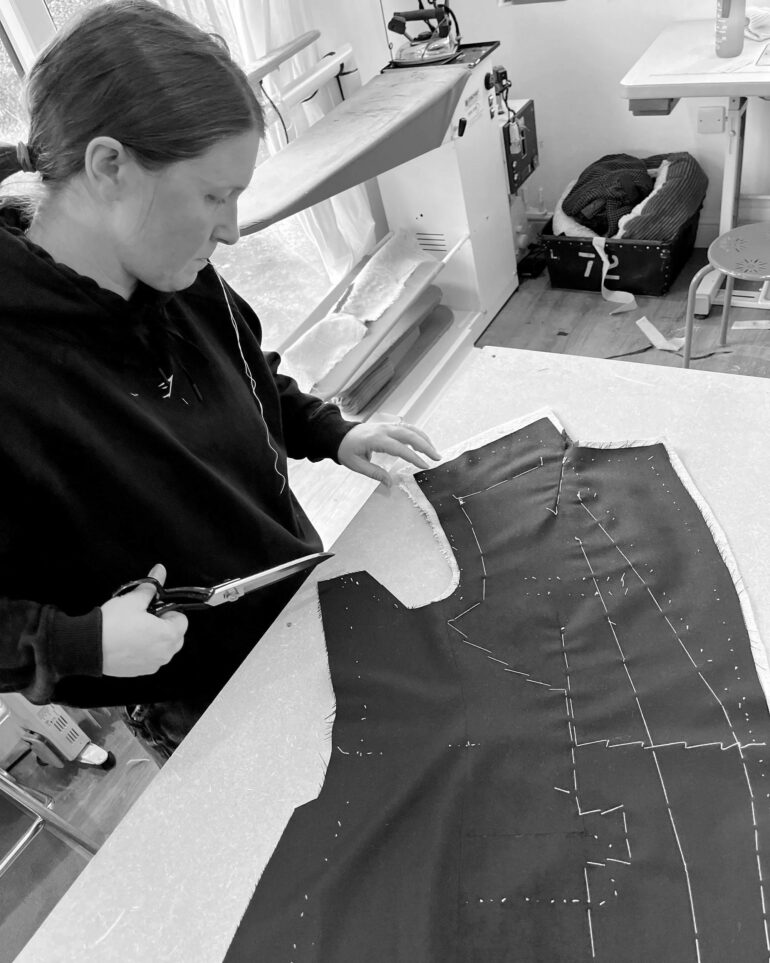
Successive fittings bring this journey to life. The raw cotton canvas, covered with pencil annotations, tailor’s chalk marks, and pins, serves as the garment’s three-dimensional draft. The client sees their project taking shape. A dialogue begins. We discuss the tension of a fabric, the stiffness of a lapel, and the way a pair of pants drapes over the instep. This constant tension between the client’s abstract vision and the technical reality imposed by the artisan leads to ongoing adjustments.

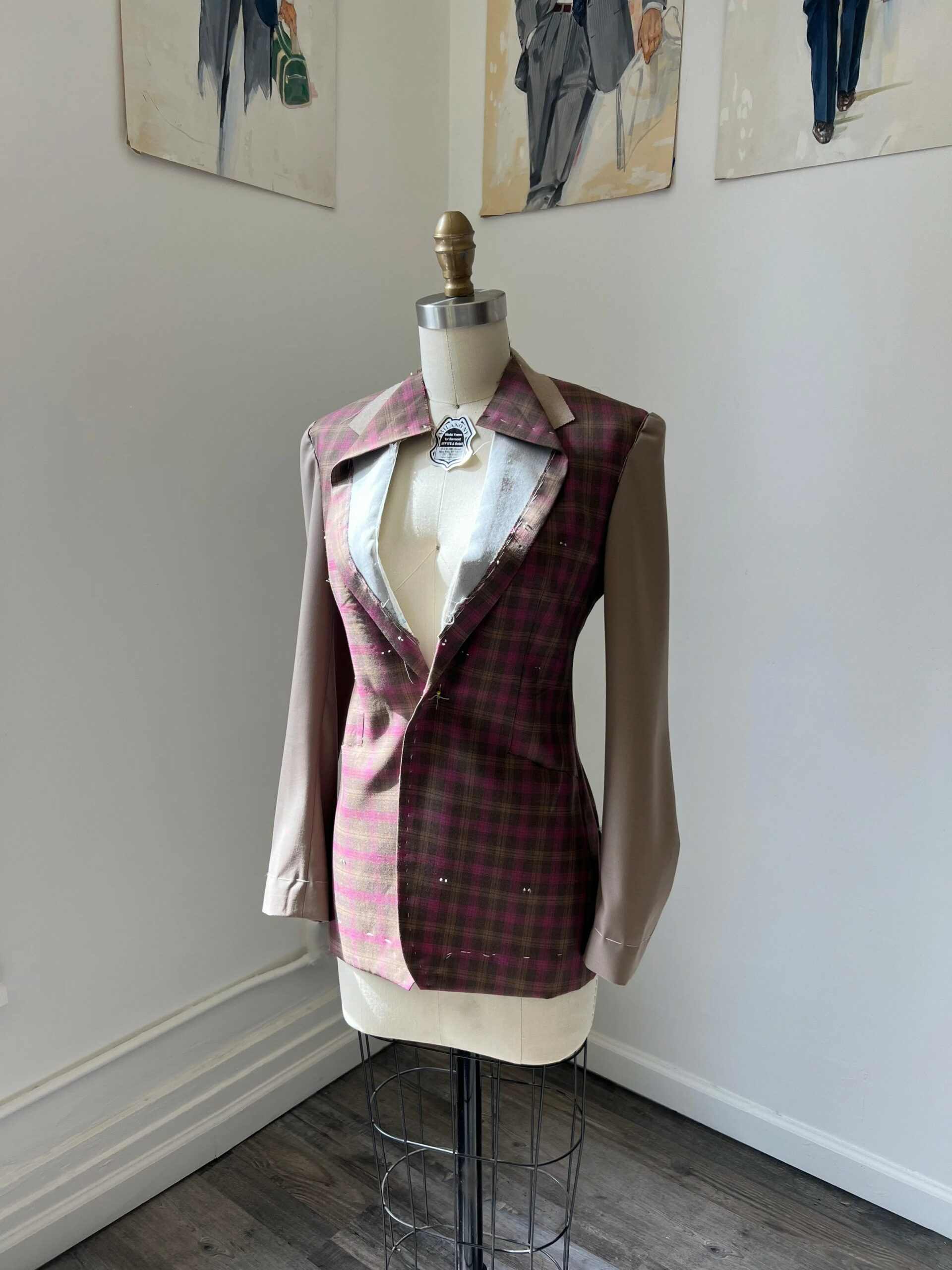
In this exclusive world, they don’t sell silk, alpaca, or calfskin. What is sold is absolute concentration. The artisan charges for the time spent basting, unpicking, flattening a seam with a heavy iron, and shaping the fabric with steam and pressure. The most spectacular details are often those that remain invisible—such as a hand-set interlining that gives the garment its shape, or a lining sewn by hand, known only to the owner.
The Elegance of Subtlety
The culmination of this process marks a complete aesthetic break with the fashion industry. The bespoke piece baffles the untrained eye with its lack of artifice. Devoid of flashy logos, ostentatious buckles, or garish prints, it may resemble, from a distance, a simple dark jacket. Its impact lies in the imperceptible details: a sleeve that rolls naturally at the cuff without ever creasing, a buttonhole where the silk thread has been pierced by hand to create a subtle texture, and a freedom of movement that allows the wearer to raise an arm without distorting the entire torso. The beauty of the garment stems from its functionality taken to the extreme.
This level of craftsmanship redefines the very purpose of the purchase. Luxury conglomerates market a ticket to a social club; the independent atelier sells an irreducible singularity. Choosing custom-made clothing is to assert a personal taste entirely free from the planned obsolescence of seasonal collections. The piece is not designed to trigger an impulse purchase and be stored away six months later. It is built to last, to withstand the ravages of time, to age gracefully, even if it means being altered to accommodate changes in its owner’s weight over the decades.
Ultimately, the true distinction between high-end ready-to-wear and bespoke craftsmanship lies in the initial intention. In traditional luxury retail, the customer consumes an imaginary world created by others. In bespoke creation, the customer becomes the initiator of a reality that did not exist before their involvement. The culmination of this process does not take place in front of the large mirror in a fitting room. It happens on an ordinary morning, when, slipping a hand into a sleeve or a foot into a shoe upper shaped exclusively for them, the individual simply forgets the garment itself and retains only the quiet confidence it instills.