Make Texture a preferred source on Google to support us
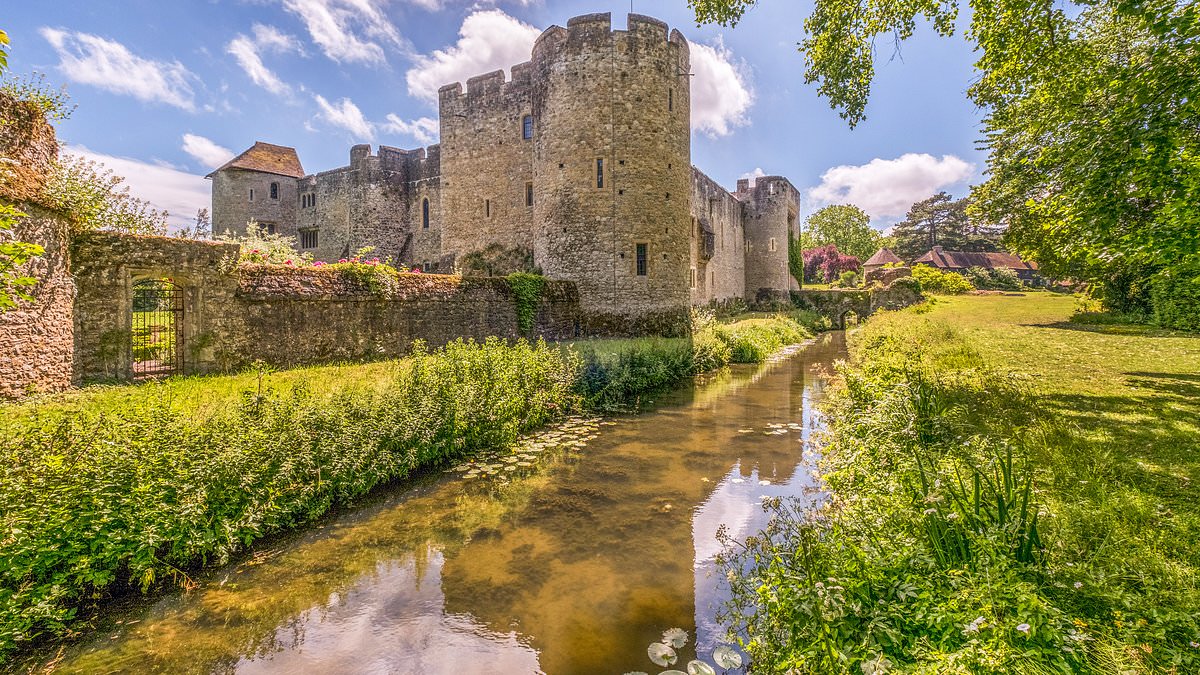
Add Texture to GoogleSir Robert Worcester spent his life gauging public opinion. The American founder of the MORI polling institute, who died in 2025, leaves behind a castle whose reputation rests in part on a fact that no investigation can verify: a royal dinner. Allington Castle, in Kent, is said to have been the site where Henry VIII and Anne Boleyn dined in the Wyatt family’s great hall. This is the claim that makes the advertisement stand out. It is also the most tenuous part of a story whose rest is etched in stone, from the moat to the niches carved out for hunting dogs.
Five million pounds on the banks of the Medway
The estate of Sir Robert Worcester, owner of the property since 1999, has entrusted the sale to Knight Frank, through its Sevenoaks office and its department specializing in country estates. The property came on the British market in October 2026 with an asking price of 5 million pounds. At that time, this amounted to approximately 6.7 million dollars and some 6 million euros.
The estate is located in Allington, about five kilometers northwest of Maidstone, on a bend in the Medway River. It spans some 40 acres—roughly 17 hectares—of woodland, parkland, and riverbanks. At this price, you’re not buying a romantic ruin. You’re acquiring a home with over 2,200 m² of living space, already equipped to host guests and film crews.
First a fortress razed, then stone
The written history of Allington begins with the Domesday Book, the great survey of 1086, which already mentions the estate. The first castle was not so lucky. In the 12th century, a fortification built without permission was destroyed during the reign of Henry II Plantagenet, at a time when erecting walls without the king’s approval was tantamount to a declaration of independence.
The current structure dates primarily from 1279 to 1299. Its builder, Sir Stephen de Pencester, was Lord Warden of the Five Ports, the office responsible for guarding England’s southeast coast. He is credited with building the stone fortress, complete with its moat—which still surrounds the complex—and its two inner courtyards.
The Wyatts: From Favor to Confiscation
In 1492, the Wyatt family purchased the castle. Sir Henry Wyatt served as an advisor to Henry VII and later to Henry VIII, and he transformed the medieval fortress into a fortified manor house in the Tudor style. His son Thomas, the poet, was born there in 1503.
The Wyatt family’s fortune collapsed in the next generation. Sir Thomas Wyatt the Younger led a rebellion against Queen Mary I. After his defeat, Allington was confiscated by the Crown in 1554. In half a century, the castle went from being the home of a royal advisor to the confiscated property of a rebel.
The Royal Dinner: Between Historical Records and Legend
There remains the scene that graces the brochures. Henry VIII and Anne Boleyn are said to have dined in the Great Hall during a visit to Sir Thomas Wyatt. Archival records from the period do confirm that royal visits took place at the Wyatt estate. However, the idea of a banquet specifically bringing together the king and Anne Boleyn in this hall stems in part from local oral tradition. The estate’s business records present it as a fact, and the story resurfaces every time the castle is in the spotlight. It is more accurate to say that Allington is reputed to have hosted the couple, and that the estate’s history claims this connection.
This nuance matters little to the charm of the place. It matters more to those who pay part of the price in the name of a story. The castle, however, has no need of it: its strangest traces are well documented.
Jousting Ground, Arena, and Dog Kennels
The estate still has a tilt yard, where jousting took place. It also retains a historic arena used for bear-baiting, a form of entertainment for which few English estates retain any physical trace. Beneath the castle, caverns known as the Dog Caves were used to house hunting dogs. These features offer a concrete glimpse into seigneurial life, with its everyday violence, far more so than the paneling.
Several outbuildings have their own heritage status. The main castle has been listed as Grade I by Historic England since July 30, 1951. The Grade II listing, which some articles have attributed to the entire complex, actually applies only to secondary structures, particularly the medieval barn and the dovecote.

Fire, Abandonment, and Rebirth
At the end of the 16th century, a fire damaged the castle. This was followed by partial abandonment and a long period of deterioration. Allington could have ended up as a stone quarry. Its rescue began in 1905, when Sir Martin Conway, a mountaineer and politician, purchased it and undertook a restoration that would take him nearly thirty years.
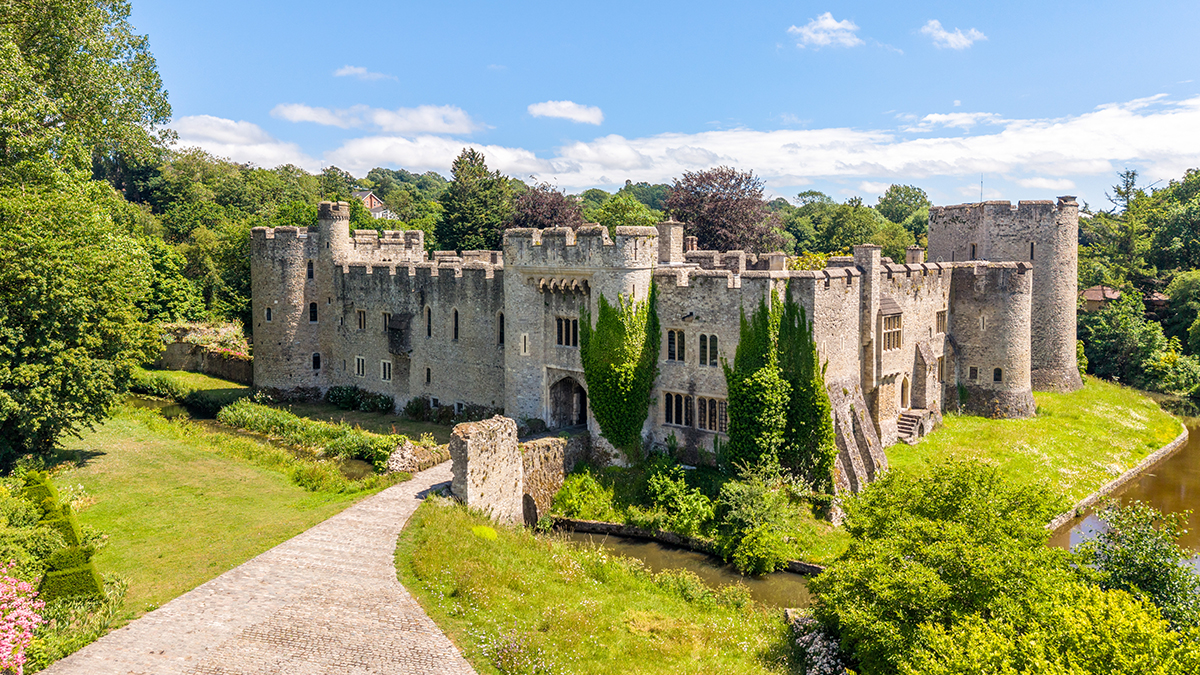
The 20th century brought a different use for the property. From 1951 to 1999, a community of Carmelite nuns occupied the premises. The château then returned to its status as a private residence the very year Sir Robert Worcester became its owner. Over the course of a century, the property thus passed from a mountaineer to cloistered nuns, and then to a man whose profession involved surveying the masses.
Thirty bedrooms—if you count them all
The listing mentions up to 30 bedrooms, 20 bathrooms, and 26 reception rooms. The number of bedrooms requires clarification. The main house has between 14 and 16. The total reaches thirty when you add the nine cottages and independent dwellings scattered across the estate, intended for caretakers or guests. For a family, this is still a considerable number. For a hotel or event venue, this layout of separate units can even be an advantage.
The amenities have been updated without detracting from the rest of the property. There is a heated indoor pool, a tennis court, and a Victorian-style greenhouse. The gardens feature intricate flowerbeds and are dotted with fountains. A flat section of the grounds serves as a helicopter landing pad, which significantly brings the Medway closer to London for those who can afford it.
A Castle That’s Still in Use
Allington is not a static residence. The Great Hall, intended for dining, can seat approximately 120 guests. The medieval barn, converted into a banquet hall, can accommodate up to 150. In the castle’s medieval wing, a professional kitchen ensures that receptions can be hosted without the need for temporary setups. The castle regularly hosts weddings and private events.
The camera crew is also a frequent visitor. The castle serves as a backdrop for several productions, including the children’s series *Horrible Histories*, which recounts England’s past through its most gruesome episodes. The choice of this setting seems logical for a place that still has its bear pit.
The future owner will inherit nine centuries of archives, a Tudor legacy to be handled with care, and a listing on the register that is not contingent on any sale. The Historic England listing bears the number 1239149: Grade I, since July 30, 1951.