Make Texture a preferred source on Google to support us
Add Texture to GoogleAmid the excitement of the late 1960s, Detroit was not only the beating heart of the automotive industry but also the epicenter of a visual and auditory explosion whose shockwaves are now reaching the galleries of the Cranbrook Art Museum. In Bloomfield Hills, a suburb of her hometown, designer Anna Sui returns to her roots with the exhibition “The World of Anna Sui.” While the event traces more than three decades of fashion, it highlights a more intimate facet of her aesthetic: her personal collection of rock posters, true relics of an era when graphic design served as a voice for the counterculture.
Gary Grimshaw and the Eye of the Grande Ballroom
At the heart of this personal mythology lies a major figure: Gary Grimshaw. A genius illustrator and graphic designer who passed away in 2014, Grimshaw was the visual architect of Detroit’s rock scene. His name remains inextricably linked to the MC5, the White Panthers, and above all, the legendary Grande Ballroom. It was in this concert venue that the visual identity was forged that would, years later, inspire Anna Sui’s ready-to-wear collections.
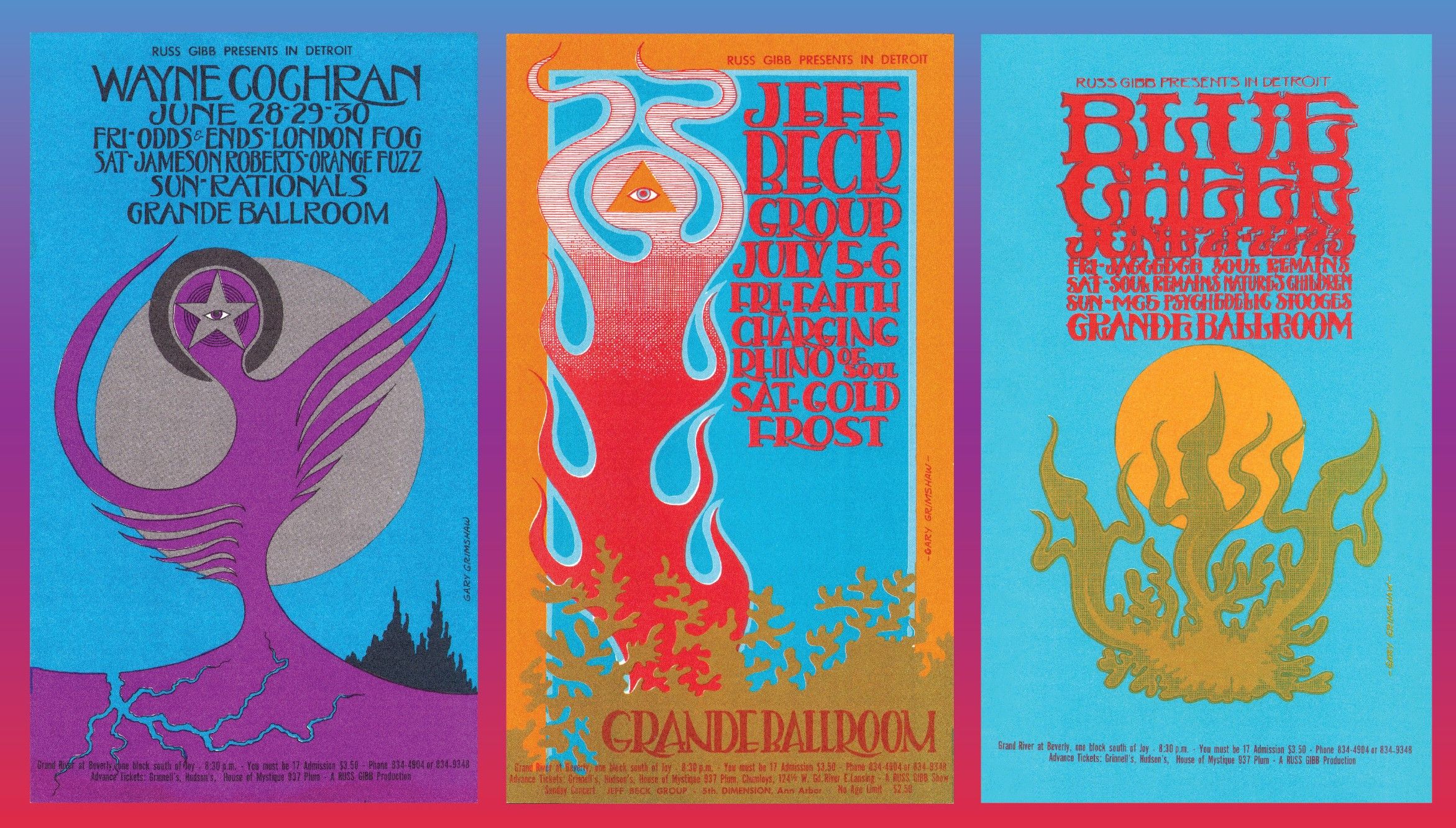
Grimshaw’s work is instantly recognizable by his sinuous, hand-drawn lettering, which seems to come to life on the page. His compositions feature kaleidoscopic patterns and vibrant, saturated colors—hallmarks of the American psychedelic aesthetic of the late 1960s. These posters did more than simply announce the arrival of international bands like Cream or The Yardbirds; they paid tribute to local pioneers, from Iggy and The Stooges to Alice Cooper, including The Amboy Dukes and Bob Seger.
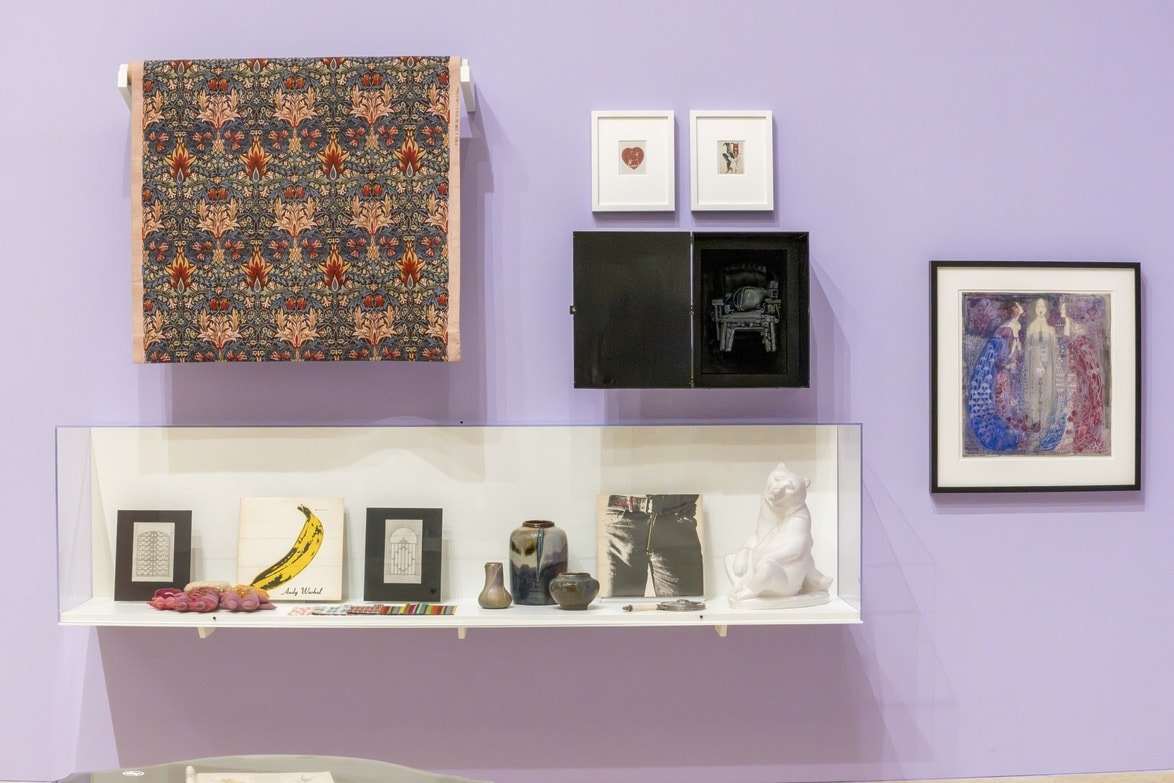
For Anna Sui, these works served as a stylistic primer. Grimshaw’s fluid typography and vibrant color palettes are consistently reflected in her brand’s identity. They infuse her runway invitations, the set design of her shows, and her fabric palettes, crystallizing the “Hippie/Rockstar” archetype that has become her global signature.
From a Teenager’s Bedroom to the Museum Galleries
The creation of this collection tells the story of an early passion. Too young to legally enter the Grande Ballroom in the 1960s, Anna Sui began by collecting “handbills”—those small promotional flyers distributed by a friend. What was then merely “ephemera”—objects meant to be thrown away or pinned to the walls of teenagers’ bedrooms—has, over time, taken on significant cultural heritage value.
In the early 1990s, the designer began organizing her collection by acquiring large-format posters, with her first purchases focusing on visuals related to Cream and The Yardbirds. With her brother’s support, she was able to build a more extensive collection, to the point where she now describes her set of Grande Ballroom posters as “nearly complete.” This quest led her to forge close ties with Laura Grimshaw, the artist’s widow and curator of his archives, further deepening the emotional significance of this graphic legacy.
On view from October 21, 2026, to February 28, 2027, the Detroit leg of her retrospective exhibition marks a turning point. It is the first time that a large selection from this private collection—usually kept in storage—has been unveiled to the public. These prints, once held together with adhesive tape, are now treated as museum-quality works in their own right.

A Retrospective Rooted in the Local Community
Originally conceived by Dennis Nothdruft for the Fashion and Textile Museum in London in 2017, the exhibition was adapted for Michigan audiences by Chief Curator Laura Mott, alongside Kat Goffnett and Katy Kim. The exhibition features over a hundred outfits illustrating twelve style archetypes, but here it is enriched with references specific to local history.
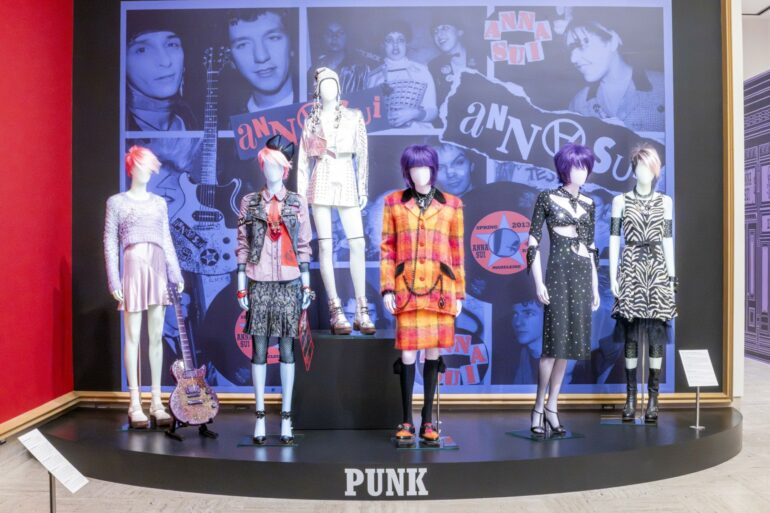
Highlights include the uniforms Sui designed in 2012 for the staff of Third Man Records, Jack White’s record label, as well as a babydoll dress worn by Olivia Rodrigo. These pieces forge a continuous link between the raw rock of the 1960s and contemporary pop, confirming the relevance of Sui’s vision across the ages. Her approach, which blends textile craftsmanship with the precision of rock graphics, finds a setting at the Cranbrook Art Museum that matches her ambition.
For visitors wishing to immerse themselves in this world, the museum offers several admission options. General admission is set at 12 USD (approximately 11.10 EUR), while in-depth guided tours are available for 22 USD (approximately 20.35 EUR), with a discounted rate of 5 USD for members. In a spirit of inclusivity, the institution offers free admission every Thursday evening, from 11 a.m. to 8 p.m., for individual visitors and families. Youth workshops, available by reservation, round out this program at a cost of 15 USD per participant.
Through Gary Grimshaw’s posters, Anna Sui presents not only collectible items but also the origins of her own artistic vision. These kaleidoscopic visions, born amid the hustle and bustle of Detroit’s nightclubs, continue to define a certain vision of fashion: a blend of graphic rebellion and romantic sophistication.