
Make Texture a preferred source on Google to support us
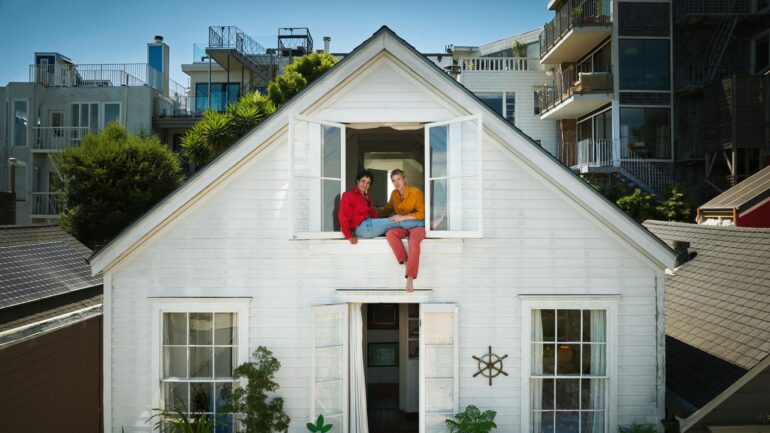
Add Texture to GoogleOn the heights of Telegraph Hill, where San Francisco’s streets slope so steeply that they eventually turn into stairways, a small wooden building from the 1850s defies the passage of time. This vernacular “captain’s cottage,” with its quirky architecture and weathered charm, became the anchor of a new chapter for Zac Posen and Harrison Ball during the first half of 2024. The couple left the hustle and bustle of New York to settle in the Bay Area, following Zac Posen’s appointment on February 5, 2024, as executive vice president and chief creative officer of Gap Inc., a role that also includes creative leadership for the Old Navy brand.
Their arrival in San Francisco marks a clear transition, both professionally and personally. For Harrison Ball, a former principal dancer with the New York City Ballet who bid farewell to the stage in 2023 to pursue a career in comedy, this change of scenery took shape through an almost serendipitous search for a home. It was on the Zillow platform that the couple spotted this historic cottage, located just a stone’s throw from North Beach. Despite its overall condition—which one might describe as worn—the structure immediately captivated them with its asymmetry and unpredictable proportions. Although they are renters, Zac Posen and Harrison Ball obtained their landlord’s permission to completely reimagine the interior atmosphere, enlisting the help of a longtime collaborator: designer Ken Fulk.
The Aesthetic of Imperfection
Far from sterile renovation standards, Ken Fulk Inc.’s work focused on highlighting the building’s original patina. The decorative approach favors an eclectic, bohemian style, drawing inspiration from the spirit of Ken Fulk’s home in Provincetown. The goal was not to erase the irregularities of this 19th-century building, but to highlight them. Within this “wonderfully imperfect” setting, each room was conceived as a layering of textures and eras.
The living room revolves around a centerpiece: a scarlet velvet sofa that adds a rich pop of color contrasting with the aged wood of the walls. The furniture does not come from contemporary catalogs, but from a meticulous search through San Francisco’s flea markets and antique shops. This locally rooted approach allows for the integration of eclectic pieces that seem to have always belonged there, reinforcing the idea of a home shaped by time rather than by trends.
The bedroom follows this same philosophy of uniqueness. It features a faux-bamboo bed from the 1930s, whose light, graphic structure complements the cottage’s simplicity. Persian rugs with dense patterns cover the floors, adding a layer of comfort and historical depth to the space.

An intimate gallery and a wild garden
The interior design also serves as a link to their past life in New York. The walls are adorned with works by Stephen Posen, a painter and Zac’s father, whose paintings have traveled across the continent to find their home on the hills of Telegraph Hill. This artistic presence lends a deeply personal dimension to the project, transforming a simple rental into a true heritage home.
Outside, the dialogue with nature was entrusted to Harrison Ball’s instinct. Without the help of professional landscapers, the former dancer designed, laid out, and planted the entire garden on his own. This green space, which surrounds the cottage, completes the couple’s vision: a place where the human touch remains discreet, allowing the poetry of the vernacular to shine through.
Although some observers refer to Harrison Ball as Zac Posen’s husband, the couple officially announced their engagement on August 8, 2022, without any subsequent formal announcement confirming a change in their marital status. Whether engaged or married, their creative collaboration on this residential project reflects a shared vision. By investing in this rental property, they demonstrate that architecture from the 1850s, even as it shows its age, remains a fertile ground for the most cutting-edge contemporary design. The project, set to be completed in 2024, illustrates a fundamental trend: luxury no longer lies in the new, but in the ability to breathe new life into the existing while openly embracing its imperfections.