Make Texture a preferred source on Google to support us
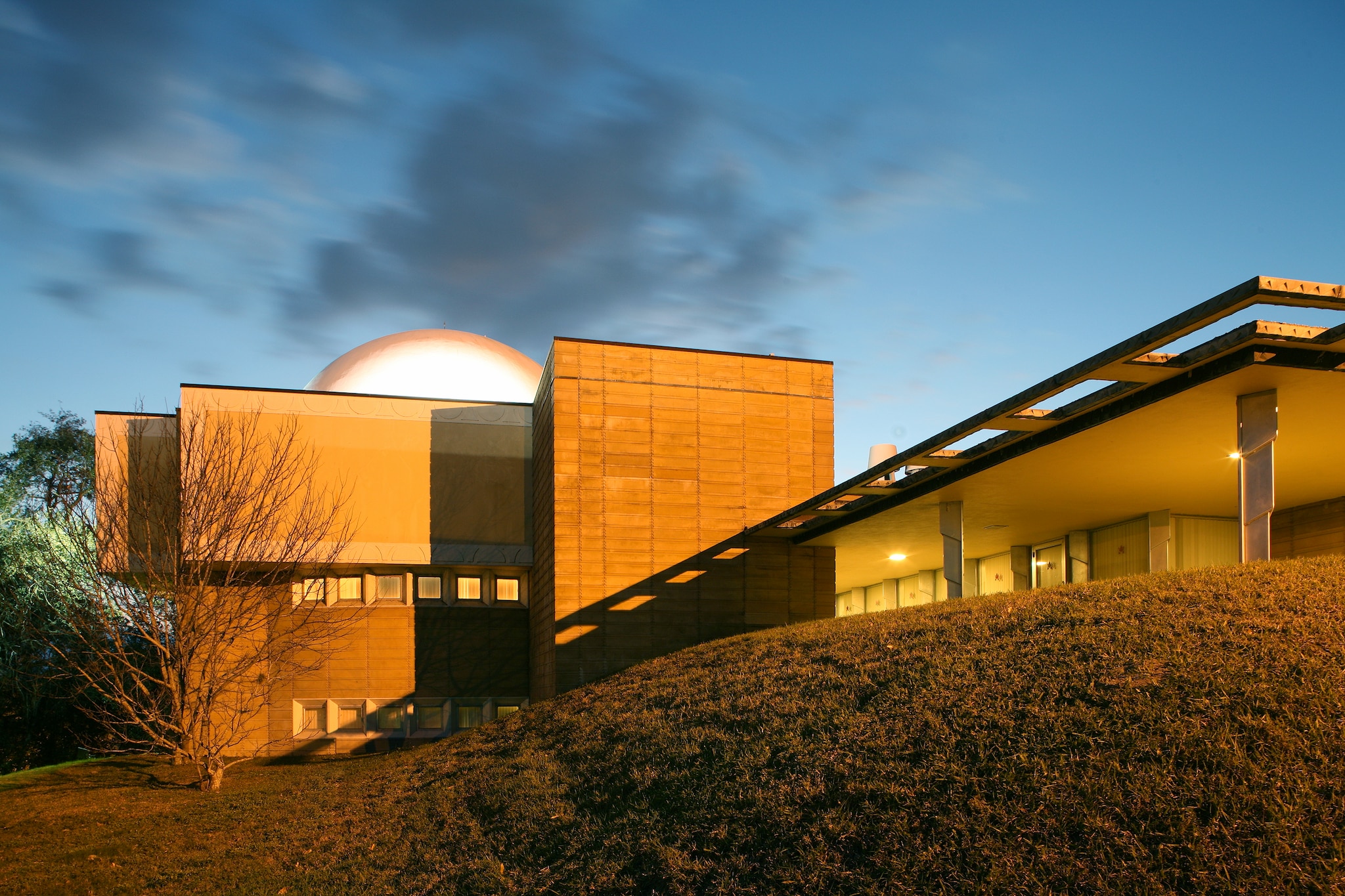
Add Texture to GoogleIn Lakeland, in the heart of Florida, a unique work of modern architecture is about to regain its celestial purpose. The Miller Planetarium, the centerpiece of the Polk Science Building, will reopen its doors to the public on Saturday, September 26, 2026, after a long, forced hiatus. This 32-foot-diameter dome is not merely a projection room; it represents Frank Lloyd Wright’s only foray into planetarium design. Located on the Florida Southern College (FSC) campus, this building is one of the jewels of the “Child of the Sun” complex—the largest concentration of buildings designed by the American master on a single site, now designated a National Historic Landmark.
A Project Between Earth and Sky
The history of the Miller Planetarium began in the mid-1950s. Between 1954 and 1958, Wright envisioned a structure capable of connecting humanity to the vastness of the cosmos, while adhering to the principles of organic architecture for which he was renowned. Although the initial project leaned toward a traditional observatory, Florida’s weather conditions—and its sometimes relentless sunshine—led the architect to favor the enclosed and controlled form of a planetarium. Frank Lloyd Wright passed away in April 1959, one year before the building hosted its first public showing on April 7, 1960. At the time, the heart of the machine beat to the rhythm of a Spitz A2 projector, state-of-the-art technology in the dawning space age.
Despite its prestige, the building suffered the ravages of time and the subtropical climate. In 2004, an irreversible failure of its projection system brought regular screenings to a halt. The stagnant humidity and water seepage characteristic of the region then began a slow process of deterioration, degrading the stucco and the very structure of the dome, until a major restoration became inevitable.
Precision in Every Detail: A Millimeter-Precise Restoration
Under the direction of Jeff Baker, campus architect and partner at MCWB Architects, the project required the patience of a master craftsman. Begun in 2021 with the exterior envelope, the work expanded to the interior spaces in 2023. The challenge was twofold: to preserve the building’s historical integrity while integrating contemporary viewing technologies. The cost of this revival is estimated at approximately $1.7 million, an investment supported by a variety of funding sources, including the Florida Division of Historical Resources, the federal Save America’s Treasures program, and local private philanthropy.
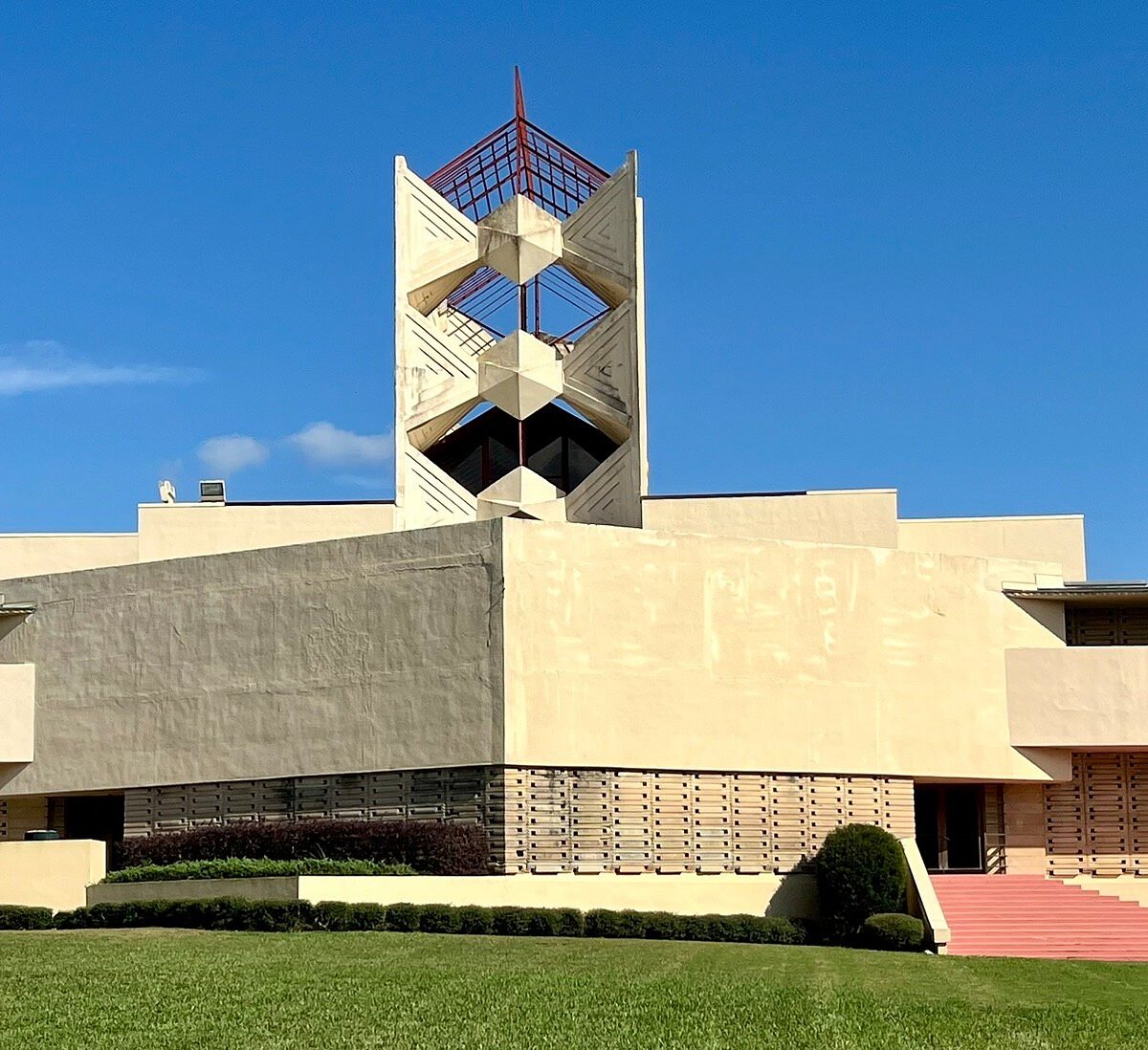
One of the technical feats of this restoration lies in the repair of the facades. More than 280 “textile blocks”—the decorative perforated concrete blocks so dear to Wright—had to be replaced. To ensure absolute fidelity to the original design, the team used 3D printing to create ultra-precise molds, after which each block was cast and finished by hand. This blend of high technology and traditional craftsmanship has restored the building’s textured, geometric appearance, allowing it to interact with Florida’s light just as Wright had envisioned.
Restoring the Original Volume
Inside, the work amounted to a true spatial archaeological endeavor. The restorers demolished a massive utility closet added in the 1980s to house computer equipment. Its removal has restored the room’s original fluidity and volumes. In the same spirit of returning to the building’s roots, several layers of midnight blue paint were carefully removed to reveal the original colors intended by the architect.
The furnishings were not overlooked. The original seats, combining plywood and colored vinyl, were restored and reinstalled in their original circular arrangement. This “theater-in-the-round” concept places the audience at the center of the experience, arranged in a circle around the dome’s central axis, faithful to Wright’s vision of a communal and organic space.

Digital Immersion in the Service of Science
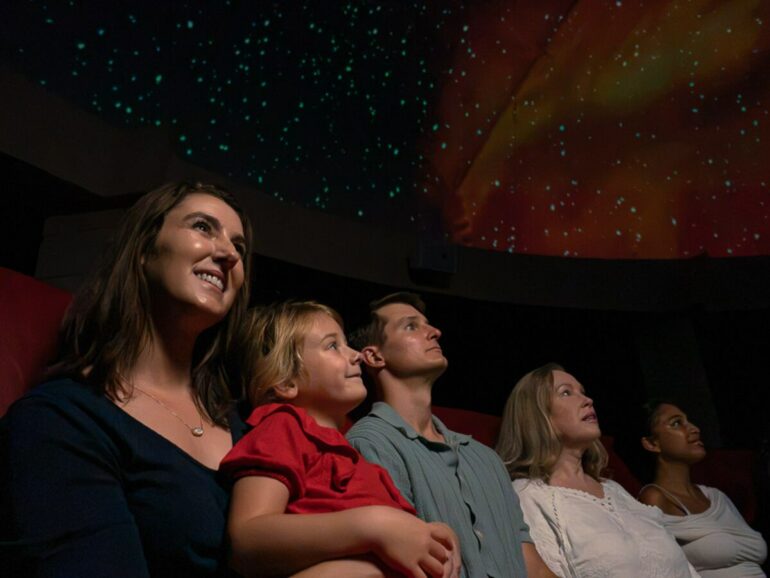
While the setting is historic, the journey it offers is resolutely forward-looking. The Miller Planetarium is equipped with a high-definition digital projection system provided by COSM, complemented by Bowen acoustic architecture. This technical setup allows for total immersion in the far reaches of the universe, enhanced by modernized dynamic ambient lighting.
The inaugural program features a monthly rotation of six immersive films. Among them, visitors can discover “Destination Mars: The New Frontier,” “Cosmic Adventure,” and “From Earth to the Universe.” More philosophical content is also on the program with “God, Science, and Our Search for Meaning,” narrated by author Dan Brown. These screenings aim to transform this historic landmark into an active learning center for students and the general public.
Practical Information for a Visit
The public is invited to explore the planetarium during regular sessions held four days a week: Tuesday, Thursday, Saturday, and Sunday, with a fixed start time at 3:30 p.m. The full experience, lasting 60 to 90 minutes, is not limited to the show; it includes a detailed historical introduction to the site’s unique architecture.
Tours begin at the Sharp Family Tourism and Education Center on the Florida Southern College campus. General admission is $20, while a reduced rate of $15 per person is available for families and groups of four or more. An official reopening ceremony will be held on October 22, 2026, which will also mark the launch of the Albritton Horticultural Complex, underscoring the institution’s commitment to heritage and education.