Make Texture a preferred source on Google to support us
Add Texture to GoogleInstant Obsolescence: When Hotel Design Disappears Before It Even Exists
In the hushed world of London hospitality, the story reads like a fable. Imagine dozens of console tables where solid brass meets the warmth of meticulously crafted oak. Think of hundreds of sculptural lounge chairs, square meters of polished marble and immaculate terrazzo, waiting in the darkness of a warehouse or under protective tarps. This furniture, designed to define the identity of one of Covent Garden’s most ambitious venues, will never see the soft light of the lounges for which it was created. The Wellington Block, whose opening was scheduled for July 2026, illustrates with rare starkness the volatility of concepts in the luxury real estate market. Before it had even taken its first reservation, the property was stripped of its physical assets, sacrificed on the altar of a strategic acquisition.
The decision, which came down like a guillotine, originated with Aendre’s new management. By taking over the portfolio of The Other House group, this newly formed entity did not merely acquire prime properties or locations; it imposed a complete aesthetic overhaul. The Wellington Block’s original design no longer aligned with the new owners’ vision. A direct consequence of this shift: the entire interior fit-out—which had just been completed to transform the site—was instantly rendered obsolete. The luxury hospitality sector, which so often emphasizes the timelessness of its atmospheres and the deep-rooted nature of its decor, demonstrates here that design is ultimately just an adjustment variable—a liquid asset that can be erased with the stroke of a pen in the boardroom.
The Stuff of Illusion: Inside the Boxes at Bergman Design House
What is most striking about this massive disposal is the very nature of the items in question. This is not a typical hotel renovation where one parts with furniture weathered by years of use. The inventory to be auctioned off shows zero wear and tear. Some items still lie in their factory packaging, untouched by use, frozen in a state of theoretical perfection.
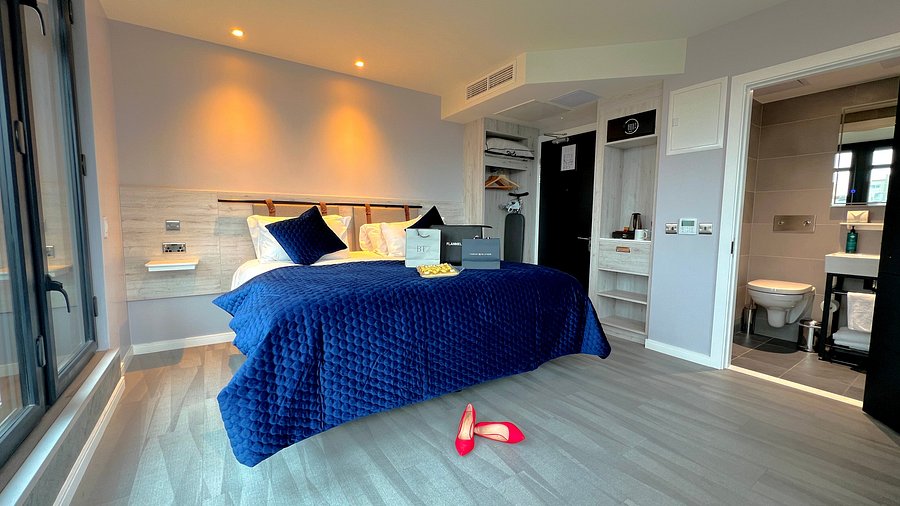
The sheer volume of this “ghost” collection is staggering. It encompasses the complete furnishings for all 149 guest rooms originally planned for the project, as well as all pieces intended for the vast reception and dining areas. Conceived jointly by Bergman Design House and the original brand’s in-house creative teams, this collection was intended to establish a strong visual identity. The list of lots paints a picture of a highly codified form of contemporary luxury. For the private spaces, the designers had opted for headboards where the upholstery complemented fluted finishes, paired with sofas featuring enveloping curves designed for two people and generously proportioned club chairs. Storage units featured textured oak, while the hallways were punctuated by console tables accented with brass.
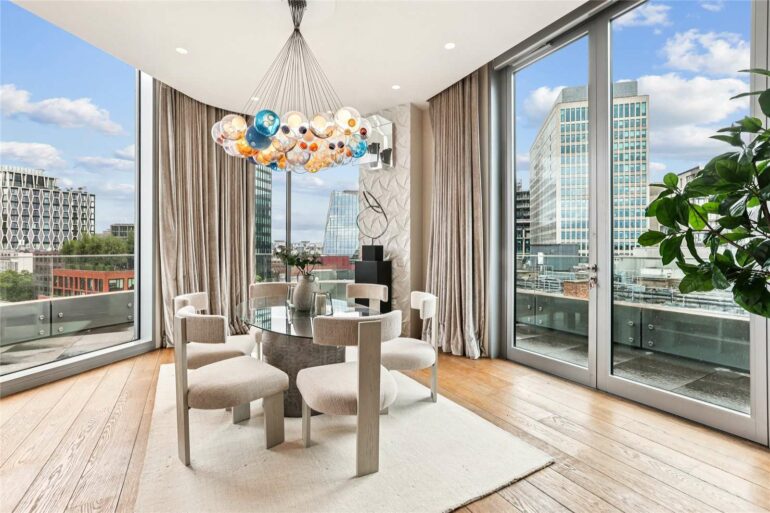
In the common areas, the decorative ambition was taken up another notch. The furniture for the upcoming restoration included bistro tables and imposing dining tables where dark wood, terrazzo, and polished marble rested on heavy bases combining brass and cast iron. Light fixtures specifically tailored to the architecture of the space, sculptures, and a myriad of decorative objects completed this meticulously crafted tableau. All of this material language—intended to tell a story unique to the future residents—is now disjointed, reduced to a mere catalog of spare parts.
A clearance sale that looks like a windfall for the competition
The auction house Pro Auction was commissioned to orchestrate the liquidation of this stillborn legacy during a three-day session beginning on November 17. Simon Rose, who is overseeing the operation, was quick to highlight the uniqueness of the event. The hotel auction market typically revolves around the end of a property’s lifecycle, allowing for the sale of beds or armchairs that have weathered the passage of thousands of guests. Finding a brand-new, custom-designed property built to premium standards on the secondary market is a fascinating anomaly.
For industry professionals—interior designers, independent hotel operators, or real estate developers—the event goes beyond mere curiosity. In an industry where lead times, international logistics, and the costs of manufacturing custom parts can severely disrupt a project’s timeline, this sale acts as a catalyst. Acquiring these lots provides access to turnkey design engineering, with no waiting involved. Ironically, the visual identity meticulously crafted to establish The Other House in Covent Garden ends up seeping, in a fragmented way, into other competing locations across the country and beyond.

Behind the furniture: the strategic repositioning of a hybrid concept
To grasp the full scope of this turnaround, we must revisit the origins of The Other House model. Prior to this abrupt sale, the brand had distinguished itself through an atypical positioning in London, at the crossroads between traditional hospitality and high-end private housing. The initial London project wasn’t a blank slate: it built on the group’s first property, located in South Kensington.
Opened in July 2022, this original property required three long years of renovation to transform the former NH Harrington Hall. Developed under the name “Residents’ Club,” it features 230 club residences, complemented by a private club, wellness facilities, a cocktail bar, and a café open around the clock. This first project brought to life the vision of Naomi Heaton, the brand’s founder, who relied on a joint venture between LCP Private Office and APG, a major player in the Dutch pension fund sector. The goal was clear: to build loyalty among an affluent clientele seeking a mid-range lodging option—more personalized than a traditional hotel suite but offering the same range of services.
The Covent Garden location was intended to serve as the second pillar of this urban expansion strategy. But Naomi Heaton’s departure last February hastened the end of this initial era. Aendre’s arrival marks a clear break from that original roadmap. Led by Eric Jafari and Chris Strong—both of whom previously held leadership roles at the edyn brand—and financially backed by JuneX Capital Partners and New End, the new organization is clearly seeking to redefine the contours of London luxury. The new leaders did not hesitate to put an end to massive investments in design to ensure that the walls of Covent Garden would accurately reflect their own interpretation of the hospitality of the future.
The Fragility of Commercial Promises
This major November overhaul goes far beyond the mere anecdote of a change in decor. It serves as a barometer of the tensions currently running through the premium real estate market. Interior design, often presented by hotel brands as the untouchable soul of their concept, reveals here its profoundly perishable nature. Months of deliberation over textures, marble selection, upholstery testing, and brass modeling were swept away by a single post-acquisition audit.
The Wellington Block will therefore never have resembled the 3D renderings that accompanied its initial announcements. By dispersing this inventory, the new owners are physically erasing the traces of the original founders to impose their own narrative. As the auctioneer’s gavel brings the bidding to a close, the armchairs and console tables from Covent Garden will begin a second life before they’ve even started their first, serving as a somewhat cold, mathematical reminder that in the world of luxury hospitality, the decor is sacred only as long as the financial strategy behind it remains intact.