
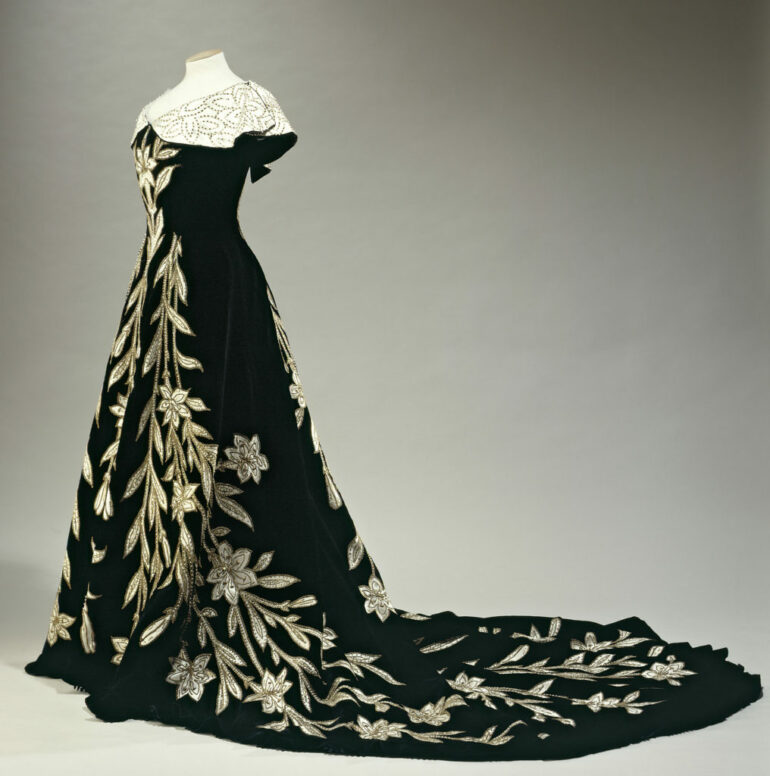
Through 2026, the Indianapolis Museum of Art is presenting an innovative exhibition that highlights how fashion reshapes the body, extending far beyond mere aesthetics to serve as a true visual language and a tool for social critique.
The Architecture of the Silhouette
In Indianapolis, the Newfields Museum is unveiling an exhibition centered on a fundamental idea that is rarely explored with such clarity: clothing does more than simply cover the body—it completely reshapes it. Titled BODY/BEYOND: Fashion That Transforms, the exhibition runs at the Indianapolis Museum of Art through October 18, 2026. It brings together twenty-two masterpieces from the institution’s fashion collection, including three recent acquisitions, most of which have never been exhibited before.
This collection is based on a fundamental insight: fashion transcends its ornamental function to sculpt the body’s posture and fuel social narratives. Designers are portrayed here as true architects of the body, capable of disciplining it, transforming it, or challenging its contours. The exhibition is by no means merely decorative; it directly examines how an era perceives, values, or—conversely—marginalizes its own forms.
Beyond Ornament: A Manifesto
Michael Vetter, the institution’s associate curator of contemporary art, recently emphasized to WISH-TV that the public does not always spontaneously view fashion as an artistic discipline in its own right. This is precisely the ambition of this exhibition design: to dispel this misunderstanding. According to him, these creations—whether for a grand evening event or everyday wear—demonstrate a virtuosity of rare finesse.
The museum thus champions a powerful vision: couture transcends technical expertise to become an eminently critical act. By altering the silhouette, designers challenge a set of norms related to gender, status, and function. This interpretive framework lends the exhibition an intellectual depth that stands in stark contrast to traditional exhibitions, which are often reduced to mere contemplation behind a display case.
Newfields’ approach treats fashion as a space for intimate expression and experimentation. It is an ambitious endeavor, yet one deeply rooted in an indisputable historical reality: for centuries, clothing has served not only as a refuge but also as a tool for standing out and reinventing oneself.
An Exhibition Experience Rooted in Life
Newfields goes far beyond the framework of a traditional museum. This vast 152-acre cultural estate, home to the Indianapolis Museum of Art, offers a layout that directly influences the visitor experience. The venue cultivates a constant commitment to fostering a dialogue between the visual arts, cutting-edge design, and immersive experiences.
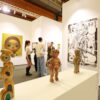
This ongoing dialogue enriches the interpretation of BODY/BEYOND. In this expansive space where heritage collections, remarkable gardens, and contemporary installations intersect, clothing sheds its status as a marginal phenomenon. It takes center stage in current museum discourse: how do we exhibit a living, intimate, and fragile medium, originally conceived for movement rather than mere preservation?
Admission to the exhibition is included in the general admission ticket and is free for Newfields members. This commitment to accessibility reflects a deliberate approach on the part of the institution: to democratize access to these reflections without ever compromising their intellectual rigor.
The Art of Simplicity: A Carefully Curated Selection
The decision to focus the exhibition on twenty-two works helps avoid the pitfall of overcrowding. This intimate approach invites visitors to take a more analytical and contemplative look. The three new acquisitions, moreover, underscore the museum’s curatorial rigor in selecting pieces to enrich its permanent collection.
This restraint is a saving grace. While fashion exhibitions in museums sometimes succumb to the allure of spectacle, this subject demands a genuine critical distance. Since clothing is never neutral—it shapes, constrains, flatters, or contradicts the body—the museum rightly reminds us that elegance and cut are also vehicles for discourse.
From this perspective, BODY/BEYOND distinguishes itself from a mere celebration of textile virtuosity by focusing on deciphering its powers. Its greatest strength undoubtedly lies here: it does not invite mere admiration, but rather a profound reflection on the impact of clothing on the body—and on what the body gives back in return.