Make Texture a preferred source on Google to support us
Add Texture to GoogleParis, mid-19th century. The capital’s cobblestone streets, crowded with horse-drawn carriages, filled with the smell of horse manure and the clatter of iron-rimmed wheels, gave no hint of the financial empires that would shape the global economy a century and a half later. The history of French luxury did not begin under the bright spotlights of contemporary runways, nor in the marble halls of Asian megastores. It took root in cramped workshops, amid the acrid smell of animal glue, poplar sawdust, and leather scraps. Before becoming symbols of social status, the great names of French craftsmanship served strictly technical purposes. Their mission was to equip travelers, horsemen, and aviation pioneers. Function came before form.
The Mechanics of Travel and the Obsession with Durability
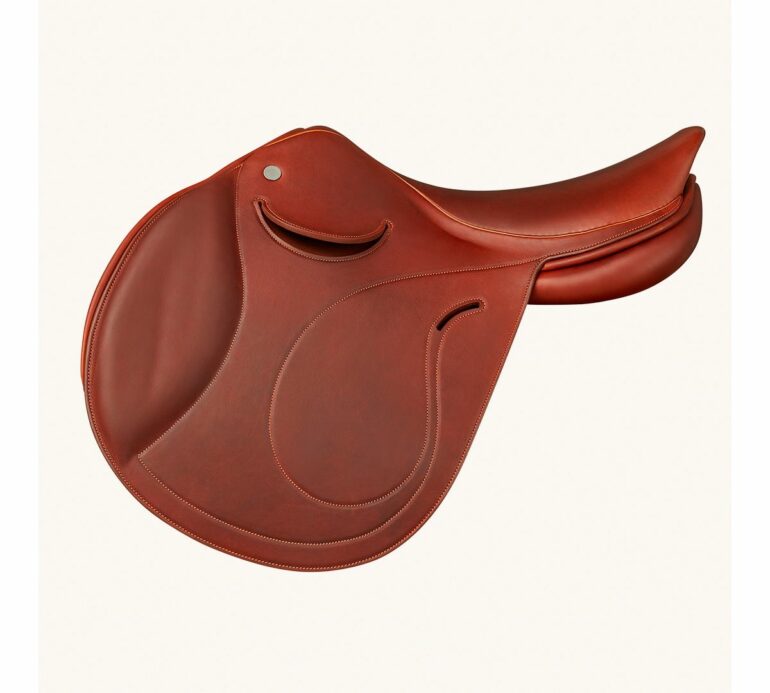
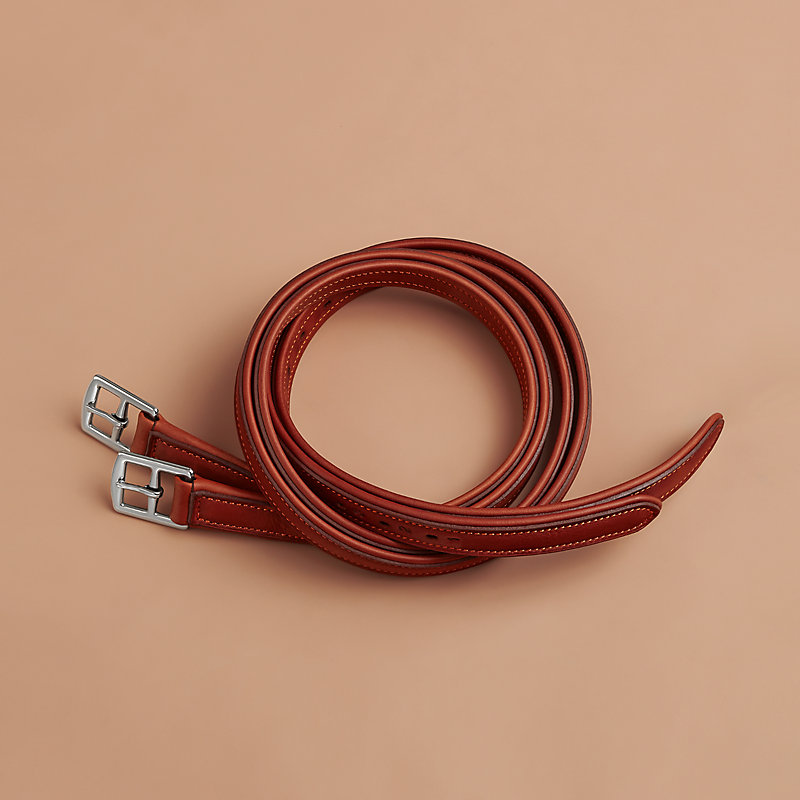
Thierry Hermès established his first workshop in the Madeleine district in 1837. His focus was by no means on creating a fashionable wardrobe, but rather on the tension of the leathers and the sturdiness of the buckles. As a master harness-maker and saddler, he crafted equipment for the carriages of the bourgeoisie. The house’s reputation was built on a precise technical feat: the saddler’s stitch. Sewn with two needles using waxed linen thread, it ensures durability that withstands the bumps of the road and does not give way, even if one of the stitches were to break. It was his successor, Charles-Émile, who moved the business to 24 Faubourg Saint-Honoré in 1880, initiating a cautious diversification. Hermès would not fully transition into civilian leather goods and clothing until the turn of the 20th century, under the leadership of Émile-Maurice, who brought back from North America the exclusive rights to a zipper system, thereby cementing the alliance between equestrian craftsmanship and modern mobility.
Amid this same wave of change in transportation, a packer from the Jura region observed the evolution of railway infrastructure. In 1854, Louis Vuitton opened his Parisian boutique and reimagined the very architecture of luggage. Until then, trunks had domed lids designed to let rainwater run off the back of horse-drawn carriages. With the rise of the railroad, this design proved unsuitable. Vuitton designed a trunk with a flat, rectangular lid that could be easily stacked in the cramped cargo holds of train cars. To make it lighter and waterproof, he replaced traditional leather with a gray coated canvas known as Trianon. The family’s workshops, established in Asnières-sur-Seine shortly thereafter, were operating at full capacity to supply goods for long-distance expeditions. In 1896, faced with a proliferation of copies, Georges Vuitton designed a pattern intertwining four-lobed flowers and his father’s initials: the Monogram was born, thereby inventing the modern principle of the logo applied on a large scale. (Louis Vuitton).
Ornament as a Language of Power and Ergonomics
While trunk makers streamlined logistics for the elite, Parisian goldsmiths focused on giving tangible form to political power. Louis-François Cartier took over the management of his master’s workshop in 1847. Fifty years later, in 1899, his grandson Louis established the house at 13 Rue de la Paix, the global epicenter of Belle Époque refinement. The family’s rise is chronicled in the order books of European royalty. The future King Edward VII of the United Kingdom commissioned twenty-seven tiaras for his coronation in 1902, bestowing upon the brand a phrase that has gone down in history: “Jeweler to kings, king of jewelers.”
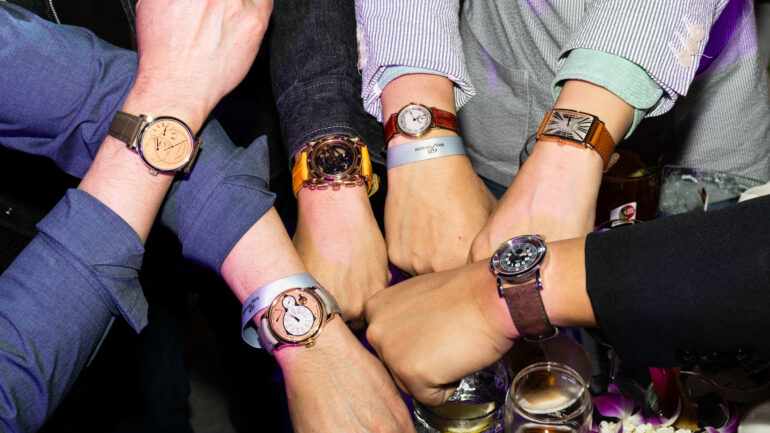
However, Cartier’s contribution went beyond the mere accumulation of carats. The house’s leadership kept a close eye on technological changes. In 1904, Brazilian aviator Alberto Santos-Dumont confided to his friend Louis Cartier that he was unable to check the time on his pocket watch while piloting his airplanes. In response, the watchmaker designed a flat, geometric case with integrated lugs to accommodate a leather strap. He had just invented one of the very first modern wristwatches designed specifically for men. Later, under the artistic direction of Jeanne Toussaint, nicknamed “La Panthère,” the house would incorporate sculptural forms and three-dimensional animal motifs, proving that fine jewelry requires as much mechanical mastery as it does aesthetic intuition.
Anatomy Unleashed in the Face of Rediscovered Opulence
The early 20th century marked a radical redefinition of fashion norms, driven by figures who rejected the constraints of a bygone era. Gabrielle Chanel opened her first millinery boutique at 21 Rue Cambon in 1910. (Chanel). Very quickly, she shifted her focus from headwear to the overall posture of the female body. She freed silhouettes from boned corsets, shortened hems to above the ankle, and embraced athletic wear. Her use of jersey—a supple knit fabric previously reserved for men’s underwear—allowed her to create garments that moved with the body rather than restricting it. In 1921, together with chemist Ernest Beaux, she applied this radical minimalist aesthetic to perfumery. N°5, composed around a bouquet of synthetic aldehydes, stood in stark contrast to the syrupy single-note fragrances of the time. The little black dress, introduced in 1926, cemented a geometric, almost monastic silhouette, rendering her competitors’ frilly dresses obsolete.

Thirty years later, the fashion landscape underwent a seismic shift in the opposite direction. In the aftermath of World War II, textile rationing had left a mark of strict austerity. On February 12, 1947, Christian Dior presented his first collection at the mansion at 30 Avenue Montaigne. He offered a radical opulence. Rounded shoulders, accentuated busts, cinched waists, and bell-shaped skirts that sometimes required up to forty meters of wool or faille fabric. Carmel Snow, editor-in-chief of the American magazine Harper’s Bazaar, dubbed this architectural silhouette the “New Look.” This unexpected return to lavish classicism, celebrating the lavish use of fabric, revitalized the French textile industry. (Dior).
The Street, Ready-to-Wear, and the Breaking Down of Gender Roles
While haute couture had dictated the vocabulary of fashion for decades, its exclusive business model began to falter at the dawn of the 1960s. Urban culture began to dictate its own desires, demanding speed and an attitude free from the confines of fitting rooms. Yves Saint Laurent, a former assistant to Christian Dior who had briefly served as artistic director on Avenue Montaigne, founded his own label in 1961.
The designer understood that the industry’s future lay on the streets. In 1966, he designed the first tuxedo for women. This move was not merely a reversal of gender roles, but a transposition of the codes of male power onto the female body, offering a new form of social armor. That same year, he opened his Saint Laurent Rive Gauche boutique on Rue de Tournon, on the intellectual side of Paris. (Yves Saint Laurent). This space officially marked the birth of designer ready-to-wear. The pieces were designed by the founder but mass-produced by manufacturers. The brand democratized its line to appeal to an active clientele, breaking the monopoly of made-to-measure clothing. He went on to create pieces drawn from the world of practical wear, such as the safari jacket in 1968, or directly inspired by contemporary art, like the Mondrian dresses of 1965.
The Tangible Legacy of the Workshops
The trajectory of these names tells the story of the slow transformation of specialized workshops into global financial powerhouses. Current development strategies target distant markets, and the revenue of luxury groups is measured in the tens of billions. Nevertheless, the sector’s roots remain fundamentally physical. Shoemakers continue to hammer away at beechwood lasts. Patternmakers trim raw cotton canvas with sharp scissors before cutting into silk crepe. Behind the digital expansion and massive billboard campaigns, the sight of leather being cut with a razor blade in the workshops of Asnières or Pantin serves as a reminder that this industry relies on the artisan’s hand. Hands that strike, assemble, and polish, revealing the hand tools that have made perfection possible.